A bowl of New Year zōni (雑煮) can look quite different in two homes.
One may hold round rice cakes in white miso soup. Another may have a clear broth with square pieces. Both belong comfortably to a Japanese New Year.


That difference is a good way into autumn and winter traditions.
Seasonal customs often mean the most within a particular place, household or gathering. This guide follows autumn and winter from the September moon to the beans of early February, and keeps those differences in view.
First, look up at the autumn sky
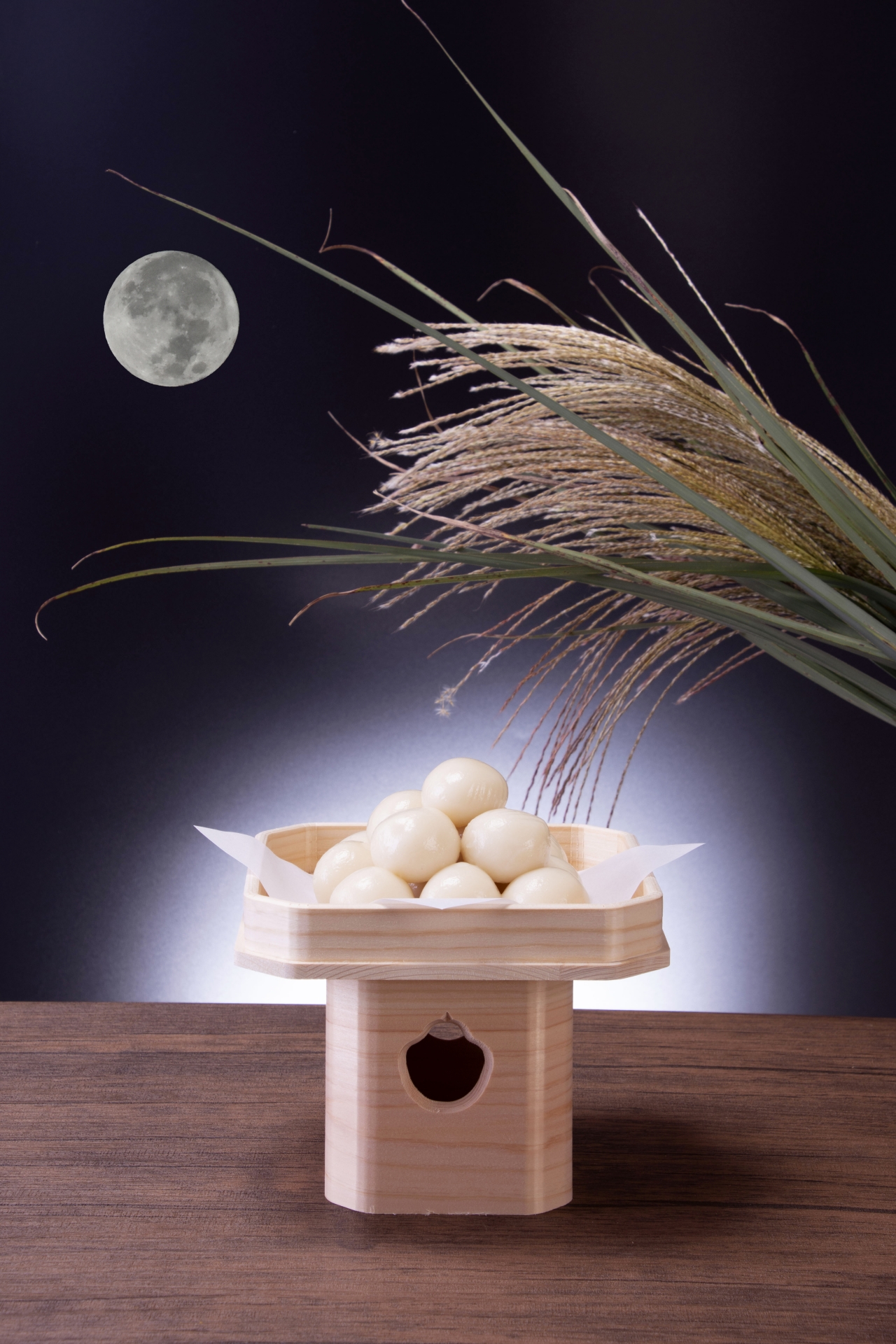
Tsukimi (月見), or moon viewing, comes with things to look at and food to share.
Families often set out three kinds of offering: autumn harvest foods such as taro, sweet potatoes, grapes and pears; round rice dumplings (月見団子, tsukimi dango) that look like the full moon; and Japanese pampas grass (すすき, susuki).1
The date needs a little care.
The famous "harvest moon" of Japan, Chūshū no Meigetsu (中秋の名月), is the moon on the fifteenth night of the eighth month in the old lunisolar calendar. In today's calendar, it can fall anywhere between September 7 and October 8.2
It is not always the astronomical full moon either. In 2017, for example, Chūshū no Meigetsu fell on October 4, but the moon was not full until October 6. This is because the moon's orbit is slightly oval, so the time from new moon to full moon varies.3 A fixed date like "September 15" will often miss it.
You can make the most of this outdoors. Look at the moon on several evenings in a row, instead of expecting one night to hold the whole season. If you want to follow the named occasion, check that year's date. If you simply want to enjoy the sky, start whenever you can see it.

Around the autumn equinox, sometimes in the same weeks as moon viewing, higan (彼岸) marks a different kind of pause. It is a seven-day period centered on the equinox.5
Day and night are nearly equal in length, and the world of the ancestors is said to be closest to this one, so many people visit their ancestors' graves.1
Later in autumn, Shichi-go-san (七五三) brings dressed-up children and long sticks of sweets into view.
Traditionally on November 15, boys of five and girls of three and seven visit shrines to pray for their health as they grow. These days, many families go on a weekend or holiday near the date. The long red-and-white sweets, chitose-ame (千歳飴), stand for a long life.6
This is a family occasion for particular children, not a general autumn activity for everyone. If you visit a shrine at this time, follow its guidance, and please do not treat families as a photo opportunity.


Notice what winter asks people to prepare
The winter solstice, tōji (冬至), falls around December 22, the shortest day of the year.
Many people put yuzu (柚子) citrus in the bath on this day, and eat kabocha squash. Both were believed to help ward off colds in the winter ahead.7
If you find a yuzu bath at a public bath, follow the instructions there. At home, even the scent of a single yuzu can mark the day.

In Shiga (滋賀), itoko-ni (いとこ煮) is a dish of azuki beans simmered with taro or squash. It is often made for Buddhist memorial services and for the winter solstice.8

The end of the year brings another threshold.
Many households give their homes a thorough year-end clean, or ōsōji (大掃除), to clear away the dust of the past year. This is related to the older susuharai (すす払い) tradition of cleaning in preparation for the New Year.9
On New Year's Eve, people eat toshikoshi soba (年越しそば). The long noodles stand for a long life, and because soba breaks easily, they also stand for cutting ties with the bad luck of the old year.9

From late on New Year's Eve into New Year's Day, Buddhist temples ring their bells 108 times (除夜の鐘, joya no kane). The number is thought to reflect the 108 afflictions, or negative emotions, that the bell drives away.9 Each temple has its own arrangements, including whether visitors can ring the bell themselves, so check before you go.

These customs sit alongside family meals, television, travel and ordinary work. It is worth leaving space for that everyday mixture, instead of imagining that the whole country spends the evening in one ceremonial mood.
Why the season has more than one history
Moon viewing came to Japan from China around the ninth century. Heian (平安) nobles made it a refined pastime: they wrote poems and admired the moon reflected in their garden ponds.2
Over time, the custom spread to ordinary households, where it became a way to give thanks for the harvest with offerings.1
That is a long journey for a plate of round dumplings.
Buddhist observances, farming work and local worship each added their own reasons to gather.
The season brings together different kinds of time: the movement of the sun and moon, food production, religious practice and family life.
New Year preparations include welcoming the toshigami (年神), the deity of the New Year. It was believed to visit each home at this time, bringing good fortune and another year of life. Cutting pine for the gate decorations (門松, kadomatsu) is part of the preparations to welcome it.1011
But some habits that feel ancient are fairly modern.
Take hatsumōde (初詣), the first shrine visit of the year. The custom of visiting shrines in the first three days of January only dates back to roughly the 1870s to the 1890s. It grew with the modernization of Japanese society, including official encouragement of shrine visits and the spread of the railways.11

In 1873, Japan adopted the Gregorian calendar.11 Some dates moved with the new system. Other observances kept following the older calendars, or adjusted their schedules.
That is why it helps to know what kind of date you are looking at, not only which day to write down. Our calendar article explains these systems in more detail.
Choose a New Year meal you can understand
Osechi (お節) is the traditional New Year meal, beautifully arranged in lacquered stacking boxes (重箱, jūbako).

The dishes are made to keep, so that whoever usually cooks can rest over the New Year. Each food carries a wish. Herring roe (数の子, kazunoko) is for many descendants, small dried sardines (田作り, tazukuri) for a good harvest, and sweet black beans (黒豆, kuromame) for good health.12
The seasoning, presentation and even the shape of the boxes vary from region to region.12


If you are learning about osechi overseas, start with one or two dishes whose ingredients and meanings you can explain. A small meal you actually enjoy is more useful than an expensive set chosen only to match a photograph. And you can present it as your own version, not "the" Japanese New Year table.
Zōni shows the regional point especially well. In Kyoto (京都), families eat zōni made with white miso and round rice cakes, which carry a wish for happiness and long life.13
In most areas, including Tokyo, a clear broth is more common. In eastern Japan, the rice cakes are usually square and grilled before they go into the soup.14
But the differences do not stop at an east–west line. In parts of Kagoshima (鹿児島), both shapes are used. Some areas make zōni with sweet azuki bean soup. In Hokkaidō (北海道), where people from all over Japan settled in the Meiji period, many kinds of zōni are eaten. It is even said that there are as many kinds of zōni as there are communities.15
So ask someone about their own family's soup, rather than what "Japanese people" put in it.
On January 7, many people eat nanakusa-gayu (七草粥), rice porridge with seven herbs. The custom came from China, spread in the Heian period, and by the Edo period was eaten by everyone from the shogun down.16 Like the other customs here, it is kept to different degrees from one household to the next.

End winter with a boundary, not a fixed date
Setsubun (節分) is best known today for throwing beans (豆まき, mamemaki). People throw "fortune beans" (福豆, fukumame) out of the door, or at someone wearing a demon (鬼, oni) mask, to drive away bad luck and welcome good fortune.17

Setsubun is the day before Risshun (立春), the start of spring in the traditional calendar.5 So it is not always February 3. In 2021, Setsubun fell on February 2 for the first time since 1897.19
Risshun names the beginning of spring in the old system, even when the air outside still feels like winter.
If you live outside Japan, you could begin with one small thing you can keep doing:
Watch the changing moon.
Make a seasonal soup.
Clear a space before the year turns.
Learn the history behind it, and be honest about how you have adapted it.
Like the two bowls of zōni at the start, your version will look different from someone else's. What matters is noticing a little more clearly what you see, what you choose to do, and the histories that give those choices meaning.
At a glance
| When (usual modern timing) | What you may encounter | What to check |
|---|---|---|
| September 7 – October 8 | Tsukimi: dumplings, pampas grass, autumn produce | That year's date; it may not be the full moon |
| Around the September equinox | Autumn higan: grave visits | Seven days centered on the equinox |
| Traditionally November 15 | Shichi-go-san: dressed-up children, chitose-ame | Shrine arrangements; many go on a nearby weekend |
| Around December 22 | Winter solstice: squash, yuzu baths | Local bath guidance |
| Late December – December 31 | Year-end cleaning, soba, temple bells | Temple access and schedules |
| Early January | Osechi, zōni, New Year decorations, first shrine visits | Recipes and practice vary by region and household |
| January 7 | Nanakusa-gayu | Not followed in every household |
| The day before Risshun (February 2 or 3) | Setsubun bean throwing | That year's date; local event guidance |
Sources
[01] Government of Japan, Highlighting Japan: Autumn in Japan (2022)
[02] National Astronomical Observatory of Japan, Koyomi Wiki: Chūshū no Meigetsu (in Japanese)
[03] National Astronomical Observatory of Japan, Chūshū no Meigetsu (October 2017) (in Japanese)
[04] Metropolitan Museum of Art, Utagawa Hiroshige, Moon-Viewing Location (1857)
[05] National Astronomical Observatory of Japan, 24 Sekki (solar terms) glossary
[06] Nippon.com, Shichi-Go-San
[07] Nippon.com, Japan's 24 Solar Terms: Tōji (Winter Solstice)
[08] Ministry of Agriculture, Forestry and Fisheries, Itokoni (Shiga)
[09] Nagoya International Center, End of Year / New Year Customs (2022)
[10] Kokugakuin University, Encyclopedia of Shinto: Toshigami, Toshitokujin
[12] Government of Japan, Highlighting Japan: New Year's O-sechi Cuisine (2025)
[13] Ministry of Agriculture, Forestry and Fisheries, Zoni Made with White Miso (Kyoto)
[14] Ministry of Foreign Affairs of Japan, niponica 25: Tasty Japan: Time to Eat! Zoni (2019)
[15] Ministry of Agriculture, Forestry and Fisheries, aff magazine: Regional zōni (2020, in Japanese)
[16] Kokugakuin University, Encyclopedia of Shinto: Jinjitsu
[17] Japanese Cultural Center of Hawai'i, Setsubun
[18] Metropolitan Museum of Art, Kubo Shunman, Beans for Tossing During Setsubun (1810s)
[19] Nippon.com, Japanese Setsubun Festival to Fall on February 2 for First Time Since 1897 (2021)
10 Quiet Ways to Bring a Little Japan into Your Everyday Life
Ten quiet invitations to bring Japanese ways of seeing into everyday life.
DISCOVER MORE

CULTURE & SEASONS