Before you buy a Japanese classic, look at three things: the writer, the translator and the kind of book it is. A collection of short observations asks for a different way of reading from a court novel, a travel narrative or a modern story told by a troubled narrator.
"Japanese literature" is a useful shelf label, but a very large one. It holds courtly refinement and rough comedy, Buddhist reflection and political argument, family life and experiments with language — far more than a few famous names can show.
This guide offers a small map: when the books were written, how writing changed, the forms they take, where you might begin and how to choose a translation. Use it to place a book you have come across, or to find a manageable first one. You can follow an interest across the centuries without reading everything in order. If you are simply looking for a first book, go straight to "Where to start".
Some links in this guide are affiliate links. If you buy through them, Japan in Small Ways may earn a commission at no extra cost to you.
As an Amazon Associate I earn from qualifying purchases.
The periods at a glance
Use the table to find a book’s place in time, then follow whatever catches your eye.
| Period (roughly) | What to look for | Examples |
|---|---|---|
| Early written traditions, especially the 8th century | Chronicles, poetry collections, religious texts; Chinese characters used in several ways | Kojiki (古事記, 712); Nihon shoki (日本書紀, 720); Man’yōshū (万葉集, completed in the late 8th century) |
| Heian court writing, 9th–12th centuries | Waka poetry, tales, diaries, letters and observations; kana alongside Chinese learning | The Tale of Genji (源氏物語); The Pillow Book (枕草子) |
| Medieval writing, roughly 12th–16th centuries | War tales, Buddhist essays and anecdotes, linked verse, performance | The Tale of the Heike (平家物語); Hōjōki (方丈記); Essays in Idleness (徒然草); Noh (能) |
| Early modern (Edo) writing, 17th–mid-19th centuries | Commercial publishing, urban entertainment, travel writing, poetry, theatre, and continued writing in Chinese | Matsuo Bashō (松尾芭蕉); Ihara Saikaku (井原西鶴); Chikamatsu Monzaemon (近松門左衛門) |
| Modern literature, late 19th–mid-20th century | A changing written language, translated fiction, new institutions and debates about society and the self | Natsume Sōseki (夏目漱石); Yasunari Kawabata (川端康成), Snow Country |
| Postwar and late-20th-century writing | Responses to war and social change; questions of identity, family, memory and belonging | Kenzaburō Ōe (大江健三郎); Haruki Murakami (村上春樹), Norwegian Wood |
These dates are broad reading guides, not sharp borders: a tradition can carry on long after the period in which it first became important. The dates for the early works come from standard Japanese reference dictionaries.010203 Nor does the map mean that everyone in a period read the same texts, or that literature moved forward in a single line of improvement.
From borrowed characters to the modern novel
The first Japanese writers worked with a script made for another language. The earliest written traditions grew through contact with China. Over several centuries Japan brought in Buddhism, Confucianism, Chinese poetry and the Chinese language in which it was written, as well as ways of organising government.04 Japanese writers could write in Chinese: the Nihon shoki, for example, is written largely in classical Chinese, apart from its songs.02
FURTHER READING · AD
The Kojiki: An Account of Ancient Matters
Translated by Gustav Heldt · Columbia University Press
They could also borrow Chinese characters for their sounds or Japanese readings, regardless of meaning, to write the Japanese language. These are called man’yōgana (万葉仮名). Hiragana later grew out of very cursive forms of these characters, and katakana from parts of them.0506 What followed was a story of new possibilities, not a clean break from China.
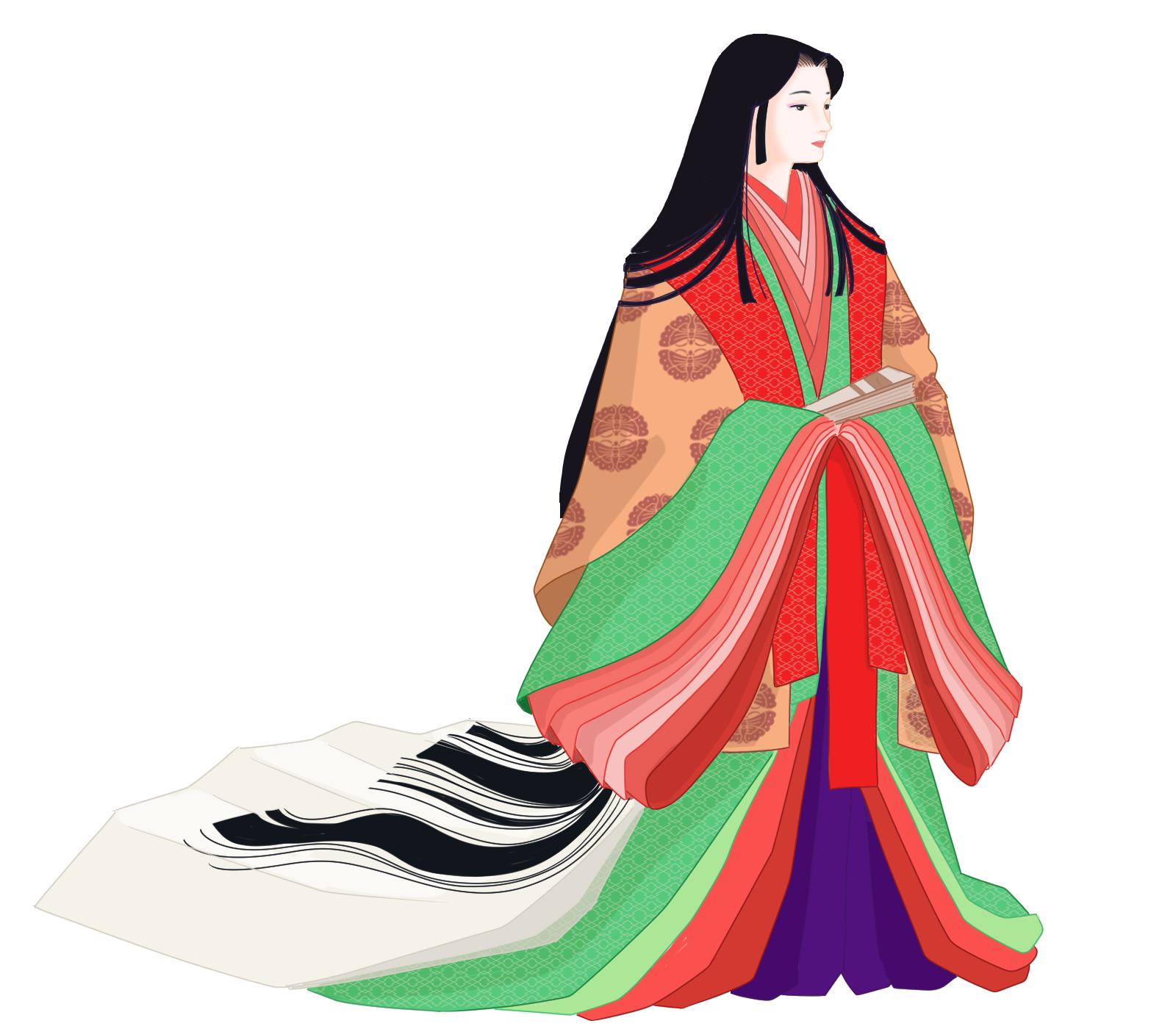
At the Heian court, poetry, letters and stories were part of social relationships as well as literary art. Women at court wrote some of the central works of the classical canon: The Tale of Genji by Murasaki Shikibu (紫式部), and The Pillow Book by Sei Shōnagon (清少納言).040708 What these women left is a view from inside particular upper-class worlds, rather than a survey of everyone living in Japan. Chinese learning continued alongside writing in Japanese.
FURTHER READING · AD
The Tale of Genji
Translated by Royall Tyler · Penguin Classics
Medieval texts bring different settings and pressures. The Tale of the Heike, a war tale recited to the biwa lute by performers called biwa hōshi (琵琶法師), opens with the sound of a temple bell that echoes the impermanence of all things.10 Performance mattered too: Noh drama took shape in this period, through the work of Kan’ami (観阿弥) and his son Zeami (世阿弥).11
FURTHER READING · AD
The Tale of the Heike
Translated by Royall Tyler · Penguin Classics
Hōjōki (1212) was written by Kamo no Chōmei (鴨長明), who took Buddhist vows around the age of fifty and later lived in a tiny hut.12 Essays in Idleness was written around 1330 by Yoshida Kenkō (吉田兼好), a former court official who also became a monk.13 Both books are shaped by the Buddhist idea of impermanence, yet they are not interchangeable books of calm advice. Their concerns and voices differ — one good reason to read them side by side.
In the Edo period, commercial publishing widened the range of what people read. Ihara Saikaku’s lively fiction began with The Life of an Amorous Man (1682); he later wrote about townspeople’s lives in works such as The Japanese Family Storehouse (1688).14 Chikamatsu Monzaemon wrote plays for the puppet theatre, including The Love Suicides at Sonezaki (1703), and also for kabuki.15

FURTHER READING · AD
Four Major Plays of Chikamatsu
Translated by Donald Keene · Columbia University Press
Matsuo Bashō (1644–1694) was a master of haikai verse; in 1689 he set out from Edo with his disciple Sora on the journey that became The Narrow Road to the Deep North.1617

Writing in Chinese also continued: Chinese-style poetry, kanshi (漢詩), flourished in the Edo period.19 A history that jumps straight from Heian women to Bashō to the modern novel leaves a large part of the landscape out.
In the late nineteenth century, translation and debates about the written language helped shape modern literature. The genbun itchi (言文一致) movement worked to bring written Japanese closer to the spoken language, and was broadly established by around 1902.20 After Japan opened to the West, foreign literature was translated on a large scale, and it did much to drive the growth of modern Japanese literature.21 Writers adapted and challenged these new forms, and combined them with older ones, while industrialisation, empire and war became part of the world they wrote in. Modern writing is not simply an older Japanese sensibility dressed in Western prose.
A few forms worth recognising
Three prose forms come up again and again:
- Monogatari (物語) — a tale: prose that tells of people and events, drawing on what the author has seen, heard or imagined.22
- Nikki (日記) — a diary. The literary kind is deeply self-reflective and carefully crafted, and many classical examples were written by women.23
- Zuihitsu (随筆) — essay-like writing in a free form, made of personal observations, experiences and thoughts.24
Treat these as helpful labels with their own histories, rather than exact matches for modern publishing categories.
Waka (和歌) is a broad term for poetry built on lines of five and seven syllables. It includes the long chōka and the short tanka (短歌) of 5-7-5-7-7 syllables.2526 Bashō wrote hokku, the opening verses of linked haikai poetry. The word "haiku" for an independent short poem came into general use from the late nineteenth century, through the reforms of the poet Masaoka Shiki.27 So calling Bashō a "haiku poet" is familiar modern usage, but it can obscure his world of linked verse. In The Narrow Road to the Deep North, prose and verse work together to build the world of the journey.28
For a first encounter, the form matters more than learning every term. If a book feels broken up, ask whether you are expecting a novel from a work built of fragments. If a journey seems full of references, use the notes to identify the earlier poem or place the traveller is bringing into the scene.
Where to start, according to what interests you
There is no single compulsory first book. Start from what already draws you: each entry below pairs an interest with a possible beginning, something to notice as you read, and a note on editions.
Small details and social encounters — Sei Shōnagon, The Pillow Book
The Pillow Book took shape around 1000 (late 10th–early 11th century). Notice the lists and court scenes. Choose a translation with notes, and check whether it is complete. Our guide to The Pillow Book explains how to begin.
A short older work about home and change — Kamo no Chōmei, Hōjōki
Hōjōki was written in 1212 (13th century); the companion work Essays in Idleness dates to around 1330 (14th century). Notice the relationship between a life and a very small dwelling. Meredith McKinney’s Penguin Classics volume pairs it with Kenkō’s Essays in Idleness, with notes and an introduction, so you can compare two medieval voices.29
FURTHER READING · AD
Essays in Idleness and Hōjōki
Kamo no Chōmei and Yoshida Kenkō
Translated by Meredith McKinney
Penguin Classics
Travel and poetry — Matsuo Bashō, The Narrow Road to the Deep North
Bashō completed this travel work by 1694 (late 17th century), after his 1689 journey; it was first published in 1702 (early 18th century). Read the prose and poems together, and use the notes for the literary places. Nobuyuki Yuasa’s Penguin Classics translation also includes other travel sketches.30 Check that the author is Bashō: a modern novel by another writer shares the title.
FURTHER READING · AD
The Narrow Road to the Deep North and Other Travel Sketches
Matsuo Bashō
Translated by Nobuyuki Yuasa
Penguin Classics
Modern relationships and moral uncertainty — Natsume Sōseki, Kokoro
Kokoro was first published in 1914 (20th century). Notice trust, secrecy and the distance between generations. Meredith McKinney’s translation includes an introduction and notes.31 The subject is serious; choose another route if you want lighter reading.

FURTHER READING · AD
Kokoro
Natsume Sōseki
Translated by Meredith McKinney
Penguin Classics
Place, atmosphere and unspoken feelings — Yasunari Kawabata, Snow Country
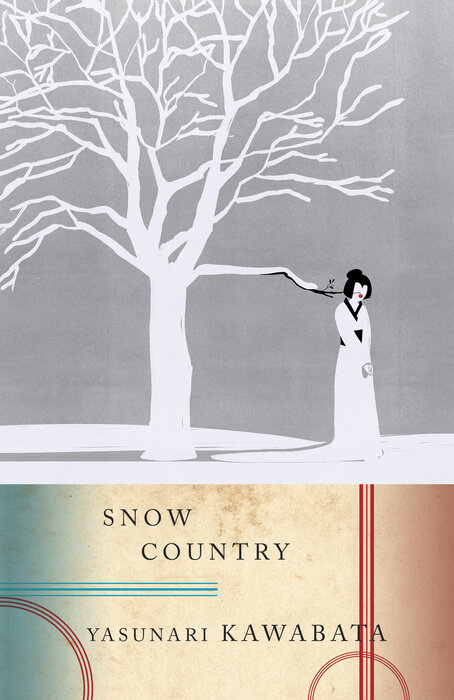
Snow Country was written and revised between 1935 and 1948 (20th century). Notice how the snowy landscape, brief encounters and things left unsaid shape the relationship at the centre of this novel. Kawabata received the Nobel Prize in Literature in 1968. Edward G. Seidensticker’s established English translation is published by Vintage. This short novel rewards slow, attentive reading.32
FURTHER READING · AD
Snow Country
Yasunari Kawabata
Translated by Edward G. Seidensticker
Vintage
Love, memory and coming of age — Haruki Murakami, Norwegian Wood
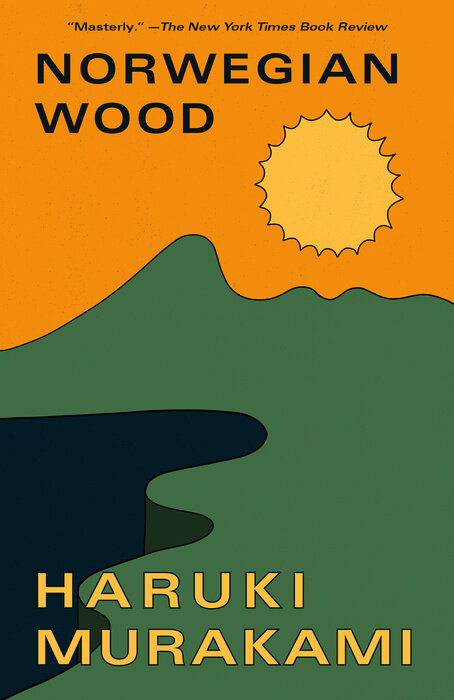
Norwegian Wood was first published in 1987 (20th century). Set among young people in late-1960s Tokyo, the novel explores love, loss and the difficulties of growing into adulthood. Jay Rubin’s English translation is published by Vintage. It offers a relatively direct introduction to Murakami, although themes of suicide and mental illness make it emotionally serious.33
A broad sample before choosing a long work — Haruo Shirane (ed.), Traditional Japanese Literature: An Anthology, Beginnings to 1600
This anthology brings together works from Japan’s early written traditions through around 1600 (principally the 8th–16th centuries). Move between poetry, prose and drama, including works written in Chinese by Japanese writers, with introductions. Because it gives extracts rather than whole works, it makes a good sampler before you commit to a long book.34
FURTHER READING · AD
Traditional Japanese Literature: An Anthology, Beginnings to 1600
Edited by Haruo Shirane
Columbia University Press
You don’t need to begin with The Tale of Genji just because it is central. A long, rich book can be a better experience after a few shorter ones. Nor do you need to begin with a modern novelist just because that name is the most visible in English-language bookshops.
Beyond the usual map
A national literary map can make some voices harder to see. Ainu oral traditions and literature deserve attention on their own terms. Chiri Yukie (知里幸恵, 1903–1922) wrote down Ainu sacred songs in the Latin alphabet and translated them into Japanese. Her Ainu Shin’yōshū (アイヌ神謡集) was published in 1923, the year after her death, and is described as the first book in the Ainu language published by a person of Ainu heritage.3536

FURTHER READING · AD
Ainu Spirits Singing: The Living World of Chiri Yukie’s Ainu Shin’yoshu
Sarah M. Strong · University of Hawai‘i Press
For readers who would like to explore Chiri Yukie’s collection in English, Sarah M. Strong’s Ainu Spirits Singing offers translations and historical context.
Writing from Okinawa also brings histories and perspectives that a mainland-centred list can miss. Before the modern prefecture was established in 1879, much of today’s Okinawa was part of the Ryukyu Kingdom, centred on Shuri.37 Islands of Protest: Japanese Literature from Okinawa, edited by Davinder L. Bhowmik and Steve Rabson, offers poetry, fiction and drama in English translation.38 It is one selection from the region’s many languages and traditions.
FURTHER READING · AD
Islands of Protest: Japanese Literature from Okinawa
Edited by Davinder L. Bhowmik and Steve Rabson · University of Hawai‘i Press
Read translations as choices
Keep the translator’s name with the title in your notes. Check whether the edition is complete, what it includes and how it handles explanation. Reading a few pages is more useful than any claim that one translation is best for every reader.
If a scene depends on a poem or a custom, read the note. If the note only adds a detail you don’t need yet, carry on. It’s fine to pick up the context gradually.
After each reading session, write down one concrete thing the book has made you notice: a letter, a room, a work routine, a meal, a place remembered through poetry. Then write one question it has left open. If you enjoy writing by hand, copying a short passage is another way to slow down with a text.
Over time, those notes become your own map: details you noticed, and questions still open. A book can deepen your understanding of Japan while remaining one writer’s work, shaped by a particular language, time and world. For the ideas behind many of these books, see our short guide to Japanese thought.
Sources
[01] Kotobank, Kojiki 古事記
[02] Kotobank, Nihon shoki 日本書紀
[04] Columbia University, Asia for Educators, Heian Japan
[05] Kotobank, Man’yōgana 万葉仮名
[06] Kotobank, Kana 仮名
[07] Kotobank, Genji monogatari 源氏物語
[08] Kotobank, Makura no Sōshi 枕草子
[09] The Metropolitan Museum of Art, Yamamoto Shunshō, The Illustrated Tale of Genji, ca. 1650
[10] Kotobank, Heike monogatari 平家物語
[11] Kotobank, Nōgaku 能楽
[12] Kotobank, Hōjōki 方丈記
[13] Kotobank, Tsurezuregusa 徒然草
[14] Kotobank, Ihara Saikaku 井原西鶴
[15] Kotobank, Chikamatsu Monzaemon 近松門左衛門
[16] Kotobank, Matsuo Bashō 松尾芭蕉
[17] Kotobank, Oku no hosomichi 奥の細道
[18] The Metropolitan Museum of Art, Matsuo Bashō, Hokku Poem "With a Powder Brush"
[19] Kotobank, Kanshi 漢詩
[20] Kotobank, Genbun itchi 言文一致
[21] Kotobank, Hon’yaku bungaku 翻訳文学
[23] Kotobank, Nikki bungaku 日記文学
[25] Kotobank, Waka 和歌
[26] Kotobank, Tanka 短歌
[27] Kotobank, Haiku 俳句
[28] Kotobank, Oku no hosomichi おくのほそ道 (Nipponica)
[29] Penguin Classics, Essays in Idleness and Hōjōki, tr. Meredith McKinney (2013)
[30] Penguin Classics, The Narrow Road to the Deep North and Other Travel Sketches, tr. Nobuyuki Yuasa
[31] Penguin Classics, Kokoro, tr. Meredith McKinney (2010)
[33] Vintage, Norwegian Wood by Haruki Murakami, translated by Jay Rubin (ISBN 9780375704024)
[35] Kotobank, Chiri Yukie 知里幸恵
[36] Japan Tourism Agency, Multilingual Explanation Database, Chiri Yukie
[37] Okinawa Prefectural Museum & Art Museum, Permanent Exhibitions (Ryukyu Kingdom history)
10 Quiet Ways to Bring a Little Japan into Your Everyday Life
Ten quiet invitations to bring Japanese ways of seeing into everyday life.