A small change in water, time or leaves can change the cup. Start with a clear method, then find out what suits your tea.
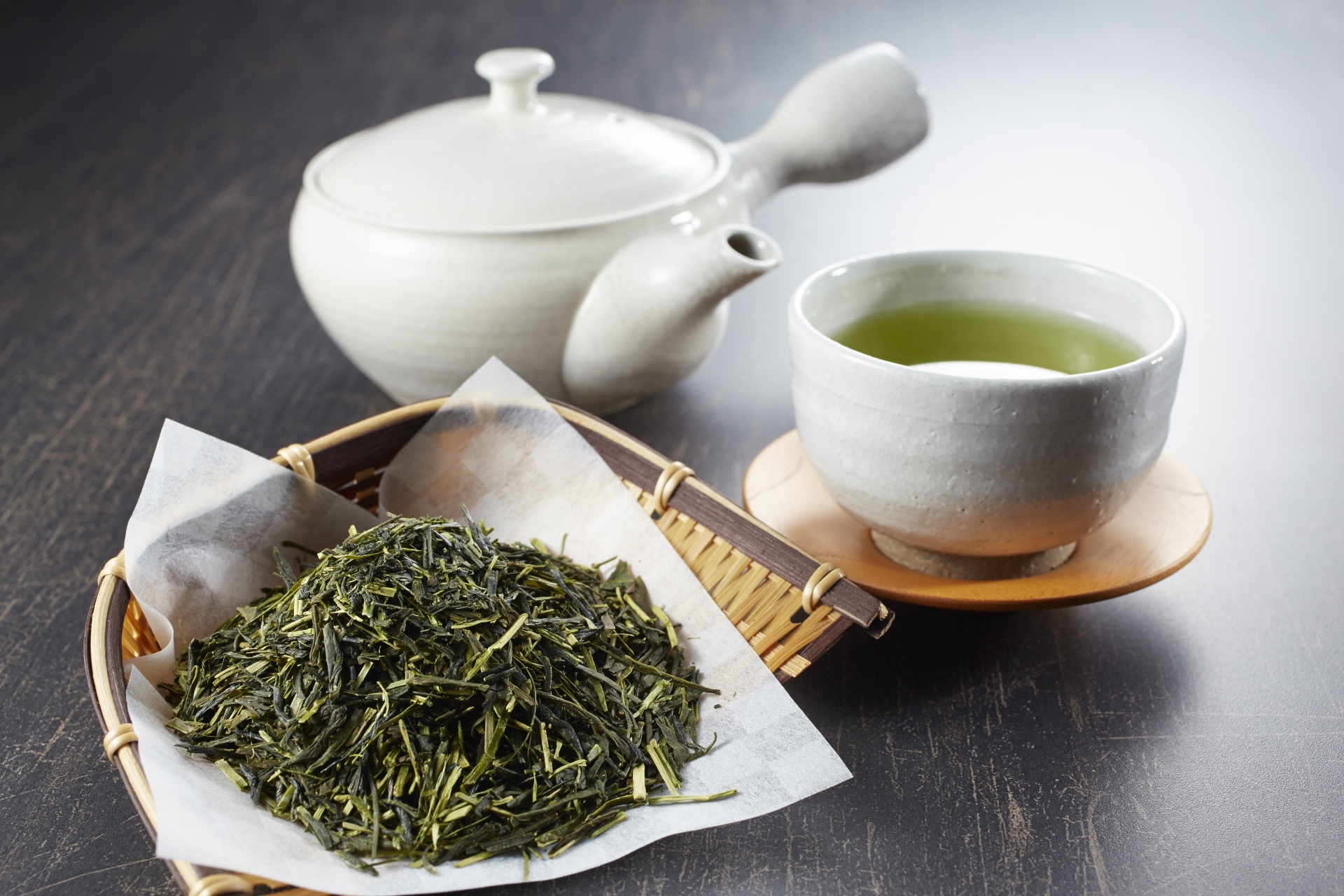
The packet is open.
The kettle has boiled.
And now comes the hesitation.
How much tea?
How much water?
How long should you wait?
Sencha (煎茶) is the most commonly drunk green tea in Japan.01 It is easier to understand when you start with a method you can repeat. You don’t need a full set of utensils. You need tea, drinking water, a way to separate the leaves from the tea, and a little attention to temperature and time.
Some links in this guide are affiliate links, which means I may earn a commission if you buy through them.
What you need
- Sencha
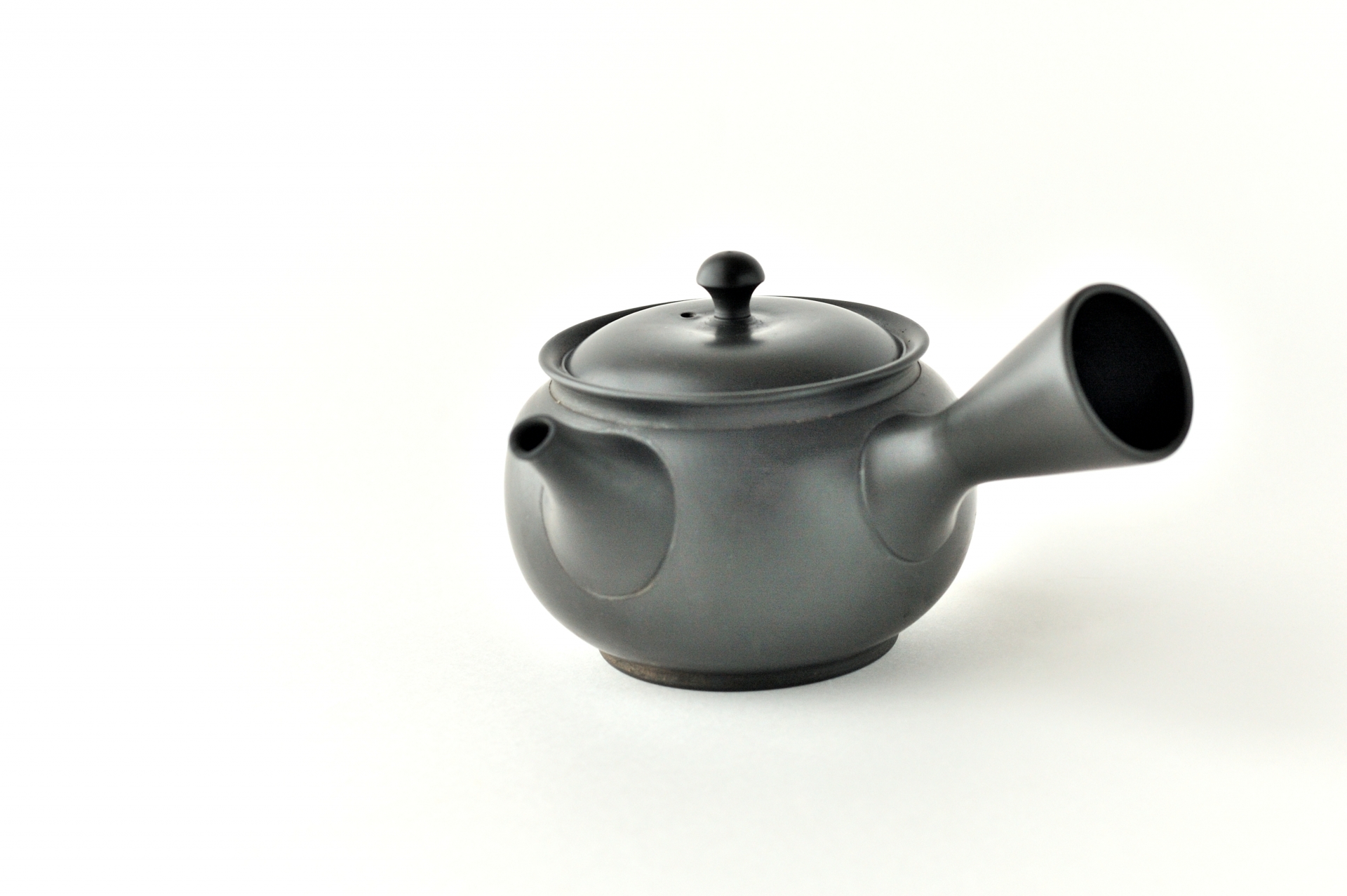
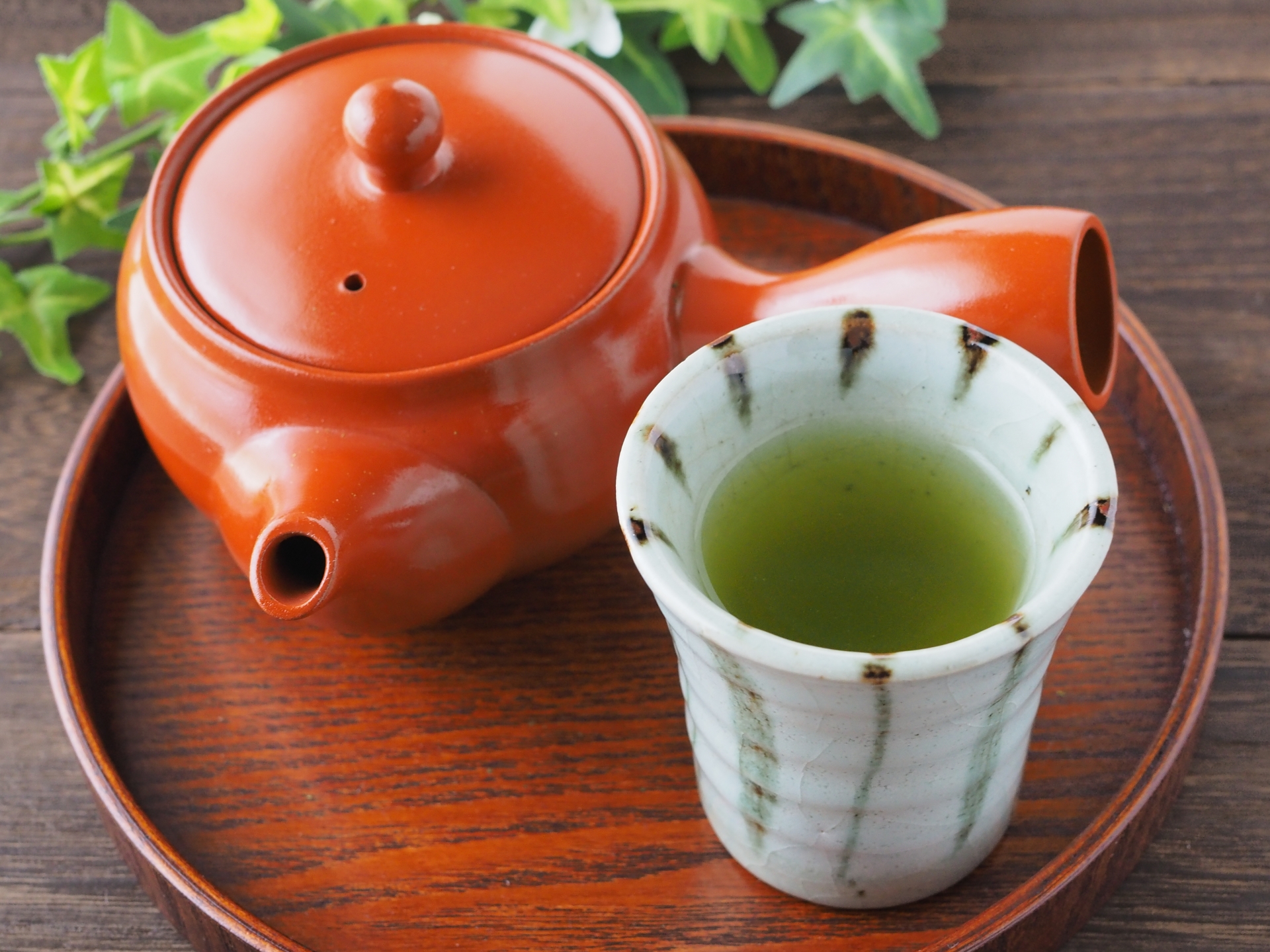
- A kyusu (急須), a small teapot, or a roomy removable basket infuser
- A kettle
- A cup or two small cups
- A timer (your phone is enough)
- A kitchen scale, if you have one
- A thermometer or a temperature-controlled kettle, if you have one
A scale makes it easier to compare one pot with the next, because a spoonful changes with the size and shape of the leaves. You can still start without one. Use the packet’s spoon measure, and keep it the same each time.
For 200 ml of water, choose a pot with some extra room for the leaves. The capacity on the label is not always the amount of tea it will pour.
A LOOSE-LEAF SENCHA TO START WITH · AD
YAMASAN KYOTO UJI Organic Sencha Loose Leaf — 80 g
A straightforward loose-leaf sencha from a Japanese tea company based in Uji, Kyoto.
A useful choice if you want to practise the brewing method in this guide. If the packet gives different directions, follow those first.
Step 1 — Prepare the water
Use drinking water that you enjoy on its own.
If your tea disappoints you even when you brew it carefully, the water is worth comparing. Japanese tap water is generally soft, which suits Japanese tea well. Soft water tends to bring out umami, while harder water can give a crisper taste.02 Japan’s Ministry of Agriculture also recommends soft water for brewing tea and notes that Japanese tap water is soft.03 Distilled water is not ideal, because some minerals help make a satisfying cup.02
Boil the water and let it cool to the temperature you want, or use the kettle’s temperature setting.
No thermometer? Pour the hot water into a heat-safe cup first, then into the pot. Each time you move hot water to another vessel, it cools by about 5–10°C, depending on the season and the material.04 This also warms the cup you will drink from.
It is only a rough guide, though. The starting temperature, the amount of water, the room and the vessel all make a difference.
Step 2 — Measure the leaves and water
Put 7 g of tea in the pot. Add 200 ml of water at around 80°C / 176°F.
If you use a basket infuser, make sure the leaves are under the water and have room to open. With a small tea ball, or a basket that sits above the water, the tea is much harder to control.
This recipe makes a fairly strong brew. If it is stronger than you like, try 5 g next time and keep the water and time the same. That is our suggestion, not a producer’s recipe. Ippodo also recommends using fewer leaves if you want a lighter cup.05
Step 3 — Give it about a minute
For standard sencha, start timing as you pour in the water, and start serving at about 60 seconds.
Leave the leaves to steep. Don’t stir or shake the pot. You are building a calm method that you can repeat.
If your tea is fukamushi sencha (深蒸し煎茶, deep-steamed sencha), start with its own instructions. Usually it is brewed for just 40–45 seconds, with the same amount of water at the same temperature.06
Because it is steamed for longer, fukamushi breaks into very fine pieces of leaf.07 A strainer that suits fine leaves will make pouring easier.
Step 4 — Pour out every drop
Hold the lid in place and pour gently into your cup.
If you are serving two or three people, pour a little into each cup, then go back in the opposite order and repeat. For three cups, that means 1–2–3, then 3–2–1.
This way of pouring, called mawashi-tsugi (廻し注ぎ), shares out both the amount and the strength of the tea evenly.0804
Pour right down to the last drop, so that no water is left in the pot. Then set the lid slightly ajar, so the leaves don’t stew in the heat.04 If you use a basket infuser, lift the basket out when the tea is ready.
You can keep the wet leaves for another infusion. Just don’t leave them sitting in water.
Depending on the style, the tea may be clear or cloudy. Look at it, smell it and taste it before you decide what to change.
Step 5 — Try another infusion
You can use the same leaves again in the same session. In most cases, teas can be brewed three times.09
The leaves have already taken in water and opened up, so the next infusion usually needs less waiting.
You can pour out the second and third infusions straight away, with no brewing time.10 Other teas, or your own taste, may suit a short wait. There is no need to repeat the full first-infusion time.
Taste the tea again before deciding on a third infusion. The way it changes from one cup to the next is part of the pleasure of brewing leaves, rather than making one fixed drink.
If the tea is not what you hoped for
Change one thing at a time, so you can tell what helped.
Swipe sideways to see both columns →
| What you notice | What to try next |
|---|---|
| Sharply bitter | Lower the temperature or shorten the time. If the whole brew is too strong, use fewer leaves. |
| Too weak | Check the amounts of water and leaves, and whether the leaves were fully under the water. |
| The second infusion is surprisingly strong | Check whether water was left around the leaves after the first pour. |
| Pouring is very slow | Check whether the strainer is blocked, or not suited to fine leaves. |
| The same tea tastes different somewhere else | Compare the water before buying a different pot. |
These are practical things to try, not a diagnosis for every disappointing cup.
Japanese tea naturally has some bitterness and astringency. Ippodo notes that these are expected characteristics of the tea, and suggests fewer leaves, cooler water or a shorter time if you want a lighter cup.05
A little briskness can be enjoyable. The goal is a cup you like, not removing every trace of bitterness from every tea.
Why temperature is more than a rule
With sencha, you can change the experience without changing the leaves.
At 80°C, you bring out a refreshing aroma and a mild bitterness, while cooler water at 75°C gives a mellower, less brisk cup. It invites you to try different times and temperatures to find the one you prefer.09
The leaves in your pot also carry a history.
In the 1600s, people in Japan first came to know sencha through monks of the Ōbaku (黄檗) school of Zen Buddhism.11
In Uji, the priest Ingen (隠元) of Manpuku-ji (萬福寺) introduced tea made by simmering pan-roasted leaves. Inspired by it, Nagatani Sōen (永谷宗円) devised a new method in 1738: steaming the young tea buds, then rolling them by hand as they dried over a tea drier.12
Japan’s Ministry of Agriculture calls this the origin of later Japanese tea production methods.12
So the sencha you brew today brings together a way of drinking leaf tea that came from China and a way of making the leaves that was developed in Japan. Each time you pour water over the leaves, and then pour the tea away from them, you are taking part in both.

The useful kind of attention here is very concrete. Notice what is in the pot, how quickly it pours, and what the person drinking it enjoys. After a few cups, a measured recipe can become a familiar habit.
Try this
Make the same sencha on two different days, with the same amounts and the same time. Use 80°C / 176°F water one day, and 75°C / 167°F the other. Write down which one you prefer and what changed.
These are temperatures for comparing, not a claim that one is better.
Sources
[01] Ministry of Agriculture, Forestry and Fisheries (MAFF), Green Tea Types / Sencha
[02] Ippodo, Is Water Quality Important in Brewing Tea?
[04] Japan Tea Action, How to Brew Delicious Tea (in Japanese)
[05] Ippodo, Help, My Tea Is Bitter!
[06] Hibiki-an, Brewing Sencha Fukamushi
[07] ITO EN, Types of Japanese Green Tea
[08] Fukumotoen, How to Brew and Serve Delicious Tea (in Japanese)
[09] Hibiki-an, Brewing Sencha
[10] Ippodo, Large Amounts of Gyokuro, Sencha or Bancha
[11] The Huntington, All the Tea in China (and Japan) (2015)
[12] Ministry of Agriculture, Forestry and Fisheries (MAFF), Uji Tea
[13] Metropolitan Museum of Art, Yamada Hōgyoku, Sometsuke Sencha Teapot and Cups (1830s)
10 Quiet Ways to Bring a Little Japan into Your Everyday Life
Ten quiet invitations to bring Japanese ways of seeing into everyday life.