What would make a Japanese tea feel at home in your day? Begin with the flavours you enjoy and the way you actually drink.
A small packet of Japanese tea can raise a surprising number of questions.
Sencha or hojicha?
Loose leaves or tea bags?
A familiar green tea, or something with a name you have never heard before?
And if one packet costs twice as much as another, will you enjoy it twice as much?
You do not need to understand every tea name before you choose. Start with three things: the flavour you are curious about, the time of day you want to drink it, and how much preparation fits your life.
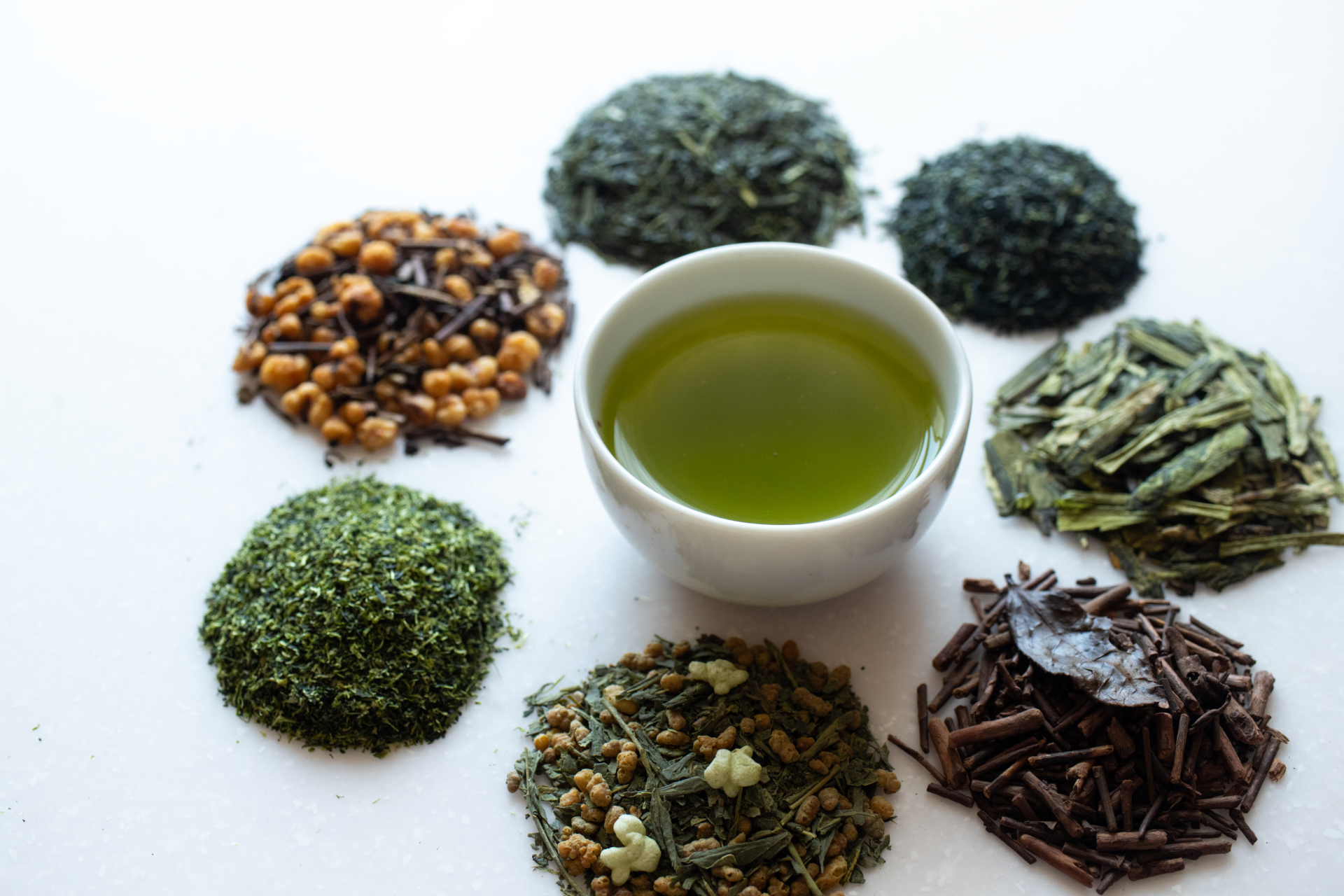
For a fresh, green cup, try sencha (煎茶). For a roasted aroma, try hojicha (ほうじ茶). For green tea with the warmth of toasted rice, try genmaicha (玄米茶).
These are three useful starting points, not three steps on a ladder.01
Some links in this guide are affiliate links, which means I may earn a commission if you buy through them.
Begin with flavour
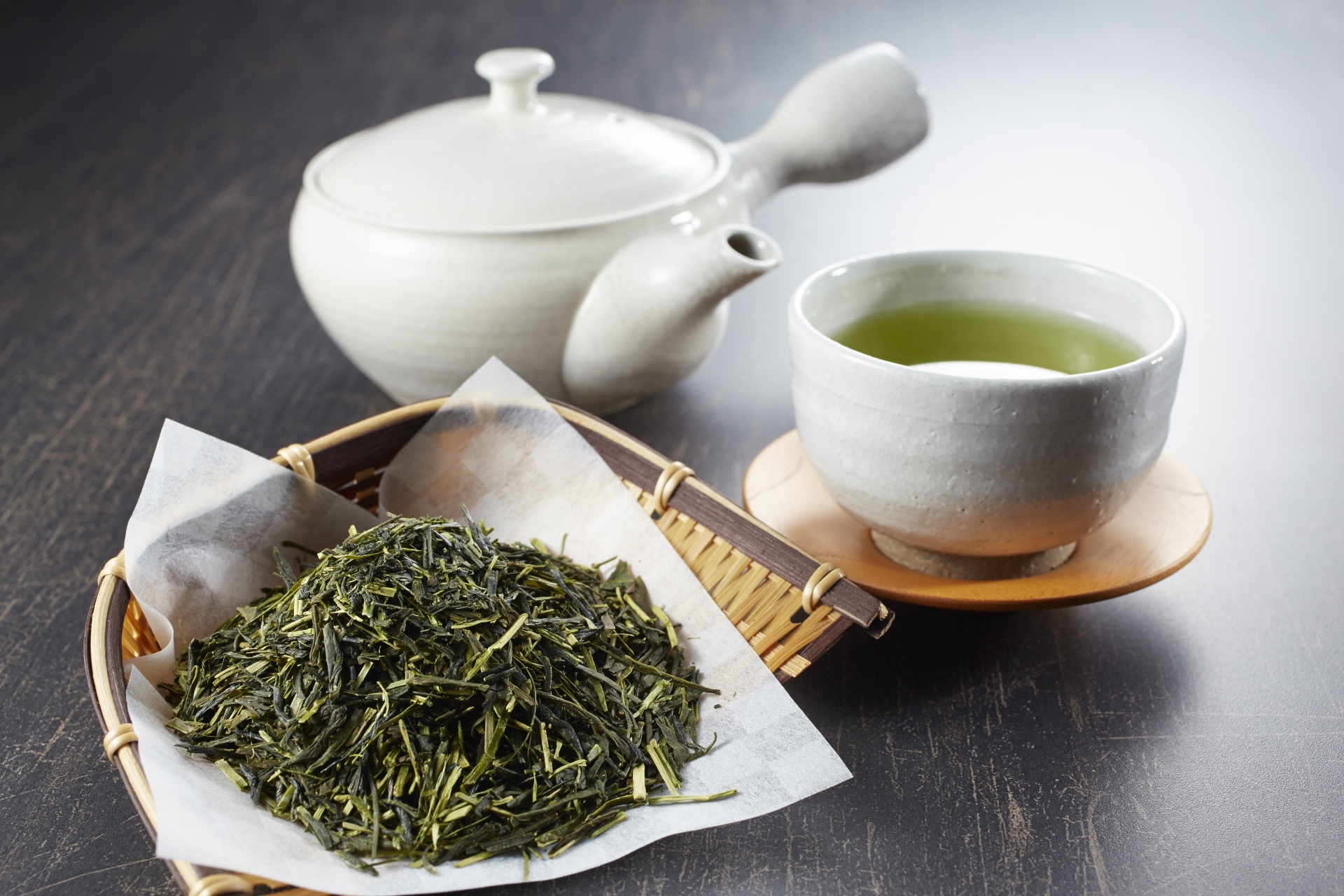
If you enjoy fresh herbs, green vegetables or a clean, brisk finish, sencha is a good place to begin.
Sencha is the most commonly drunk green tea in Japan, but it can taste quite different from one tea to another.02
One Kyoto tea house, for example, offers sencha that ranges from lighter and more astringent to sweeter and richer in umami. So if your first packet disappoints you, it does not have to be your final answer about Japanese green tea.03
If the grassy taste of green tea has put you off, hojicha offers a different direction.
It is made by roasting sencha or other green tea, which gives it a brown colour and a warm, toasty aroma. It is still green tea, even though it looks very different in the cup.04
Genmaicha is green tea blended with roasted rice.
The rice changes both the aroma and the experience. It can be a lovely introduction if you like something savoury and toasty alongside the green flavour.
Do check the ingredients, because some blends also contain matcha. Matcha can be added to give the brewed tea a brighter green colour and a fuller green-tea flavour; its presence does not automatically mean the genmaicha is higher quality. Choose it because you like the balance, not because “with matcha” sounds more premium.050607
THREE EVERYDAY TEAS TO BEGIN WITH · AD
Three simple ways to compare the flavours described above, all from Yamamotoyama, a long-established Japanese tea maker.
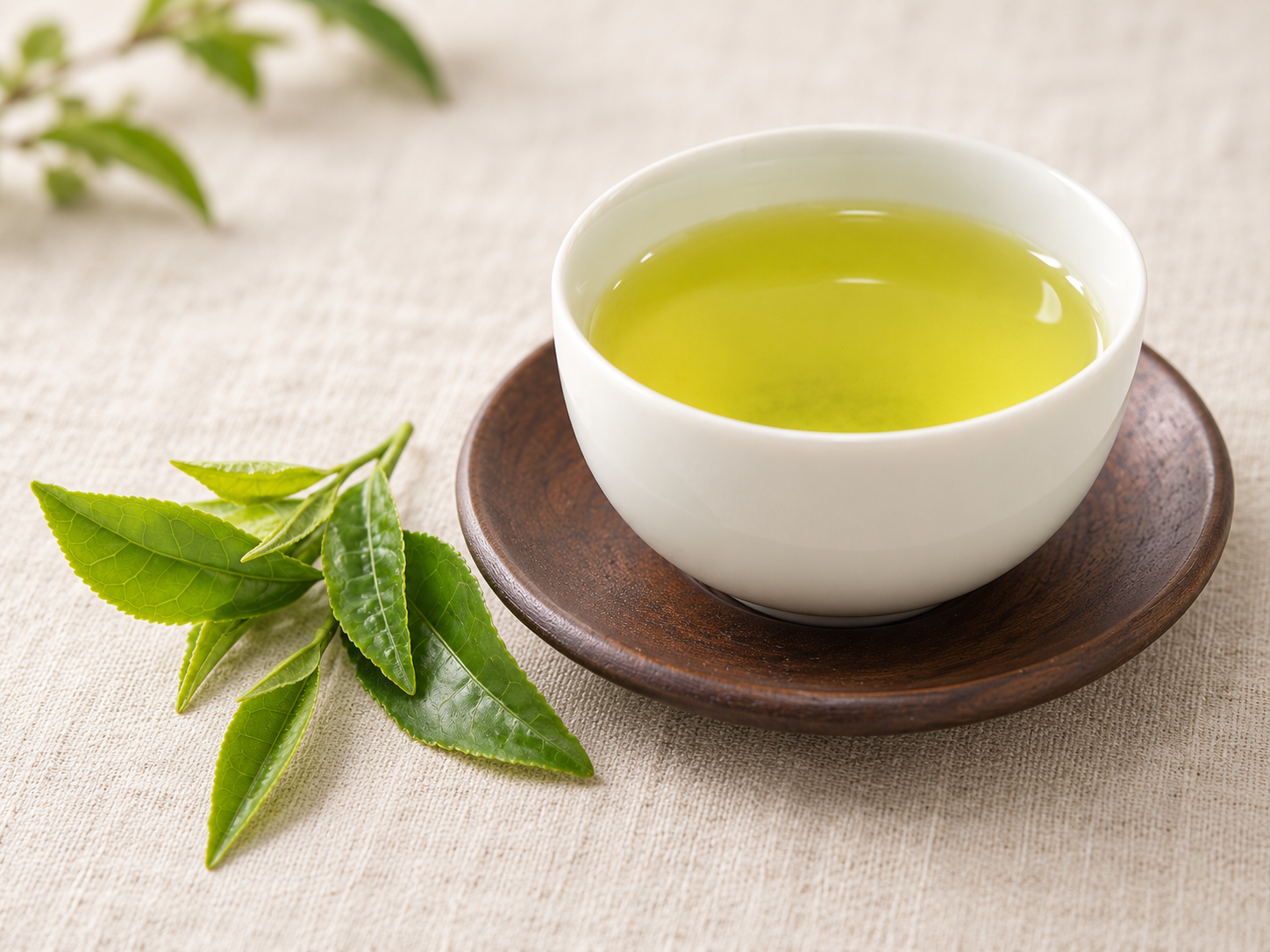
SENCHA
Yamamotoyama Sencha Green Tea Bags
A clean, classic starting point if you want to begin with the most familiar style of Japanese green tea.
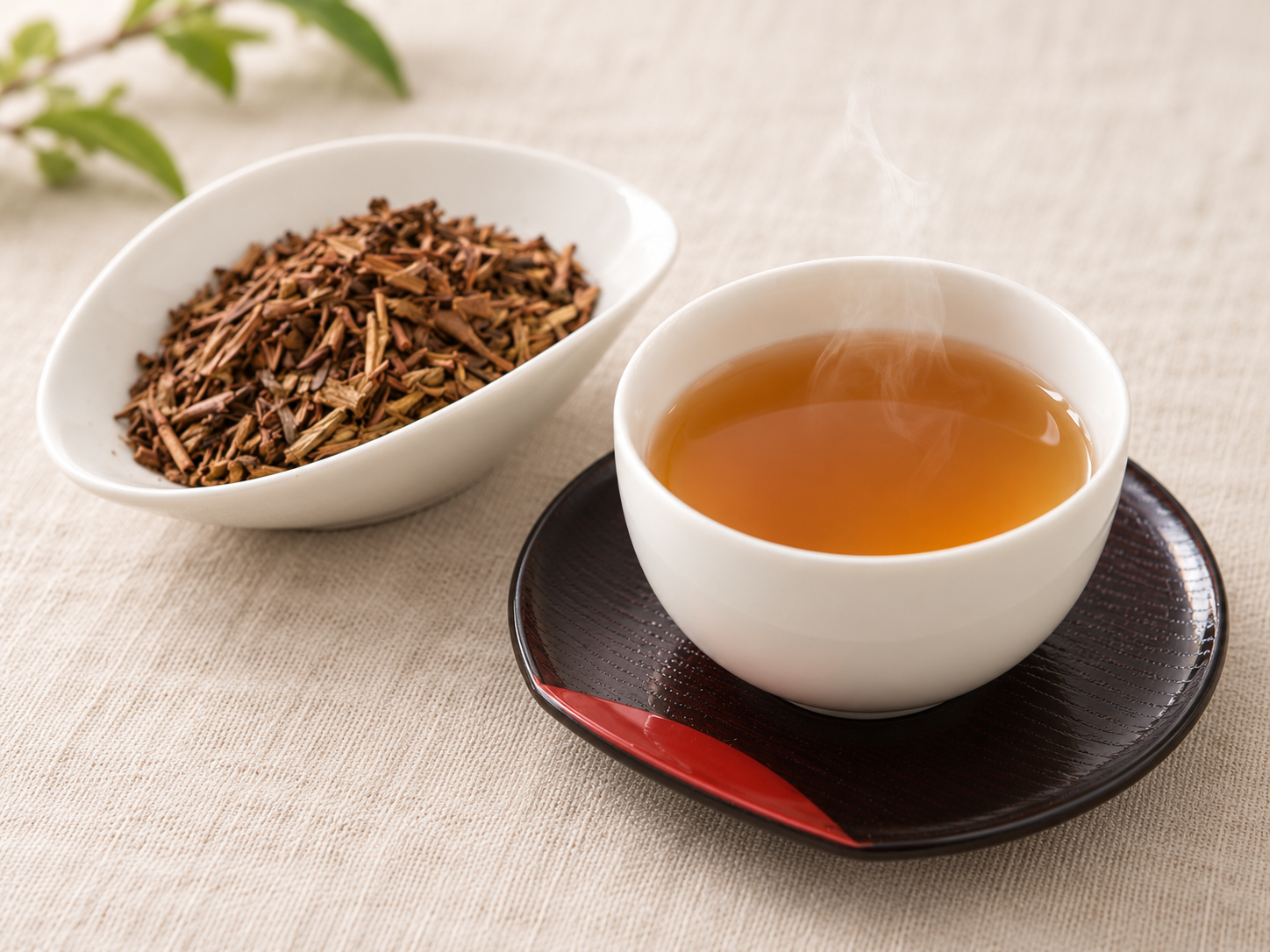
HOJICHA
Yamamotoyama Hoji Cha, Roasted Tea
Warm and toasty, with a very different character from the fresh green flavour of sencha.
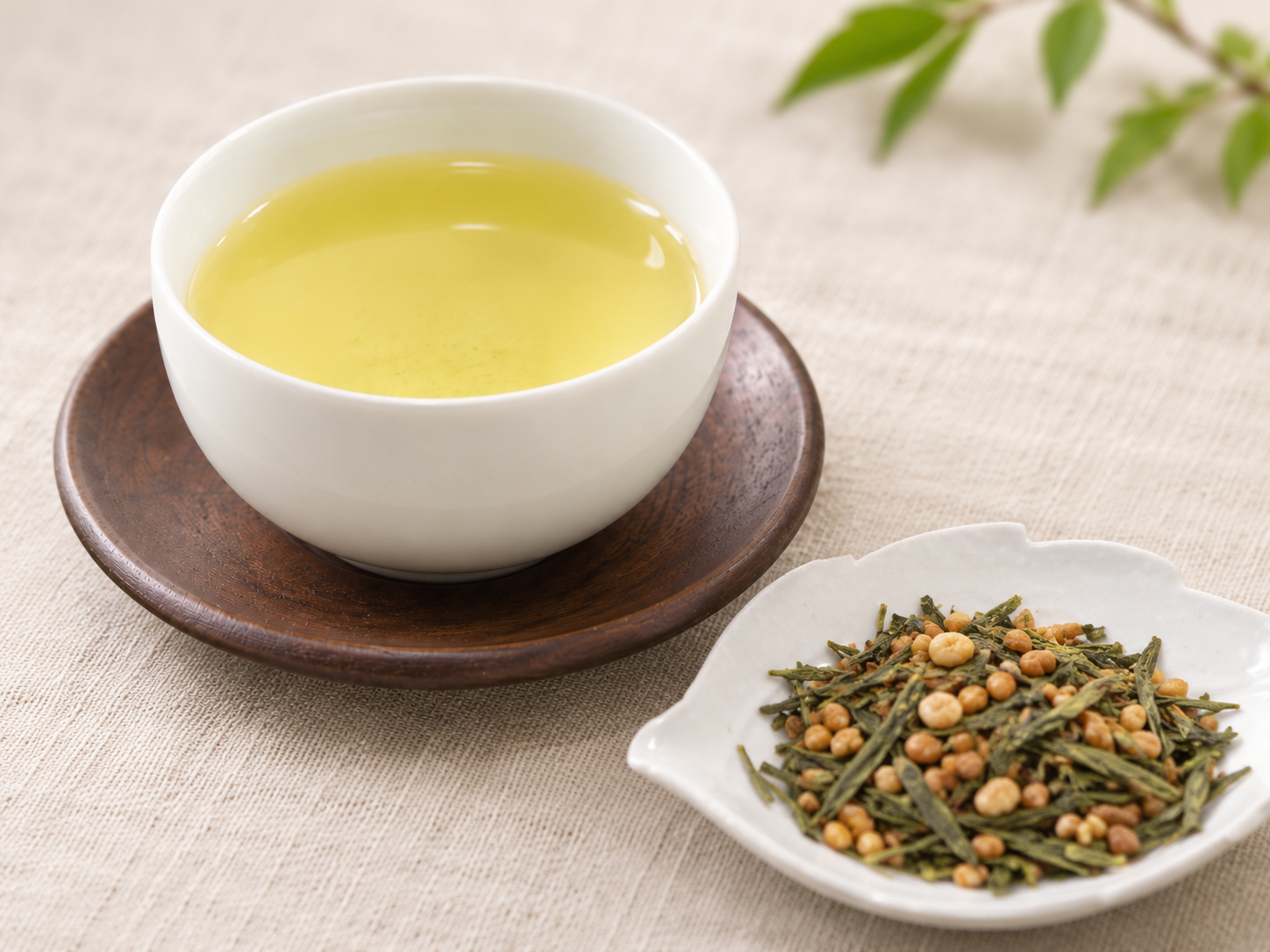
GENMAICHA
Yamamotoyama Genmai-cha Green Tea with Roasted Rice
A useful first choice if you like roasted, savoury aromas alongside green tea.
Gyokuro (玉露) is worth exploring if you are curious about a deeper savoury taste, often called umami (旨味).
The tea bushes are shaded for about twenty days before picking, and gyokuro is usually brewed much more gently than sencha. One classic approach is around 60°C (140°F), using about 80 ml (3 oz) of water for 10 g of leaves and steeping for about 90 seconds. The cooler water and concentrated brew bring forward its sweetness and umami while keeping bitterness in check.040809 It is a tea to explore slowly. You do not have to start with it just because it is expensive.
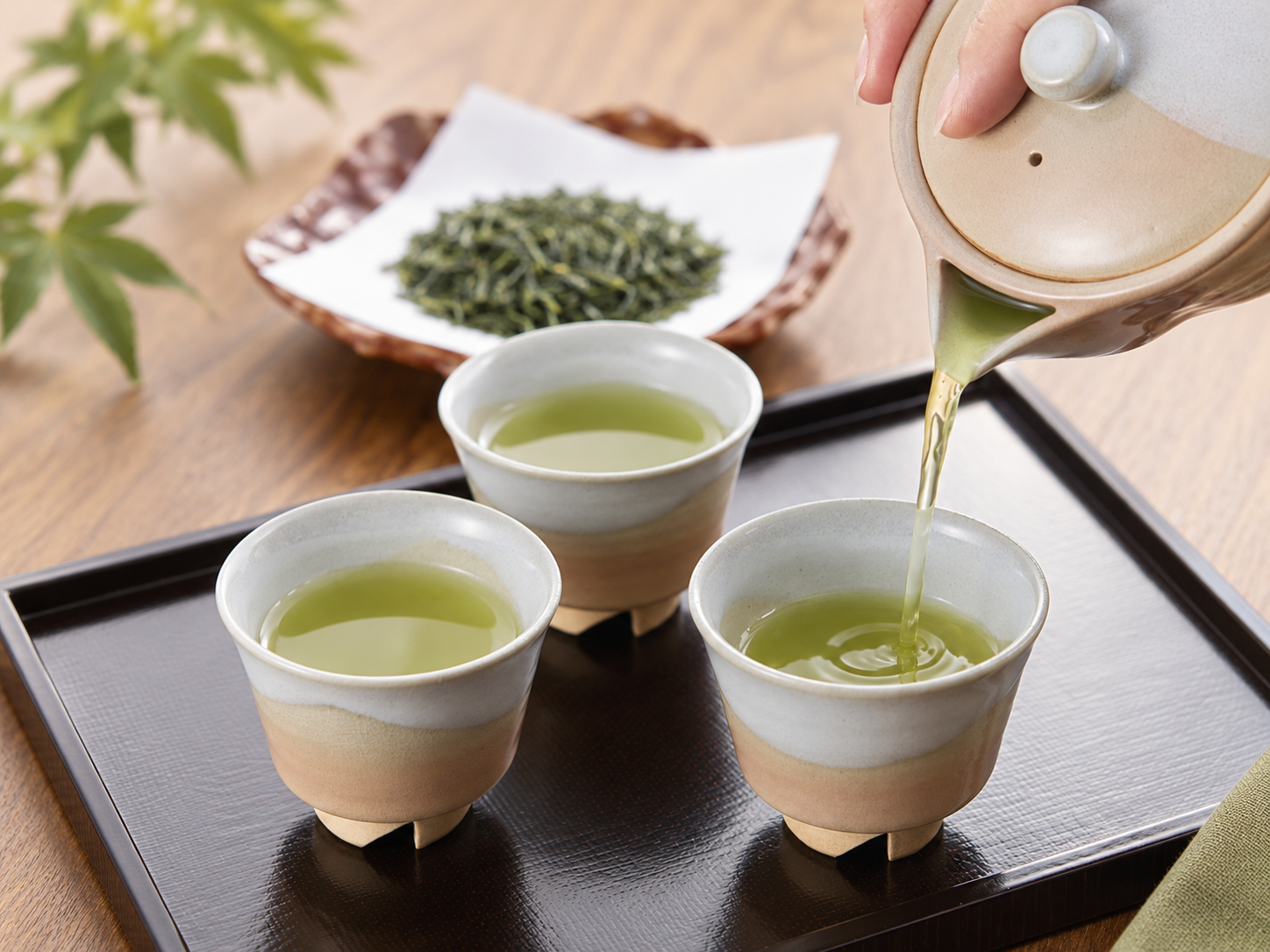
FOR A DEEPER UMAMI EXPERIENCE · AD
Ippodo Kanro Gyokuro, 50g
A good next step if you want to experience the concentrated sweetness and umami that make gyokuro different from an everyday sencha.
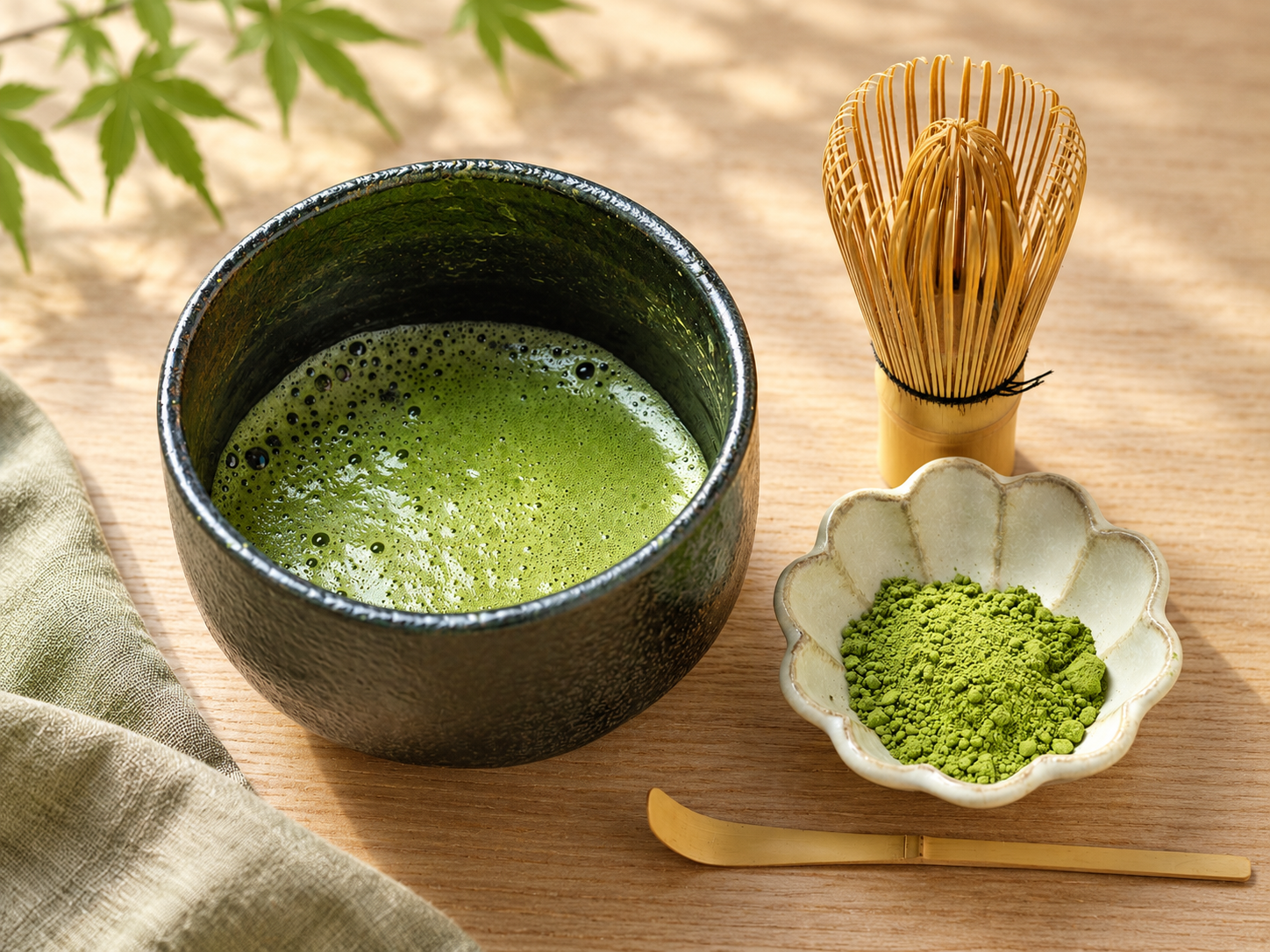
Matcha (抹茶) is famous internationally, but it is not the standard everyday style of tea most commonly drunk in Japan; sencha fills that role.1002
It is made by grinding tencha (碾茶), a shaded tea dried without rolling, into a fine powder.1001
The powder is whisked into hot water rather than steeped and removed, so the preparation and taste are quite different from leaf tea. Matcha is also widely used as a flavour in sweets and sweet café drinks, which can give the misleading impression that matcha itself is sweet. Plain matcha is not sweet; it can be grassy, bitter, creamy and umami-rich depending on the tea and how it is prepared. Choose it if that style of preparation appeals to you. If what you want is a pot of tea to pour into a cup, start with leaves instead.
FOR MATCHA · AD
Aiya Ceremonial Grade Matcha, First Harvest, 30g
For readers who want to try plain whisked matcha rather than a sweetened matcha drink, this is a straightforward place to begin.
Does Japanese tea contain caffeine?
Most Japanese teas made from tea leaves contain caffeine. Decaffeinated versions exist, but they are not the default. In Japan, it is perfectly ordinary to drink tea with or after meals, including dinner, so an evening cup is not unusual. Gyokuro can be comparatively high in caffeine.11
If you want less caffeine, do not assume that hojicha or genmaicha is caffeine-free. Roasting can reduce caffeine in hojicha, and genmaicha often has less caffeine in the cup because part of the blend is roasted rice, but both still contain tea.0411
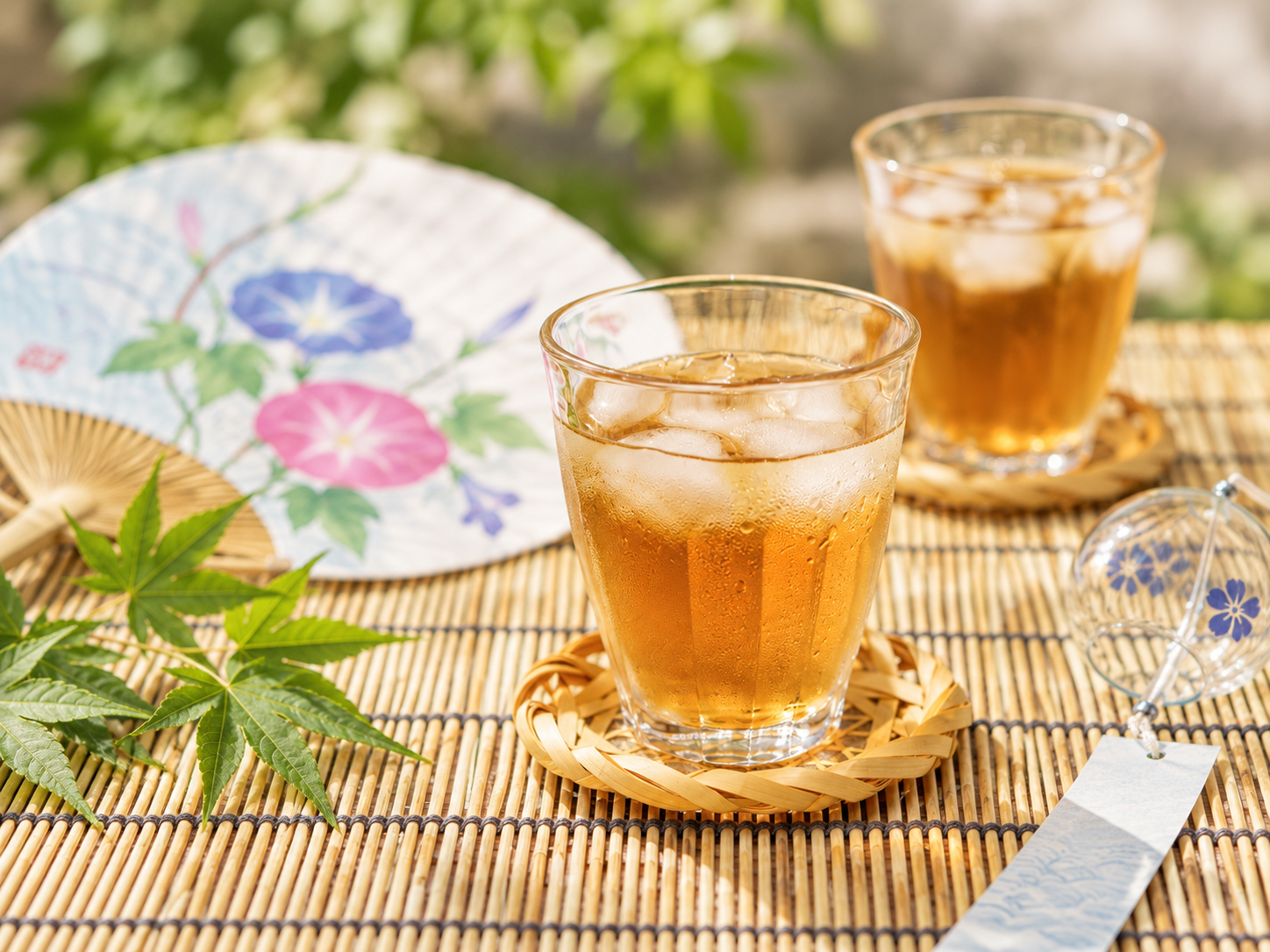
Plain mugicha (麦茶), made from roasted barley rather than tea leaves, is naturally caffeine-free. In Japan it is a very familiar family drink, including for children, and in summer it is often brewed in a large jug and kept chilled in the fridge. It is a useful choice when you want something roasted and refreshing without caffeine. Always check the ingredients of blends.1213
FOR A CAFFEINE-FREE OPTION · AD
ITO EN Kaori Kaoru Mugicha, 54 bags
A practical way to try the chilled barley tea that is so familiar in Japanese homes in summer.
Loose leaves or tea bags?
Loose leaves let you change the amount of tea and water, and try several infusions from the same leaves. Tea bags make preparing and clearing up simpler.
Japanese tea makers sell both. The format alone does not tell you whether a tea is worth drinking.14
For loose tea, you can start with a roomy basket infuser and a cup you already own. What matters is that the leaves have room to open, and that you can separate them from the water when the tea is ready.
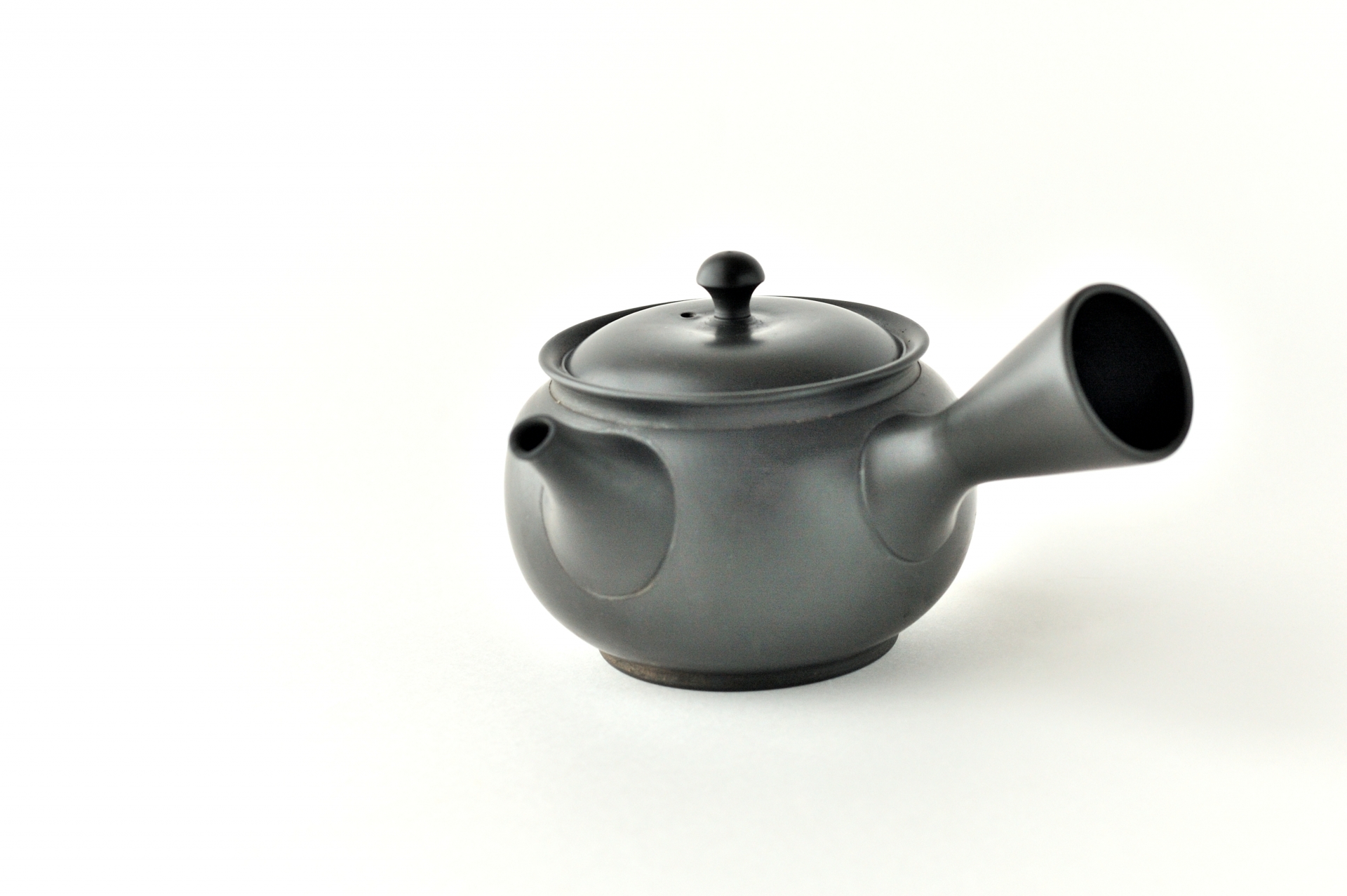
A Japanese teapot, a kyusu (急須), becomes worth buying when you want to drink loose-leaf tea more often—or when you want to prepare tea in the style most commonly used in Japan.
Read the packet before the praise
Words like "premium" and "luxury" tell you less than practical information does. Look for:
- the type of tea and the ingredients
- where the tea was grown, if this is given
- how much tea is in the packet
- brewing instructions for that particular tea
- storage advice and a best-before date.
Tea names describe different things. Sencha is a type of tea. Fukamushi (深蒸し) means the leaves were steamed for longer. Shincha (新茶) is the first tea produced in the spring of that year.10
So one tea can carry several of these names at once. You are not always choosing between separate categories.
For a first purchase, a small packet or a sampler can be more useful than a large bag. It gives you room to discover what you like, without filling a cupboard with tea you feel you have to finish.
Once a packet is open, keep the tea away from direct sunlight, heat, humidity and strong smells. Rolling up the original bag, clipping it shut and keeping it in a suitable cupboard is a sensible start.15
A beautiful tea caddy is optional. Good storage is not.
Let the first cup be an experiment
If your sencha tastes sharply bitter, check how you brewed it before deciding you dislike it.
For many sencha, 70–80°C (158–176°F) is a useful starting range—noticeably cooler than the near-boiling water commonly used for black tea. Too much leaf, water that is too hot, or too long a brewing time can all make the cup stronger than you want. Using less tea, cooler water or a shorter time will make it lighter. Start with the seller's instructions, then change one thing at a time.1718
For a step-by-step method, see How to Brew Sencha.
Water matters too. Japanese tea is traditionally brewed with soft water, and Japan's tap water is generally soft.18 Soft water tends to bring out umami more easily, while harder water can make the flavour crisper and sometimes less rounded.19 If you live in a hard-water area, try comparing your usual water with a softer bottled water. A filter jug can improve taste, but it does not automatically make hard water soft.
A choice that can change with you
Tea came to Japan through connections with China. In 1191, for example, the priest Eisai (栄西) brought tea back from Song China.20
Japanese tea then developed through changes in how it was grown, made and drunk. In 1738, Nagatani Sōen (永谷宗円) in Uji developed a way of steaming tea buds and rolling them by hand as they dried. This became the basis of the steamed and rolled sencha we know today.20

So the tea shelf holds the results of many decisions and adaptations.
You can approach your own choice in the same practical spirit. Notice what works, change what does not, and let your taste develop.
A tea you enjoy making on an ordinary Tuesday has already found a meaningful place in your life.
Try this
Write down the moment when you would most like a cup of tea: something fresh to wake up with, a quiet afternoon pause, or perhaps a caffeine-free mugicha in the evening. Choose one small packet for that moment. Make it three times before you buy another, changing just one brewing detail if you need to.
Sources
[01] Ippodo, Types of Tea
[02] Ministry of Agriculture, Forestry and Fisheries, Types of Green Tea / Sencha
[03] Ippodo, Differences between Sencha Varieties
[04] ITO EN, Types of Japanese Green Tea
[05] Marukyu Koyamaen, Varieties of Tea
[06] Marukyu Koyamaen, Genmaicha products (in Japanese)
[07] ITO EN, Oi Ocha Matcha Genmaicha product information
[09] Ippodo Tea, Standard Gyokuro Brew
[10] Japan Tea Central Association, Green Tea Labelling Standard (in Japanese)
[11] Ministry of Agriculture, Forestry and Fisheries, Caffeine in Foods and Beverages
[12] ITO EN, Mugicha Barley Tea Bags
[13] ITO EN, Healthy Mineral Mugicha — caffeine-free family drink
[14] Marukyu Koyamaen, Teabags and Pot Bags
[15] Ippodo, How Should I Store My Tea?
[16] Metropolitan Museum of Art, Totoya Hokkei, Tea Things
[17] Ippodo, Help, My Tea Is Bitter
[18] Ministry of Agriculture, Forestry and Fisheries, How to Brew Green Tea / Water and Temperature
[19] Ippodo, Is Water Quality Important in Brewing Tea?
[20] Ministry of Agriculture, Forestry and Fisheries, Uji Tea
[21] Metropolitan Museum of Art, Saitō Motonari, Illustrations of Uji Tea Production (1803)
10 Quiet Ways to Bring a Little Japan into Your Everyday Life
Ten quiet invitations to bring Japanese ways of seeing into everyday life.