A cup can change how much tea you pour, how you hold it, and what you notice before the first sip.
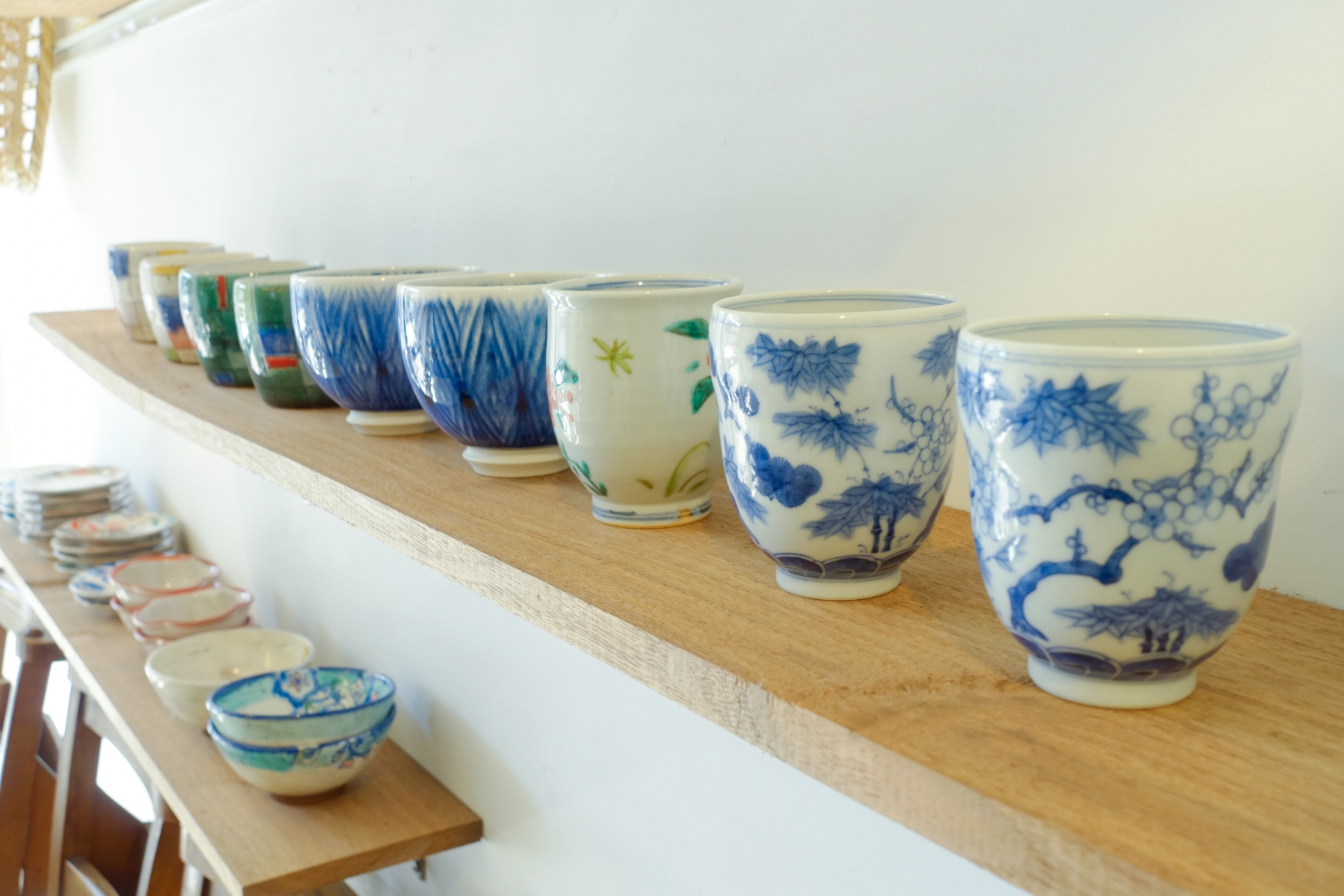
The first surprise may be the missing handle.
You pick up a Japanese tea cup and hold the body itself. Straight away, you notice its size, its surface and its weight.
A photo can show you the colour. Your hand finds out something else.
For everyday tea, the familiar handleless cup is usually called a yunomi (湯呑み). It may be a deep cylinder or a shallower bowl.01
When you choose one, start with your tea and how much you want to drink. Then look at the rim, the weight and how it feels in your hand.
Some links in this guide are affiliate links, which means I may earn a commission if you buy through them.
Yunomi, kumidashi and matcha bowls
Yunomi is short for yunomi-jawan (湯呑み茶碗), a cup for drinking hot tea. Japanese dictionaries describe both deep, cylindrical yunomi and shallower, bowl-shaped ones.01
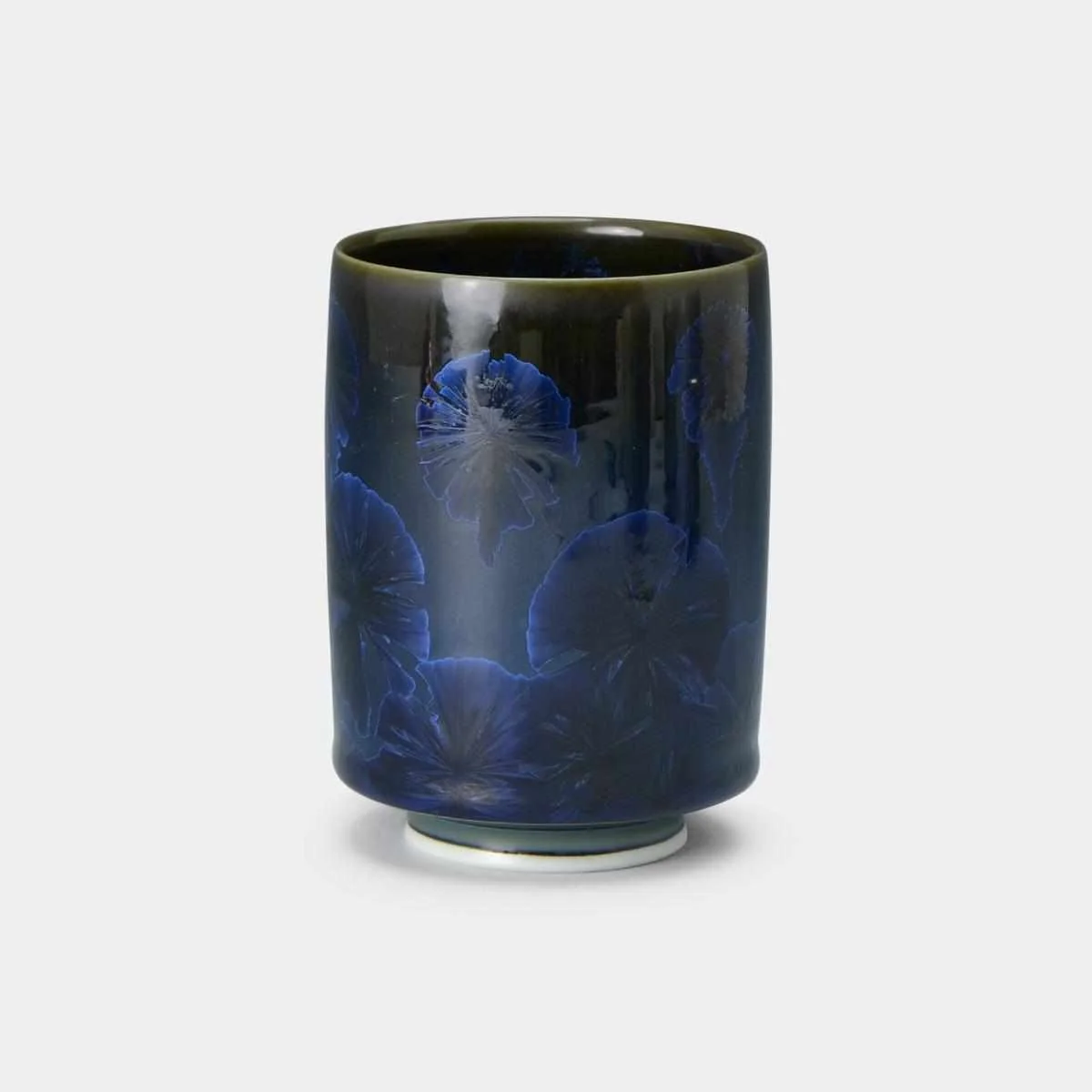
FOR AN EVERYDAY YUNOMI · AD
Touan Flower Crystal (Blue Ink) Yunomi
A handleless Kiyomizu-yaki cup that makes the shape, glaze and feel of a yunomi part of the experience.
Kumidashi (汲み出し) is a name you may meet for a lower, wider cup.
In the tea ceremony, kumidashi were used in the waiting area, to serve guests hot water or kelp tea. The name comes from scooping hot water in the kitchen and bringing it out to the guests.02
A matcha bowl, or chawan (茶碗), belongs to a different way of making tea.
It is the bowl used to make matcha, powdered green tea.03 You don’t need one to drink sencha from a pot.
You can drink leaf tea from a mug you already own. A Japanese cup is a chance to explore another kind of object, not a condition for making tea properly.
Choose the amount you want to drink
A smaller cup works well if you enjoy tea freshly poured, and several infusions from the same leaves. A larger cup makes sense if you like to sit down with more tea at once.
The Global Japanese Tea Association says yunomi commonly hold about 50–150 ml. Smaller cups are used for higher-grade teas, and bigger ones for more casual teas.03
This is not a rule about how Japanese tea must be drunk. Larger cups exist too.
Remember that the capacity on the label may mean the cup filled to the brim. Your comfortable serving will usually be less.
Check it against your pot. The useful question is how much tea you can pour into the cups you actually use.
If you are used to a large breakfast mug, a small yunomi may feel too small at first. Try it as a different way of serving tea, rather than expecting it to do exactly the same job.
Pay attention to the rim and your hand
The rim touches your lips every time you drink. Is it thin, rounded, straight, or slightly turned out? None is best for everyone, but each one feels different.
Think about the width of the cup as well as its height.
Can you hold it comfortably?
Does it feel steady?
Will it be easy to lift when it is full?
A heavier cup may feel reassuring to one person and tiring to another.
When shopping online, look for the weight, height and width. A photo of the cup in someone’s hand can help, but remember that their hand may be a different size from yours.
What changes with the material?
A pale porcelain inside makes it easier to see the colour of the tea. A darker or textured surface may draw your eye to the cup itself. Both can be a pleasure.
Pottery and porcelain each include many kinds of cup. The thickness of the walls, the shape and the glaze all change how a cup feels. So “pottery keeps tea warm” or “porcelain is always delicate” is too simple a rule for shopping.
For an everyday cup, read the maker’s care guidance. Can it go in the dishwasher? Does the maker recommend washing by hand? Are there decorated surfaces that need special care? Cups that look alike can come with different instructions.
What if a cup without a handle is too hot?
Let it cool. You don’t need to put up with an uncomfortable grip to use a cup “properly”.
Don’t fill it to the brim, and find a secure, comfortable place to hold it. The foot ring at the bottom can give you something to hold, but it can get hot too. For very hot tea, a cup with a handle may suit you better.
You may read that if you can’t hold the cup, the tea was brewed wrongly. That is too absolute. Hojicha (ほうじ茶), for example, is brewed with freshly boiled water.04 Comfortable handling and the right brewing temperature are separate questions.
When you serve someone else, choose a cup they can use comfortably. A beautiful cup matters less if your guest is worried about picking it up.
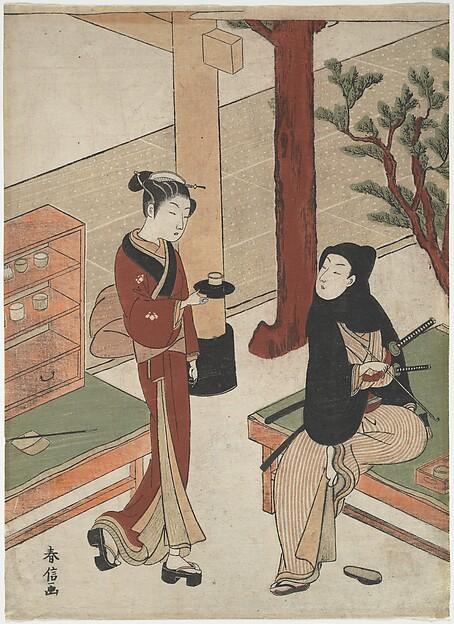
A saucer, a pair or a whole set?
A chataku (茶托) is a small saucer or stand used when serving tea.
The Japanese Tea Instructor Association suggests choosing one to suit the cup: heavy tin for a small, light cup such as one for gyokuro, lacquer for thin porcelain, and plain wood for pottery.06
You don’t need one for every everyday cup at home.
Cups are also sold in pairs of different sizes. Traditionally, the bigger cup was for a man and the smaller one for a woman.03 Choose the sizes that suit the people who will use them. There is no need to decide by gender.
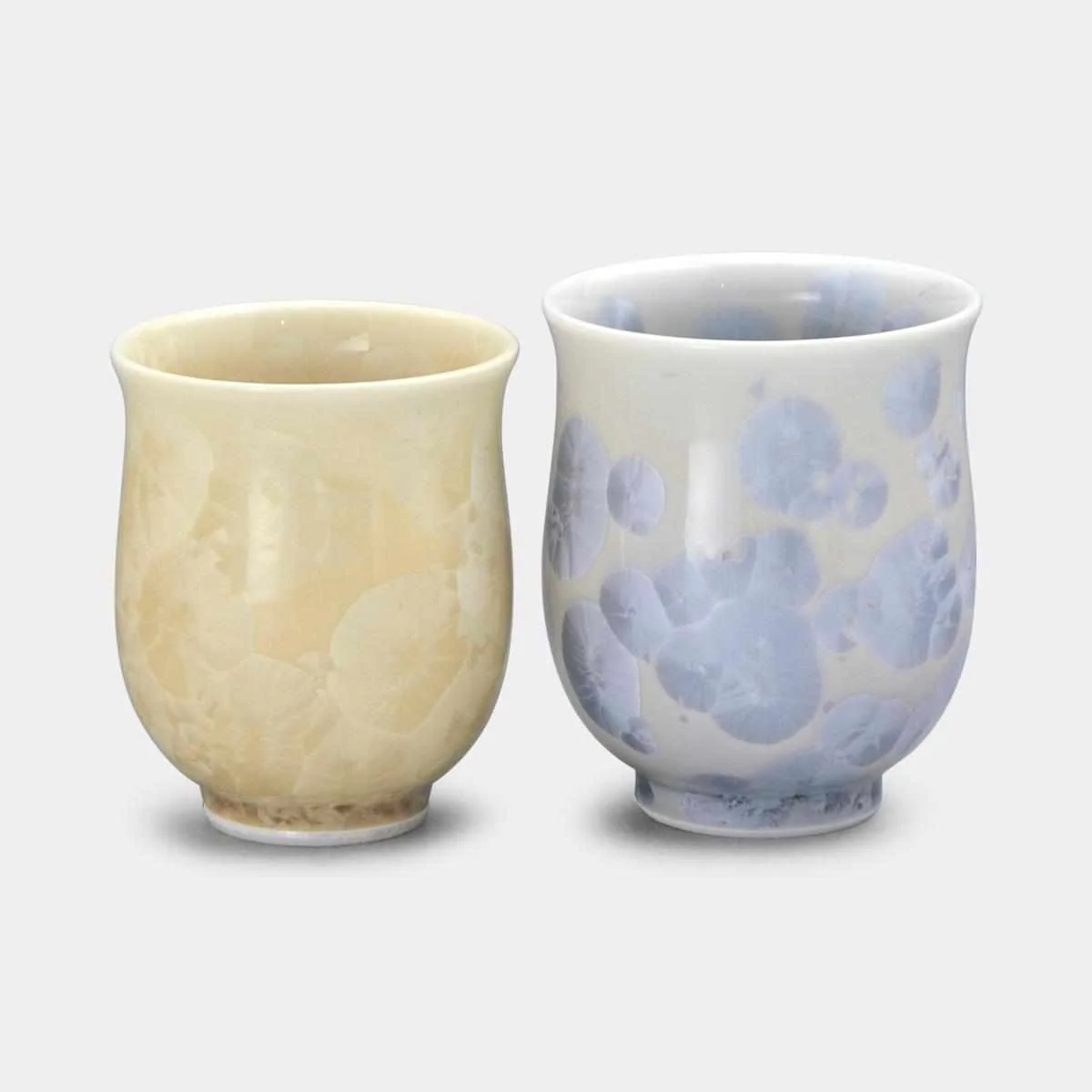
FOR A PAIR IN TWO SIZES · AD
Touan Flower Crystal Silver Flower / Gold Flower Yunomi — 2-piece set
Two different sizes can be useful when two people prefer different amounts of tea. Choose the sizes for the people who will use them, rather than by gender.
Sets of five are traditional too.03 For one person’s daily tea, one cup may be enough. For visitors, a small set can be useful. Think about how often that happens before you buy five cups just because they come together.
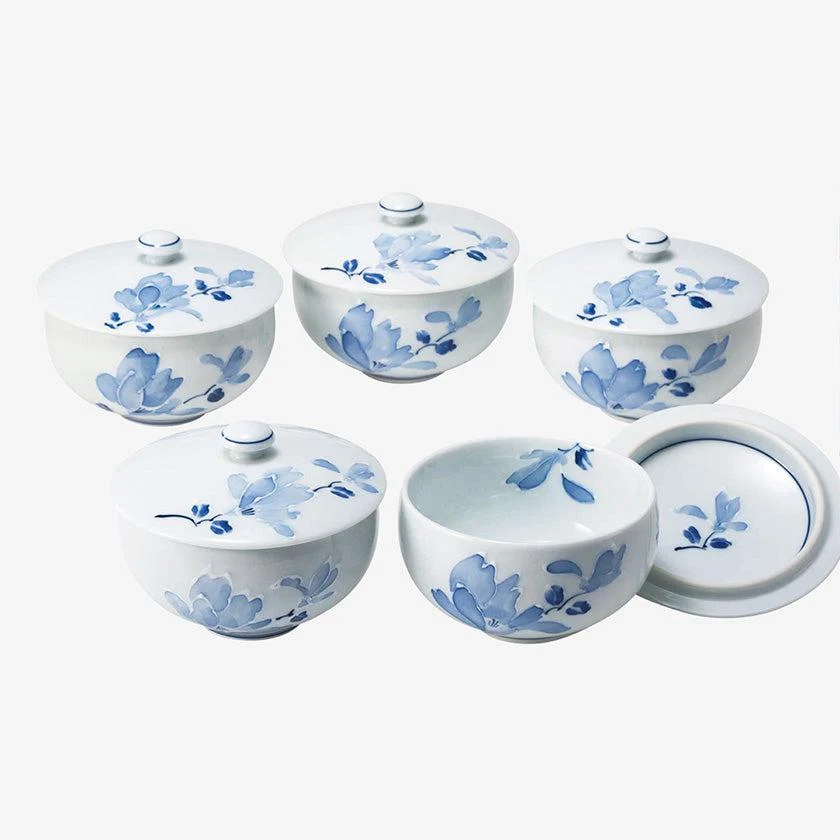
FOR SERVING GUESTS · AD
Saikai Toki Tsujigahana Yunomi with Lids — Set of Five
A five-cup set makes sense if you regularly serve several guests; for everyday tea, one or two cups may be all you need.
Try this
Pour the same tea into two cups you own. Compare the weight, the rim, the colour you can see and the amount you are comfortable drinking. Which difference matters most to you? Use that answer when you choose your next cup.
Sources
[02] Kotobank, Kumidashi-jawan (Digital Daijisen; dictionary of tableware) (in Japanese)
[03] Global Japanese Tea Association, Japanese Teaware
[04] Japan Tea Action, How to Brew Delicious Tea (in Japanese)
[05] Metropolitan Museum of Art, Suzuki Harunobu, Osen Waiting on a Young Samurai (ca. 1770)
[06] Japanese Tea Instructor Association, Hospitality Tips (in Japanese)
10 Quiet Ways to Bring a Little Japan into Your Everyday Life
Ten quiet invitations to bring Japanese ways of seeing into everyday life.