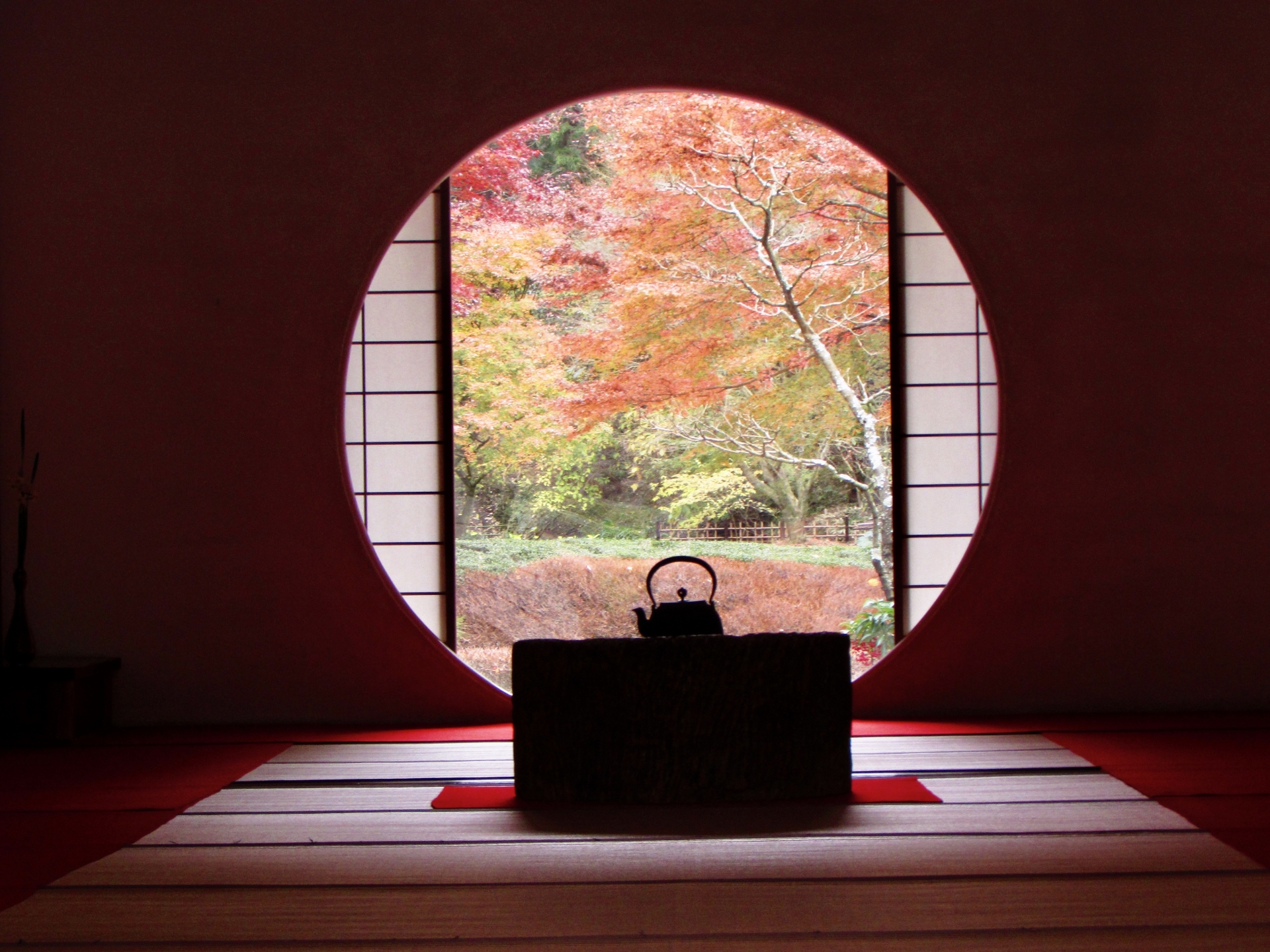
A letter arrives from someone far away, someone you have been anxious about, and for a moment it feels as if they were in the room. Sei Shōnagon (清少納言) wrote that feeling down about a thousand years ago, in The Pillow Book.01
Some books ask you to follow a plot. This one often asks for something smaller: to look closely at a letter, a sound or an awkward visitor. She turns such moments into writing that is quick, exact and often funny. An irritation can arrive on the page with startling freshness. Then a title, a ceremony or a social judgement reminds us how far away her world is.
Both reactions matter. The book is at its best when a familiar feeling turns up in an unfamiliar room, and Shōnagon is better company as herself, sharp edges included, than as a gentle guide to modern wellbeing. To see why, it helps to know what kind of book it is.
(If you would like to try the book yourself, I suggest one English edition further down.)
Lists, scenes and memories: how the book moves
The Pillow Book, Makura no Sōshi (枕草子) in Japanese, is made up of roughly three hundred separate sections. Scholars usually group them into three kinds: lists, short essays and diary-like recollections of court life. These sometimes overlap.0203 A list can lead into a little scene, and a remembered event can reveal a preference.
In Japan, the book is regarded as the first work that fully deserves the name zuihitsu (随筆), a loose, personal kind of prose often translated as “essays” or “miscellany”.04
A list may invite instant agreement. You recognise the feeling, then notice that Shōnagon has drawn a finer distinction than you would have. A longer scene asks you to watch people: who understands a reference, who answers quickly, who has misjudged the occasion.
This makes short reading sessions very satisfying, and it lets you read selectively. Dipping in and out is a fine way to read it. Just remember that the order you read in is yours, not the book’s: the arrangement of the sections, and the differences between editions, still carry meaning.
The world behind the small details
From about 993, Shōnagon served Empress Teishi (定子) at the imperial court in Heian-kyō, today’s Kyoto.05 Her writing lets us into one highly cultivated social circle.
Teishi died in 1000, at the age of twenty-four. The book was completed after her death.0305
So a court anecdote is more than an amusing interruption. It can preserve the intelligence and charm of the woman at the centre of that circle. Scholars have read the book partly as a memorial to Teishi.02 It is worth keeping that reading in mind through the court scenes that follow, rather than treating every passage as a private confession.
The culture of that court was steeped in Chinese literature. In one famous episode, Teishi asks what the snow on Xianglu Peak (香炉峰, Kōrohō in Japanese) is like. Without a word, Shōnagon has the lattice shutters raised and rolls up the blind. She has recognised a line by the Chinese poet Bai Juyi (白居易), in which the poet raises the blind to look at the snow on the peak.0607 The pleasure lies in a shared reference made visible through an action. Without the poem, we see someone adjusting a room. With it, we see wit, learning and a relationship.

The poem did not stay in that room. It became part of an exchange in a Japanese palace, then part of Japanese prose, and, centuries later, a subject for prints. Kitagawa Utamaro, for example, reimagined the scene with samurai-class women of the Edo period.07 Knowledge travels, and its uses change. That is a more interesting story than the familiar idea of a self-contained Japanese sensibility growing untouched out of its own landscape.

The court’s refined pleasures also had limits. Shōnagon can be impatient, dismissive and keenly aware of rank. In one passage, she says that if she hears a servant girl praise a gentleman, she at once thinks a little less of him.01 Some passages make a modern reader uncomfortable. Her attention does not belong equally to everyone she sees. Keeping that discomfort in view lets us read more honestly: beautiful observation and social exclusion can share the same page.
Notice the judgement as well as the object
When you come to a list, ask two questions. What has she noticed? And what has she decided about it?
These are different acts. A sound may be described accurately, but whether it is delightful, tiresome or out of place depends on circumstances and taste. The categories tell us about the writer as much as about the things inside them.
Think back to the letter at the start. In a world of instant messages, the passages about letters are especially rewarding. You can recognise the experience while also imagining a different kind of paper, a different journey and a slower rhythm of exchange.01
One person, in particular circumstances, has described something you can partly understand. That is a firmer place to start than pretending nothing has changed.
Choose an edition you can actually read
If you would like to read The Pillow Book yourself, there are several English translations to choose from. Some are selections rather than the complete work, so it is worth checking the translator and edition.01
For a first reading, I recommend the Penguin Classics edition translated with notes by Meredith McKinney (2006). It is a complete translation, and its notes help explain the people, poems and court customs in Shōnagon’s world.09 You can begin with this one book rather than comparing every translation before you start.
If possible, open a sample. Try a short list and a court scene. Can you follow the prose, and are the notes easy to consult? Once you have the book, you can read a little at a time, check a note when it helps, and then return to the writing. A second bookmark for the notes can be useful with a printed copy.
Some links in this guide are affiliate links. If you buy through them, Japan in Small Ways may earn a commission at no extra cost to you.
As an Amazon Associate I earn from qualifying purchases.

FURTHER READING · AD
The Pillow Book
Sei Shōnagon
Translated with notes by Meredith McKinney
Penguin Classics
Our short guide to Japanese literature can help you place the book on a wider map.
Try a list of your own
After reading, take an ordinary sheet of paper and write a heading, such as “Small things that improve a morning” or “Things that make a room feel unfinished”. Add five observations.
Make them concrete. “Peace” is a large, abstract word. “The sound of the kettle before anyone speaks” gives a reader something to hear. You don’t need to copy Shōnagon’s categories exactly, and you don’t need Japanese paper or a brush. Writing your own list is a different activity from copying a text by hand, and both are worth trying.
Then look at your list again. Which entries are observations, and which reveal your preferences? Who might find the same thing irritating? That second question stops noticing from turning into a claim that your own taste is universal.
Read this way, The Pillow Book shows Japan through the textures of one particular life: rooms, weather, writing, literary references and social encounters. It does not speak for a whole country, and it does not need to. Shōnagon, sharp edges and all, can draw our attention to the small judgements that shape our own days.
Sources
[01] Project Gutenberg, The Pillow-Book of Sei Shōnagon, translated by Arthur Waley (1928)
[03] Kotobank, Makura no Sōshi 枕草子 (in Japanese)
[04] Kotobank, Zuihitsu 随筆 (in Japanese)
[05] Kotobank, Sei Shōnagon 清少納言 (in Japanese)
[06] The Costume Museum (風俗博物館), Kyoto, 香炉峰の雪 (The Snow of Xianglu Peak) (in Japanese)
[09] Penguin, The Pillow Book, translated with notes by Meredith McKinney (Penguin Classics, 2006)
10 Quiet Ways to Bring a Little Japan into Your Everyday Life
Ten quiet invitations to bring Japanese ways of seeing into everyday life.