Arita, Hasami, Kutani, Bizen… Japanese pottery names can feel like a maze. This guide explains not only what each region makes, but how its history shaped the objects you see today.
Start looking at Japanese tableware, and before long you begin to meet names.
Arita. Hasami. Kutani. Bizen. Hagi. Shigaraki. Mino.
At first, it isn't always clear what they mean. Are they styles? Brands? Materials? Kinds of decoration?
Usually, the answer begins with a place.
The word yaki (焼き) comes from yaku, "to fire", and is also short for yakimono (焼き物), fired ware.01 So in a name such as Arita-yaki or Bizen-yaki, it simply means "ware from Arita" or "ware from Bizen".
But a place name on Japanese ceramics can tell you much more than where something was made.
It can carry a story of local clay and imported technology, of craftspeople moving from one part of Asia or Japan to another, of feudal lords supporting kilns, of tea masters changing ideas of beauty, of overseas trade creating new tastes. And sometimes, of a modern town trying to make its own name visible again.
This is not a complete list. Japan has far more pottery regions than one guide could cover. Nor is it a list you need to memorise.
Think of it instead as a map. Once you understand why these places developed differently, the names on Japanese tableware become much easier to read.
First: pottery, porcelain and "Japanese pottery"
In English, "Japanese pottery" is often used loosely to mean all Japanese ceramics. Strictly speaking, that includes both pottery and porcelain.
Porcelain tends to be harder and denser, and is often whiter or more translucent. Pottery is usually made from different clays, and can have a warmer, more earthy surface.
If you want to feel that difference in an everyday object, our guide to choosing a Japanese rice bowl looks at porcelain and pottery in the hand.
For now, just remember that a famous Japanese yaki may be known for pottery, for porcelain, or, in some regions, for both.
Porcelain traditions: when white clay became a canvas
1. Arita / Imari ware — Saga
Porcelain · white body · blue-and-white · coloured overglaze decoration
If you want to understand the history of Japanese porcelain, Arita is one of the most important places to begin.
According to the Saga Ceramics Industrial Association, the history of Arita porcelain began in 1616. A Korean potter, Yi Sam-pyeong (李参平), found white porcelain stone at Izumiyama in Arita and succeeded in firing white porcelain for the first time.02
Before this, the most popular porcelain in both Japan and the West was made in China.03
The story did not stop at Japan's borders. When Chinese porcelain exports stopped around 1644, Dutch traders switched to buying Japanese porcelain instead.03 From 1653, large amounts of Arita porcelain were exported to Europe and elsewhere by the Dutch East India Company.04
This is why you will meet both Arita and Imari. Porcelain from Arita and the kilns around it was shipped out through the nearby port of Imari, and came to be known by that name.03
The Kakiemon style, with its distinctive overglaze colours and designs, inspired European makers including Meissen in Germany.03 Copies of exported Japanese porcelain were also made in places such as Meissen and Delft.04
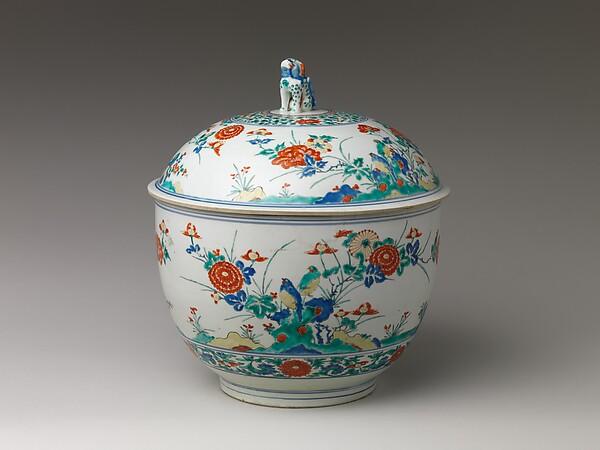
So Arita is not simply a "traditional Japanese style". Its history moves outward and inward: Korean craft knowledge, Chinese porcelain, Japanese development, European demand, and new forms made in response.
Modern Arita continues that pattern. In 2016, for the 400th anniversary of Arita porcelain, the 2016/ project brought together the skills of Arita potteries with 16 international designers.06 Exchange is not only something that happened four hundred years ago.
Some links in this guide are affiliate links. If you buy through them, Japan in Small Ways may earn a commission at no extra cost to you.

OBJECT IN FOCUS · AD
2016/ Christian Haas Bowl 180 Pink
2016/ · Christian Haas · Arita porcelain · Saga, Japan
German designer Christian Haas worked with Arita makers to rethink a familiar bowl. Its unglazed exterior and three-point support make the region’s continuing exchange of ideas visible in the object itself.
2. Hasami ware — Nagasaki
Porcelain · everyday tableware · flexible design · division of labour
Hasami has a rather unusual story.
Its porcelain has been part of everyday Japanese life for around four hundred years. In the Edo period, inexpensive Hasami bowls, known as kurawanka bowls, helped spread porcelain as everyday tableware among ordinary people.07
Today, Hasami is still a major producer of Japanese tableware. A Nagasaki Prefecture text has noted that it accounts for 13% of Japan's shipments of Japanese-style tableware by value, the third largest in the country.08 Local maker Maruhiro describes how a division of labour, with specialists for each stage of production, lets the town produce large quantities.09
And yet, for a long time, people didn't necessarily know the dishes they used came from Hasami.
In the Edo period, Hasami ware was sold as "Imari ware", after the shipping port. From the Meiji era onward, it was sold as "Arita ware", after the railway station it was shipped from. In other words, much of what was sold as Imari or Arita ware was actually made in Hasami.08
This creates an interesting difference in perspective. A Japanese person may have grown up using tableware made in Hasami without ever thinking about the name of the town. A design lover overseas today, on the other hand, may first meet HASAMI as a clearly presented design name.
Modern brands have put the place name at the centre of their identity. Maruhiro's HASAMI brand, for example, launched its SEASON 01 everyday collection in 201010, and has worked with House Industries, an American design studio known for typography.11
So Hasami is a useful reminder that a "traditional craft name" is not always something people have been consciously using for centuries.
Sometimes the objects were there first. The name became visible later.
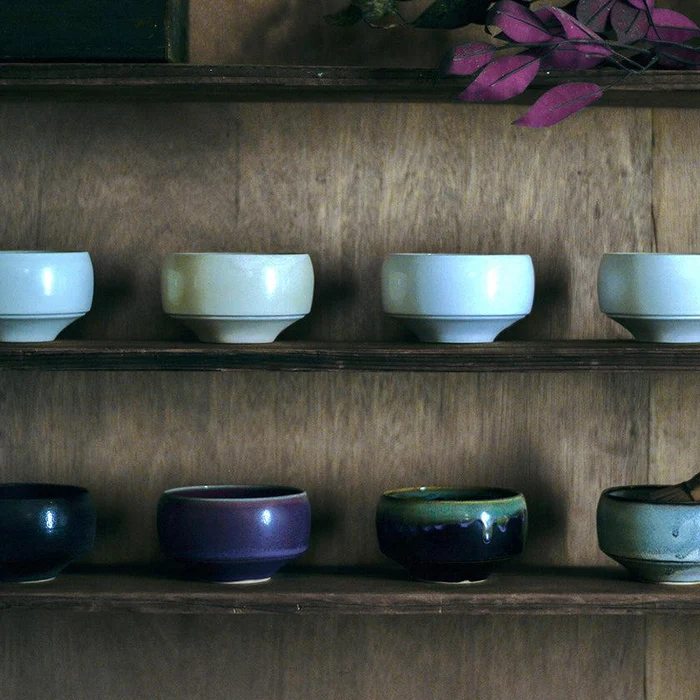
OBJECT IN FOCUS · AD
HAKU Bowl Blue
J.Flavor × Saikai Toki · Hasami ware · Nagasaki, Japan
The HAKU bowl is a compact, practical form for rice or a side dish. Seen alongside other everyday bowls, it shows how Hasami keeps adapting familiar tableware to contemporary life.
3. Mikawachi ware — Nagasaki
Also known historically as Hirado ware
Porcelain · very fine blue-and-white work · handwork · extraordinary technical detail
Mikawachi is less widely known today than Arita, even in Japan.
But if you collect older Japanese porcelain outside Japan, another name may sound more familiar: Hirado.
In the Edo period, Mikawachi ware was called Hirado-yaki (平戸焼), after the Hirado domain. Today it is called Mikawachi-yaki (三川内焼), after the production area in Sasebo.12
Its beginnings again show how mobile ceramic culture was.
One strand began with a Korean potter, Koseki, brought back by the Hirado lord Matsura Shigenobu after Hideyoshi's invasions of Korea. Another came from Karatsu potters who settled in what is now Mikawachi. In 1637, the Hirado domain made Mikawachi its official kiln.13
That support mattered.
The domain's generous backing allowed Mikawachi to set aside profit and concentrate on fine workmanship. Techniques such as openwork and relief carving developed. Until around 1789–1800, Mikawachi ware was made only as gifts, and selling it was strictly forbidden.13
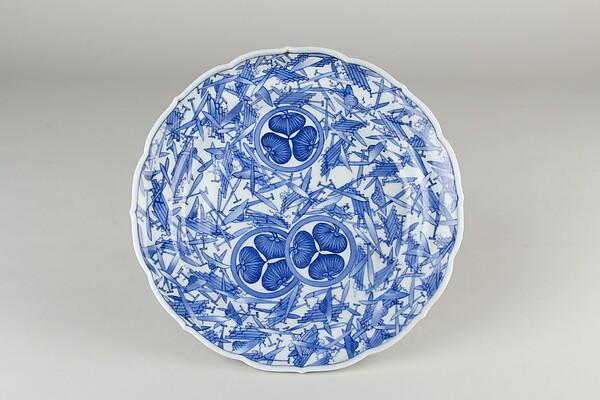
Exports began around 1831, including coffee cups and wine cups in pure white, ultra-thin porcelain known as "eggshell". After the Second World War, Mikawachi could not keep up with the move to mass production. But as a result, its traditional techniques were preserved and are still used today.13
That history is still visible in contemporary work. Some Mikawachi pieces need a level of hand painting that simply takes time.
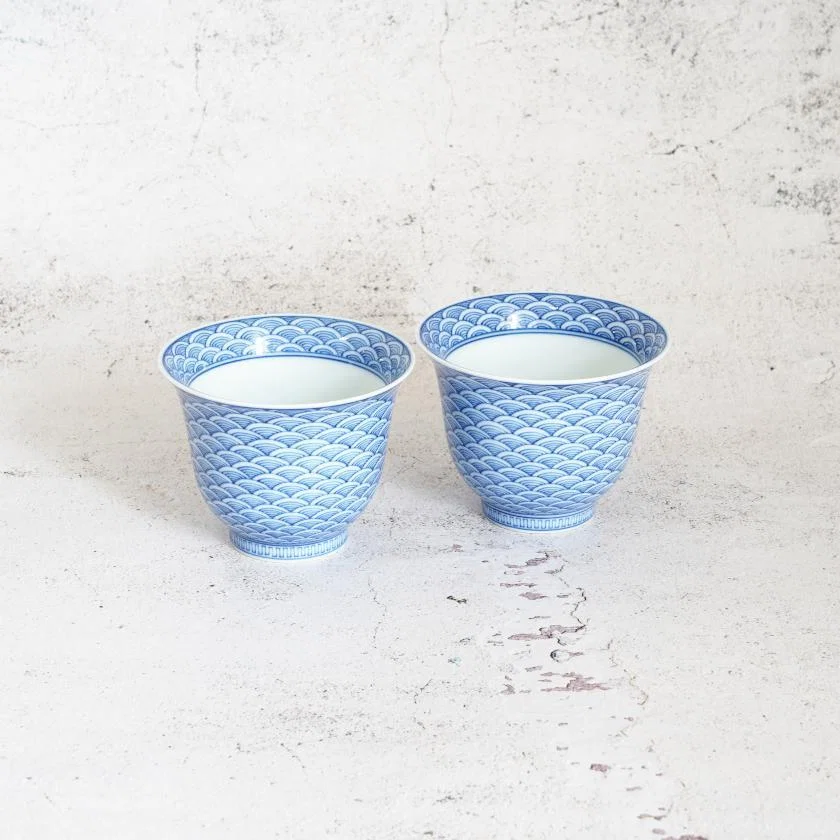
See Mikawachi ware in use · AD
Hirado-Seigaiha 2-piece Sencha Cups
Hirado Shozan · Mikawachi porcelain · Nagasaki, Japan
This is an especially good example for JISW because it lets readers see the labour immediately: the blue wave pattern is built from fine repeated brushwork across white porcelain.
4. Kutani ware — Ishikawa
Porcelain · bold colour · overglaze painting · a tradition reinvented again and again
Kutani is one of the easiest Japanese porcelain traditions to recognise. Colour is everywhere.
But the interesting question is not simply what colours does Kutani use? It is:
Why did Kutani become so colourful?
Kutani porcelain began in 1655, after porcelain stone was found in the area, using techniques newly brought from Arita.15 Its palette of green, yellow, purple, dark blue and red is now called Kutani gosai (九谷五彩), "the five colours of Kutani".16
Then the original kilns closed around 1700. For about a hundred years, Kutani was not made at all.16
When Kutani was revived in the early nineteenth century, it did not simply copy the past. In 1807, the Kyoto potter Aoki Mokubei (青木木米) was invited to Kanazawa to help restart production.17 Later kilns developed their own styles, with the technical guidance of Kyoto potters. In the Meiji era, Kutani found new opportunities in exports to Europe and America.15
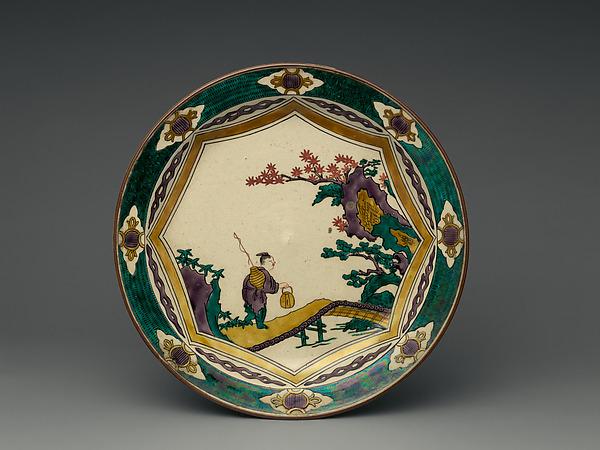
So the strong colours we now think of as "typically Kutani" are not evidence of a sealed local tradition untouched by the outside world. They are almost the opposite.
Kutani has taken in new techniques, people and tastes again and again, and turned them into something recognisably its own.
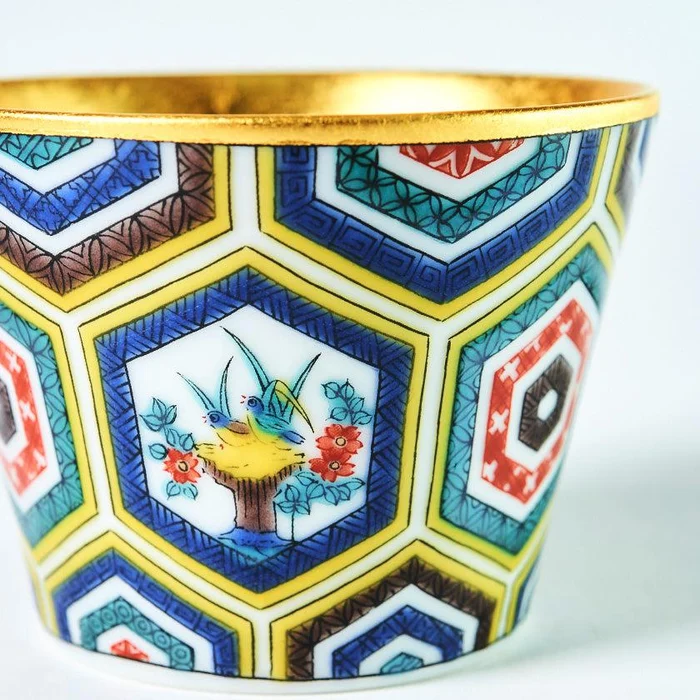
OBJECT IN FOCUS · AD
Old Kutani Dish
Hakuichi · Kutani ware · Ishikawa, Japan
The close-up makes Kutani’s colour story tangible: yellow, turquoise, blue, purple and red sit within strongly drawn outlines. Hakuichi adds a gold-leaf interior, bringing another Ishikawa craft into this contemporary object.
The Six Ancient Kilns: clay, fire and daily life for centuries
You will often see the term Six Ancient Kilns of Japan: Rokkoyō (六古窯).
It refers to six production areas where pottery has been made from the Middle Ages to the present day: Echizen, Seto, Tokoname, Shigaraki, Tamba and Bizen. The name was given by the ceramics scholar Koyama Fujio around 1948, and the six were recognised as Japan Heritage in 2017.19
It is a historical grouping of long-running production areas, not a ranking of Japan's "best six".
Each developed differently.
5. Bizen ware — Okayama
Stoneware · unglazed · earth, flame and ash
Bizen may be the clearest contrast to highly decorated porcelain.
There is no painted picture to look at, and no bright overglaze colour. Bizen ware is fired at a high temperature without glaze and without painting.20
That means fire itself becomes part of the decoration.
Where a piece is placed in the kiln, and the conditions of the firing, change its colour and markings.21 Ash that settles on the pot can melt into spots known as goma (胡麻), "sesame".22
This is one reason Bizen feels so immediate. You are not only seeing what the potter drew or painted. You are seeing the record of a process the potter could guide, but never completely control.
Bizen ware was also among the first Japanese ceramics thought suitable for the tea ceremony.22 There, irregular surfaces and the presence of the material could be seen as qualities rather than faults.
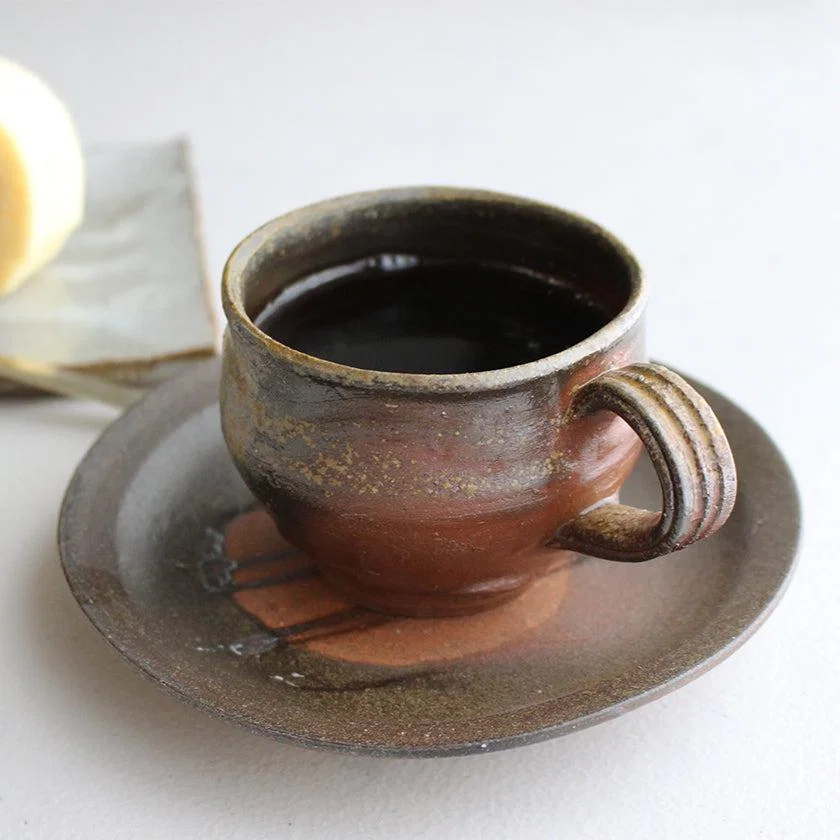
See Bizen ware in use · AD
Naoto Tsuneki Coffee Cup & Saucer
Naoto Tsuneki · Bizen ware · Okayama, Japan
A particularly good current BECOS example is Naoto Tsuneki’s Bizen coffee cup and saucer. Each piece is shaped individually and fired without paint or glaze, so the way it is packed in the kiln and the heat of the kiln give every cup its own pattern and colour.
This is a good example because it also shows that an ancient pottery tradition does not have to remain tied to an ancient use. Bizen can become your everyday coffee cup.
6. Shigaraki ware — Shiga
Coarse clay · natural ash glaze · fire colour
Shigaraki pottery makes the material itself hard to ignore.
It is known for coarse-grained clay that resists fire well.23 In the kiln, ash from the firewood can settle and melt into a natural glaze, and the clay can take on reddish patches called "fire colour", hi-iro (火色).24
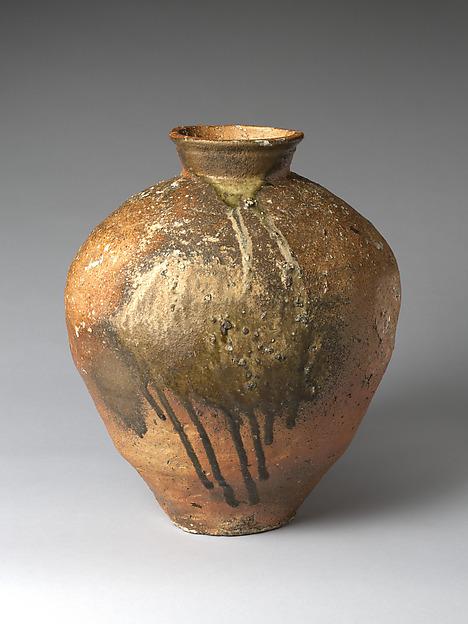
Over the centuries, Shigaraki has made water jars and seed jars, then tea utensils, and later everything from charcoal braziers to building tiles.24
And then there are the tanuki.
Visit Shigaraki, and you will see ceramic tanuki (raccoon dog) figures everywhere. Their link with the town grew in the twentieth century. In the early 1950s, tanuki figures by the Shigaraki potter Fujiwara Tetsuzō were part of the welcome for Emperor Shōwa's visit. Their cheerful faces made them popular good-luck symbols, and many business owners place one at the entrance to their shop or restaurant to encourage prosperity.26
That popular history sits on top of a much older pottery tradition. The same town now known for cheerful tanuki has been making ceramics for centuries.
7. Tokoname ware — Aichi
Pottery · iron-rich clay · jars, building ceramics and kyusu
Today, many tea lovers meet Tokoname through one object: the kyusu (急須), the Japanese teapot.
But Tokoname's history is much larger than tea.
It goes back to the end of the Heian period, and Tokoname is one of the Six Ancient Kilns. Over the centuries it has made sutra burial jars, storage jars, tea and flower-arranging utensils, everyday tableware, and, from the Meiji era, earthenware pipes, washbasins, toilets, tiles and flowerpots.27
That changing list tells us something about pottery towns. A production area does not necessarily survive by making the same thing forever. Tokoname adapted its skills and clay to what people needed.

The iron in its clay fires to a red colour.27 Vermilion clay, shudei (朱泥), is famous as one of Tokoname's most representative products.28 Red-clay tea utensils are actually a relatively recent part of Tokoname's history, made from the late Edo to the early Meiji period onward.27
So when you look closely at a Tokoname kyusu, remember that it belongs to a much longer history of practical ceramics. We look at how to choose one in How to Choose a Kyusu.
8. Seto ware — Aichi
Pottery and porcelain · remarkable technical range · one of Japan's great ceramic centres
Seto is hard to reduce to a single look. That may be because its influence has been so broad.
In Japanese, setomono (瀬戸物), "things from Seto", came to mean ceramics in general.29 That shows how closely Seto became linked with ceramics themselves.
From the late Heian to the Muromachi period, Seto was the only one of the Six Ancient Kilns to make deliberately glazed pottery, known as ko-Seto.19 In the nineteenth century it also began making porcelain.30
That breadth is useful for beginners to understand.
Some production areas are memorable because they have an instantly recognisable surface. Seto is almost the reverse. Its story is about a ceramic centre that kept taking in new materials and techniques, and kept producing.
So rather than asking, "What does Seto ware look like?", it may be more useful to ask, "Why was Seto able to make so many different things?"
9. Echizen ware — Fukui
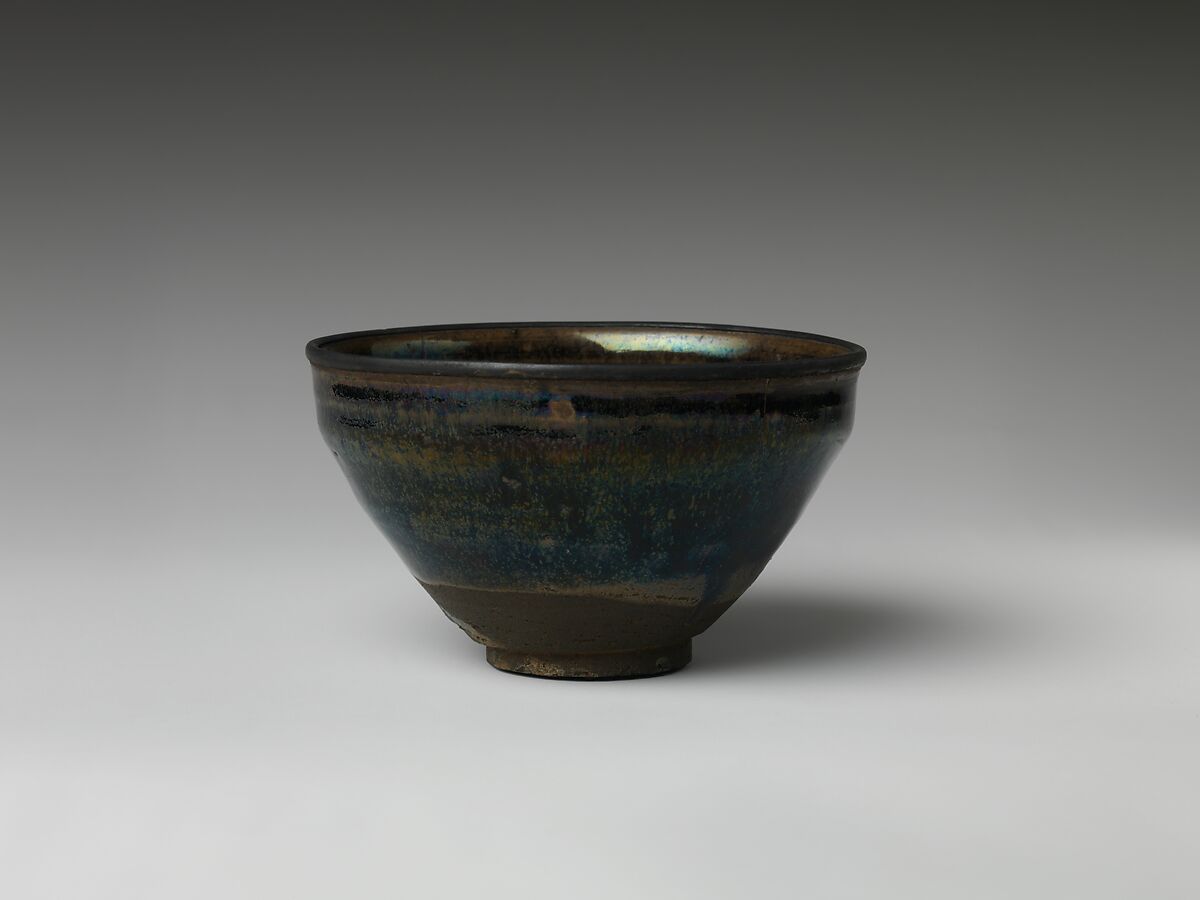
Pottery · jars and practical vessels · natural ash glaze · an old region becoming newly diverse
For much of its history, Echizen made things people needed.
Jars. Pots. Mortars. Sake bottles.31
More than 200 old kiln sites have been found in the area, and pottery was fired there from the late Heian period onward. When ash falls on the pots in the kiln, it can form a yellowish-green natural glaze.31
But modern Echizen has changed. After the Echizen Pottery Village was founded in 1971, young potters came from all over Japan, and the look of Echizen ware changed.31 Today, many techniques and personal styles exist side by side.

There is something rather appealing about that. A pottery town can keep its clay and history without asking every potter to repeat the same past.
10. Tamba Tachikui ware — Hyogo
Pottery · everyday vessels · ash effects · a long, unbroken link with daily life
Tamba's story is quieter. That is part of what makes it interesting.
Its kilns were opened more than 800 years ago, at the end of the Heian period. The main products were first jars and pots. In the Edo period, under the guidance of tea masters such as Kobori Enshū, Tamba also made many fine tea utensils.32 Yet throughout its history, Tamba has kept making mainly everyday wares.32
In its climbing kiln, noborigama (登り窯), ash from the pine firewood falls on the pots and melts into the glaze, so each piece comes out differently. Tamba also keeps a rare kick-wheel tradition: the wheel is kicked with the right foot and pulled with the left, so it turns anticlockwise.32
But perhaps the most important thing to notice is less dramatic. Tamba stands for the continuity of ordinary things.
A tradition does not have to survive because its objects become museum pieces. Sometimes it survives because people keep needing cups and plates.
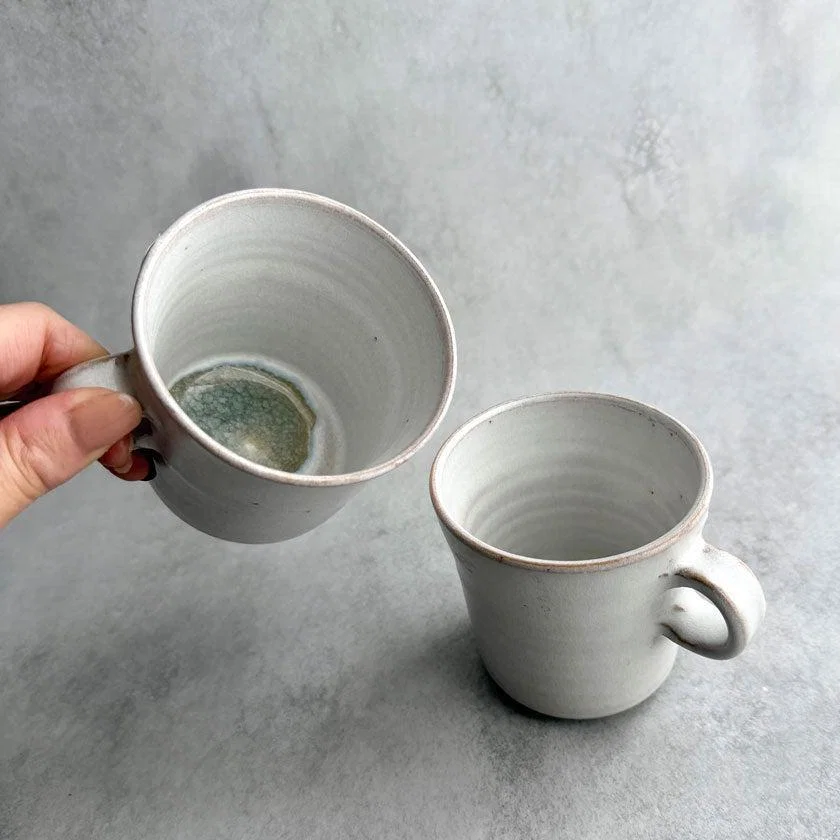
See Tamba ware in use · AD
SHINSUIGAMA Glass Glaze Mug
Shinsuigama · Tamba ware · Hyōgo, Japan
Tea, patrons and the changing meaning of beauty
11. Hagi ware — Yamaguchi
Pottery · soft glazes · porous clay · a vessel that changes with use
Hagi ware grew from the skills of Korean potters. The lord Mōri Terumoto, who had gone to Korea with Hideyoshi's armies, returned with two Korean potters, the brothers Ri Shakkō (李勺光) and Ri Kei (李敬). When the Mōri moved their castle to Hagi, Ri Shakkō was allowed to open a kiln there to make wares for the lord. This was the beginning of Hagi ware.33 The Mōri arrived in Hagi in 1604.34
Hagi has been highly valued for the tea ceremony ever since.34
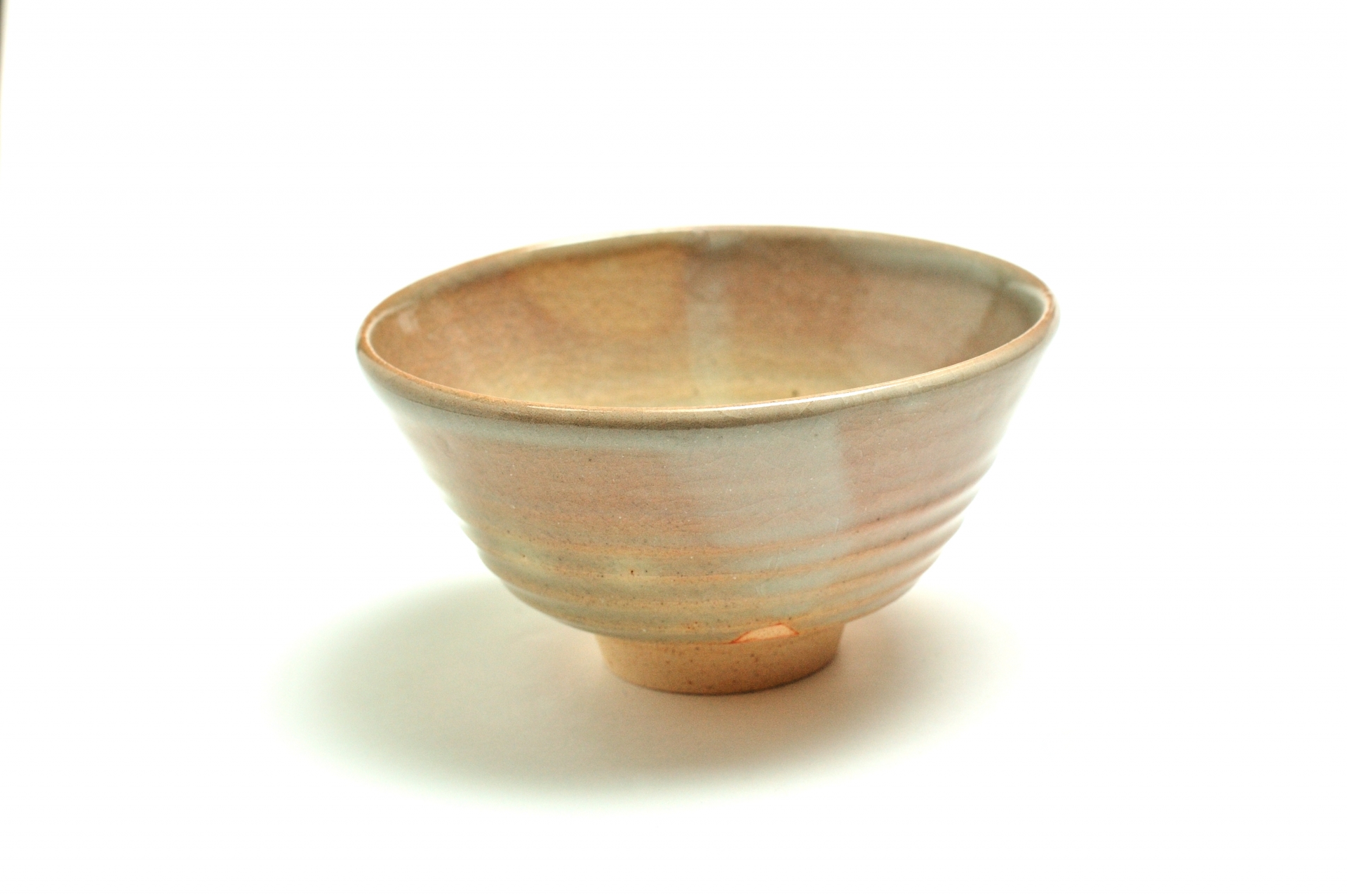
Its surfaces are often quiet rather than dramatic: soft whites, warm earth tones, fine crackle in the glaze.
But the most interesting part may be what happens after you buy it.
The crackle in the glaze and the porous clay let the pot absorb tea as it is used, and its colour changes over time. Hagi ware is said to go through as many as seven changes of colour, known as nanabake (七化け).35
In other words, the piece you buy is not necessarily the piece you will have ten years later. Use becomes part of the object.
That is a very different idea of perfection from hoping something will stay untouched forever.
12. Karatsu ware — Saga
Pottery · iron brushwork · earthy surfaces · everyday ware and tea culture
Karatsu, like Arita, is in Saga Prefecture in northern Kyushu. Arita Town is even one of the official Karatsu ware production areas.36
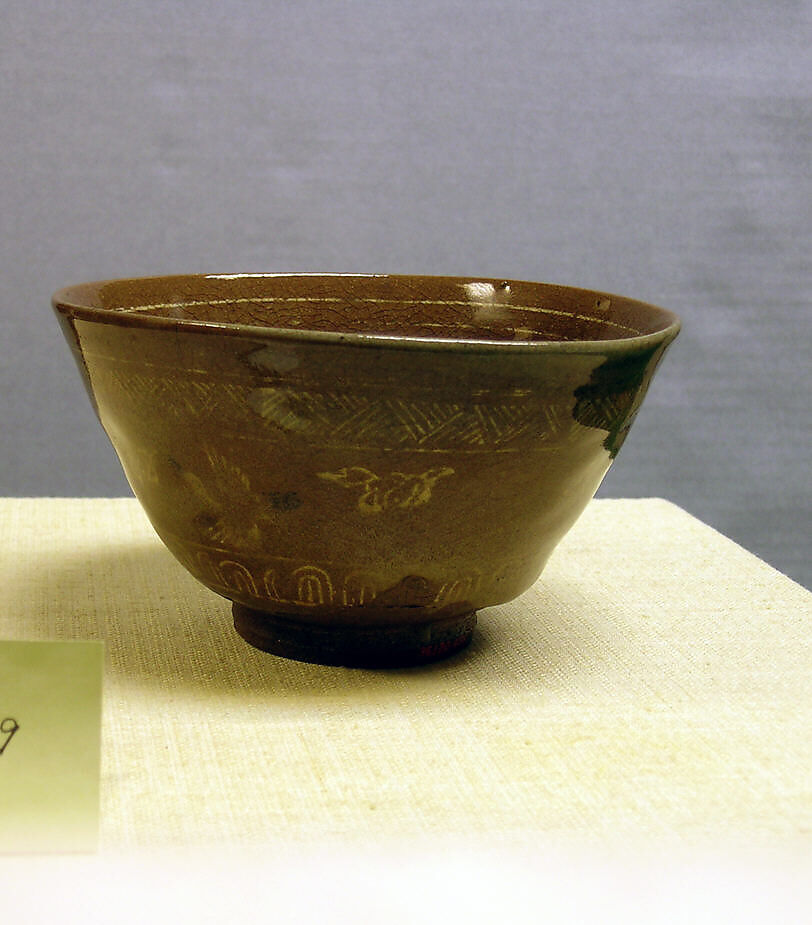
Visually, however, they can feel like different worlds. Where Arita became famous for white porcelain and refined decoration, Karatsu stayed closely tied to clay, glaze and brushwork.
Its beginnings are often linked with the Korean potters who came after Hideyoshi's invasions of Korea (1592–98), and production certainly grew after that. But a jar dated 1592 shows that Karatsu kilns were already working before then.37
In the Edo period, Karatsu's everyday wares spread not only across Kyushu but throughout western Japan.36 They became so common that in western Japan karatsu-mono (唐津物) came to mean ceramics in general.37
At the same time, Karatsu won an important place in tea culture. Its tea bowls are said to be one of the three most valued types, alongside Raku and Hagi.36
That combination is worth noticing. A ware could be admired by tea masters and still be used by ordinary households.
13. Kyo ware / Kiyomizu ware — Kyoto
Pottery and porcelain · extraordinary variety · shaped by a cultural capital
Kyoto is a reminder that a great pottery centre doesn't always begin with plenty of local clay.
In fact, porcelain stone and clay are not dug in Kyoto. They are brought in from places such as Amakusa in Kumamoto and Shigaraki in Shiga.38
Kyoto Prefecture puts it this way: because Kyo-Kiyomizu ware has no single defining feature, unlike the unglazed Tamba or Bizen ware or the red enamels of Arita, it can be free and varied.39
In the seventeenth century, master potters such as Nonomura Ninsei and Ogata Kenzan appeared in Kyoto.38 Early Kyoto potters also made copies of Chinese, Korean and Seto tea wares, and found their way forward through tea utensils.40
This makes Kyoto different from a place where the local clay explains much of the pottery's character. Here, the concentration of culture, and especially tea, is part of the raw material.
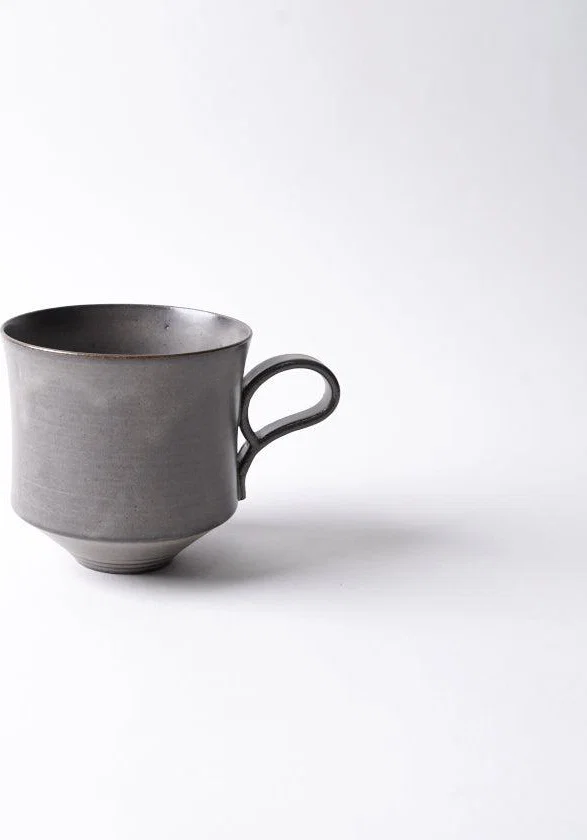
See Kyo/Kiyomizu ware in use · AD
FUUU Easy-to-Hold Mug Gray
FUUU / TOHKEN-GAMA · Kyoto-Kiyomizu ware · Kyoto, Japan
Regions that refuse to fit into one style
14. Mino ware — Gifu
Pottery and porcelain · enormous variety · Shino, Oribe and much more
Mino may be the most dangerous Japanese ceramic name to memorise as if it were one style. It is not.
Its history goes back more than 1,300 years, beginning with Sue ware techniques brought from the Korean Peninsula. In the Heian period, ash-glazed pottery began to be made. From the Azuchi-Momoyama to the early Edo period, as the tea ceremony rose, Mino made pottery that reflected the tastes of tea masters.41
Within Mino are styles such as Shino, Oribe, Ki-Seto and Seto-guro, which can look completely different from one another.41
That variety is not a problem to solve. It is the point.
Mino became a vast ceramic world rather than one look. That makes it a very useful region for seeing why Japanese pottery names should not be treated like paint colours.
"Mino" tells you something important about where and how an object was made. It doesn't tell you exactly what it will look like.
See Mino ware in use · AD
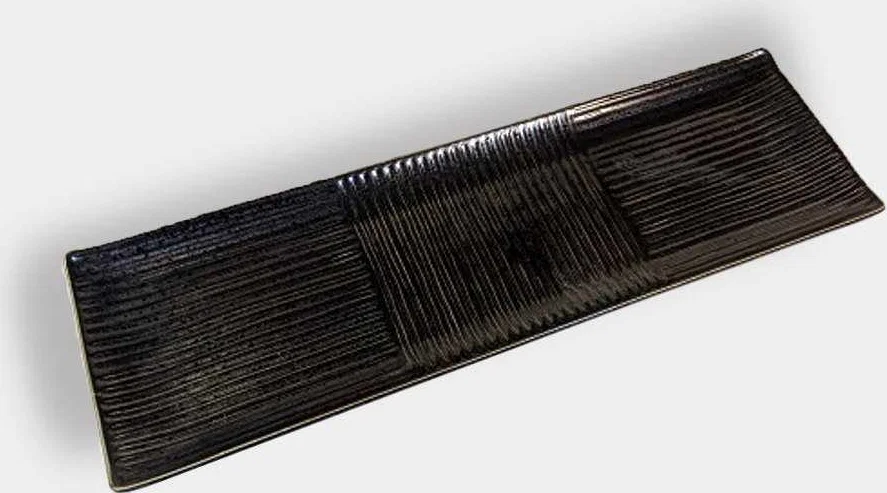
Kushime Saury Plate, Black
Marumo Kato Pottery · Mino ware · Gifu, Japan
15. Mashiko ware — Tochigi
Pottery · everyday origins · Mingei · a living community of makers
Mashiko is much younger than the Six Ancient Kilns.
Its first kiln was opened around 1853 by Ōtsuka Keizaburō, who had learned from the potters of nearby Kasama.43 With the support of the local domain, early Mashiko ware was made for kitchens in Edo, today's Tokyo.44
Then, in the twentieth century, Mashiko gained another identity.
In 1924, the potter Hamada Shōji (濱田庄司) settled in Mashiko, and the town flourished.43 The following year, Yanagi Muneyoshi, together with Hamada and Kawai Kanjirō, gave the name mingei (民藝) to everyday crafts made by unknown craftspeople, drawing attention to their beauty.45
Mashiko therefore raises an interesting question:
How old does a tradition need to be before we call it traditional?
Today, Mashiko has around 260 kilns and about 50 pottery shops, and many potters, from young makers to veterans, have set up their kilns there.46 Mashiko is not a town where everyone makes the same brown pot.
Tradition here has continued partly by letting new makers in.
How to use this guide when choosing Japanese tableware
You don't need to remember all fifteen names. Instead, begin by noticing what draws you.
If you enjoy clean white porcelain and detailed decoration, you might start with Arita or Mikawachi.
If you like colour and painting, Kutani offers something entirely different.
If you respond to clay, fire and irregular surfaces, look more closely at Bizen or Shigaraki.
If you like the idea that an object can change through years of use, Hagi may speak to you.
If you are drawn to tableware that grew out of ordinary everyday life, Hasami, Tamba and Mashiko each tell a different version of that story.
And if you think you like "Mino ware", keep looking. You may find that what you actually love is Oribe, while someone else loves Shino, even though both belong to the same region.
The names are useful only when they help you see more.
A name is the beginning of the story
A pottery name is more than a label on an object.
It can be a clue to geography, trade, political patronage, technology and changing tastes. And sometimes to a modern effort to make an old production town visible again.
Perhaps the most interesting thing about Japanese ceramics is how rarely their histories are completely isolated.
A Korean potter moves to Kyushu.
Chinese porcelain changes what Japanese craftspeople want to make.
A tea master changes what people consider beautiful.
A feudal lord supports a kiln that doesn't need to make a profit.
A Dutch merchant carries porcelain to Europe.
A Kyoto potter travels to another region.
A nineteenth-century pottery town becomes part of a twentieth-century craft movement.
A town whose name Japanese shoppers barely noticed becomes a design name overseas.
The objects remain local. But their histories are full of movement.
Once you begin to see those connections, Arita, Hasami, Kutani or Bizen stop being names to memorise. They become different ways of seeing how objects, people and places have shaped one another over time.
Sources
[01] Kotobank, Yaki 焼き (in Japanese)
[02] Saga Ceramics Industrial Association, Arita-yaki / Imari-yaki
[03] Japan Tourism Agency Multilingual Commentary Database, History of Arita Ware
[04] Pottery Day (Yakimono no Hi), Arita Ware
[05] Metropolitan Museum of Art, Tureen with Rocks, Flowers, and Birds (18th century)
[06] 2016/ (Saga Prefecture, Arita Porcelain 400th Anniversary Project), About the Project
[07] Pottery Day (Yakimono no Hi), Hasami Ware
[08] Nagasaki Prefecture, Ceramics Training Text: Hasami Ware (in Japanese)
[09] Maruhiro, About Hasami Ware
[10] Maruhiro, Maruhiro Store (HASAMI SEASON 01)
[11] Maruhiro Journal, House Industries (in Japanese)
[12] Mikawachi Ceramics Industry Cooperative, What Is Mikawachi Ware?
[13] Mikawachi Ceramics Industry Cooperative, History
[14] Metropolitan Museum of Art, Dish with Rafts, Bamboo Hats, and Tokugawa Family Crest (ca. 1680–1720)
[15] Ishikawa Prefectural Kutani-yaki Art Museum, For Foreign Visitors
[16] Japan Tourism Agency Multilingual Commentary Database, Ko-Kutani (in Japanese)
[17] Kotobank, Kutani-yaki 九谷焼 (in Japanese)
[18] Metropolitan Museum of Art, Dish, Kutani ware (mid-19th century)
[19] Six Ancient Kilns of Japan (Japan Heritage), About
[20] Okayama Prefecture Tourism Federation, Bizen Ware (in Japanese)
[21] Okayama Prefecture Tourism Federation, Bizen Ware, page 2 (in Japanese)
[22] JAANUS, Bizen-yaki
[23] Shiga Prefecture, Shigaraki Ware
[24] Association for the Promotion of Traditional Craft Industries, Shigaraki Yaki (Japanese page)
[25] Metropolitan Museum of Art, Large Storage Jar (Ōtsubo), Shigaraki ware (late 15th century)
[26] Japan Tourism Agency Multilingual Commentary Database, Tanuki Figures of Shigaraki
[27] Association for the Promotion of Traditional Craft Industries, Tokoname Yaki
[28] Aichi Prefecture, Tokoname Ware (in Japanese)
[29] Kotobank, Setomono 瀬戸物 (in Japanese)
[30] Six Ancient Kilns of Japan (Japan Heritage), Seto
[31] Association for the Promotion of Traditional Craft Industries, Echizen Yaki
[32] Association for the Promotion of Traditional Craft Industries, Tamba Tachikui Yaki (Japanese page)
[33] Association for the Promotion of Traditional Craft Industries, Hagi Yaki (Japanese page)
[34] Kotobank, Hagi-yaki 萩焼 (in Japanese)
[35] Japan Tourism Agency Multilingual Commentary Database, Hagi Ware (Kikuya Residence)
[36] Association for the Promotion of Traditional Craft Industries, Karatsu Yaki
[37] Kotobank, Karatsu-yaki 唐津焼 (in Japanese)
[39] Kyoto Prefecture, Kyo-yaki / Kiyomizu-yaki profile (in Japanese)
[40] Kotobank, Kyo-yaki 京焼 (in Japanese)
[41] Association for the Promotion of Traditional Craft Industries, Mino Yaki
[43] Kotobank, Mashiko-yaki 益子焼 (in Japanese)
[44] Association for the Promotion of Traditional Craft Industries, Mashiko Yaki
[45] The Japan Folk Crafts Museum (Nihon Mingeikan), About
[46] Japan Patent Office, Regional Collective Trademark No. 5595844: Mashiko-yaki (in Japanese)
10 Quiet Ways to Bring a Little Japan into Your Everyday Life
Ten quiet invitations to bring Japanese ways of seeing into everyday life.