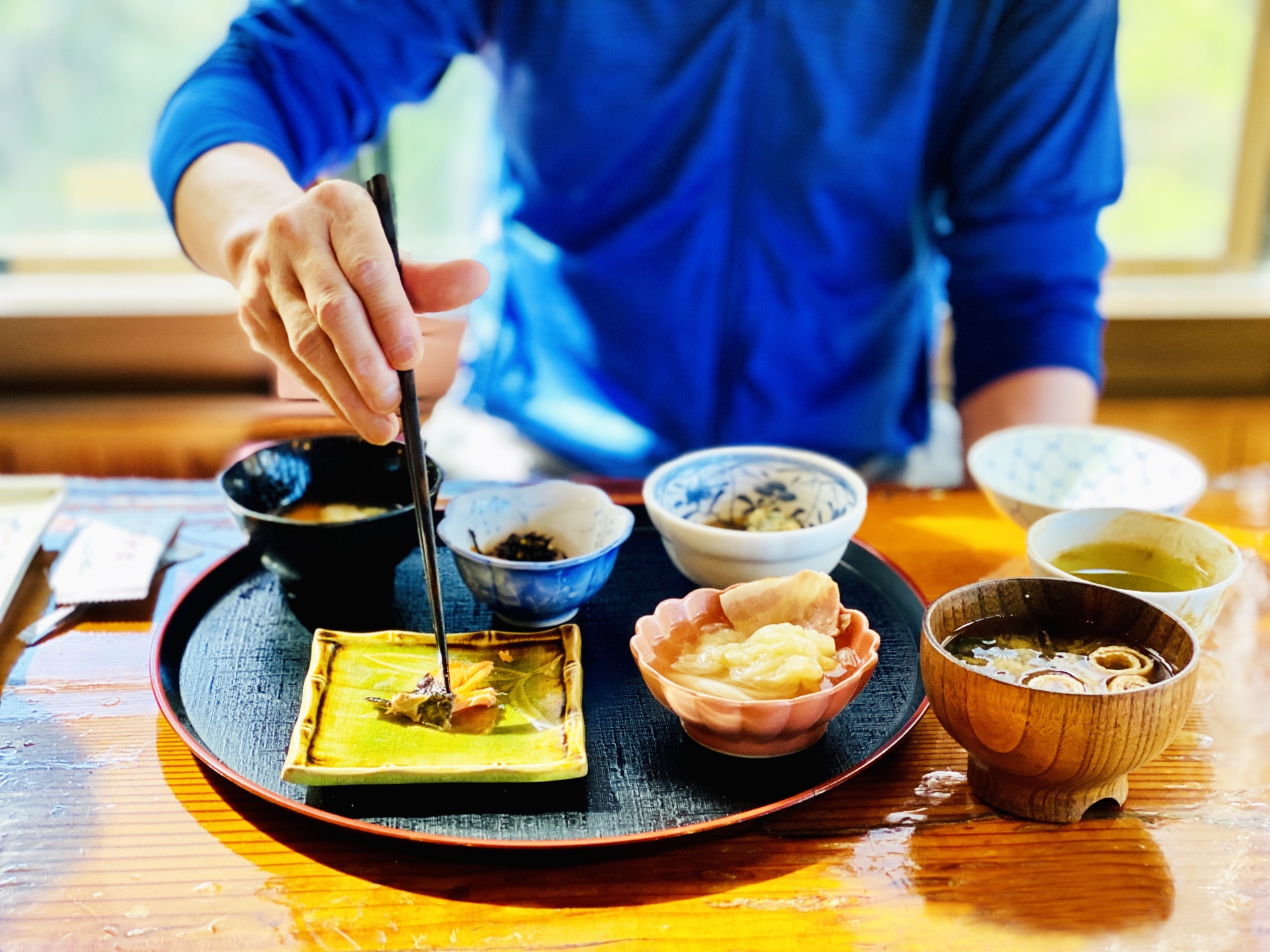
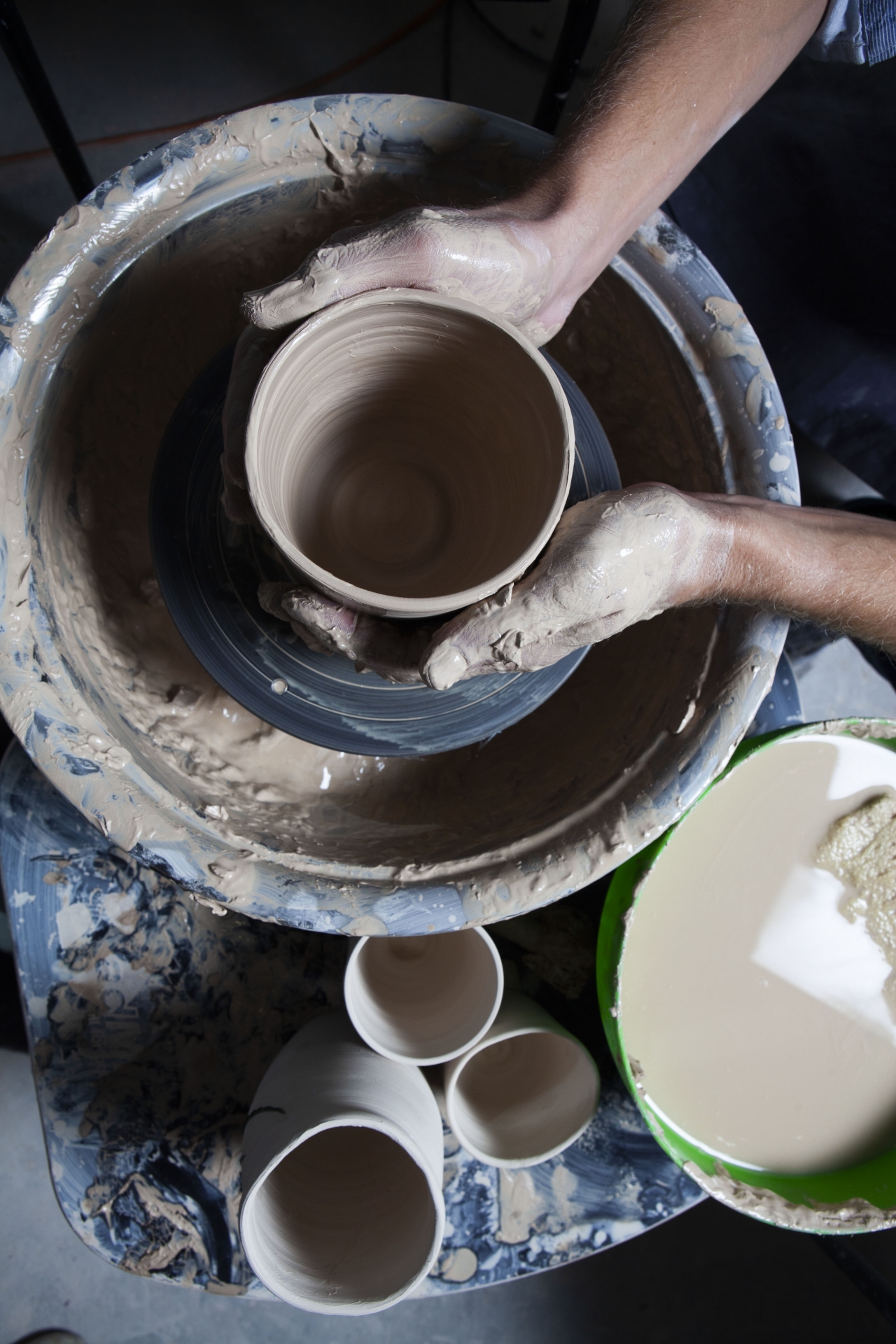
Rice is usually served in ceramic. Miso soup often comes in a light wooden bowl coated with lacquer. Why did these two everyday foods end up in such different vessels?
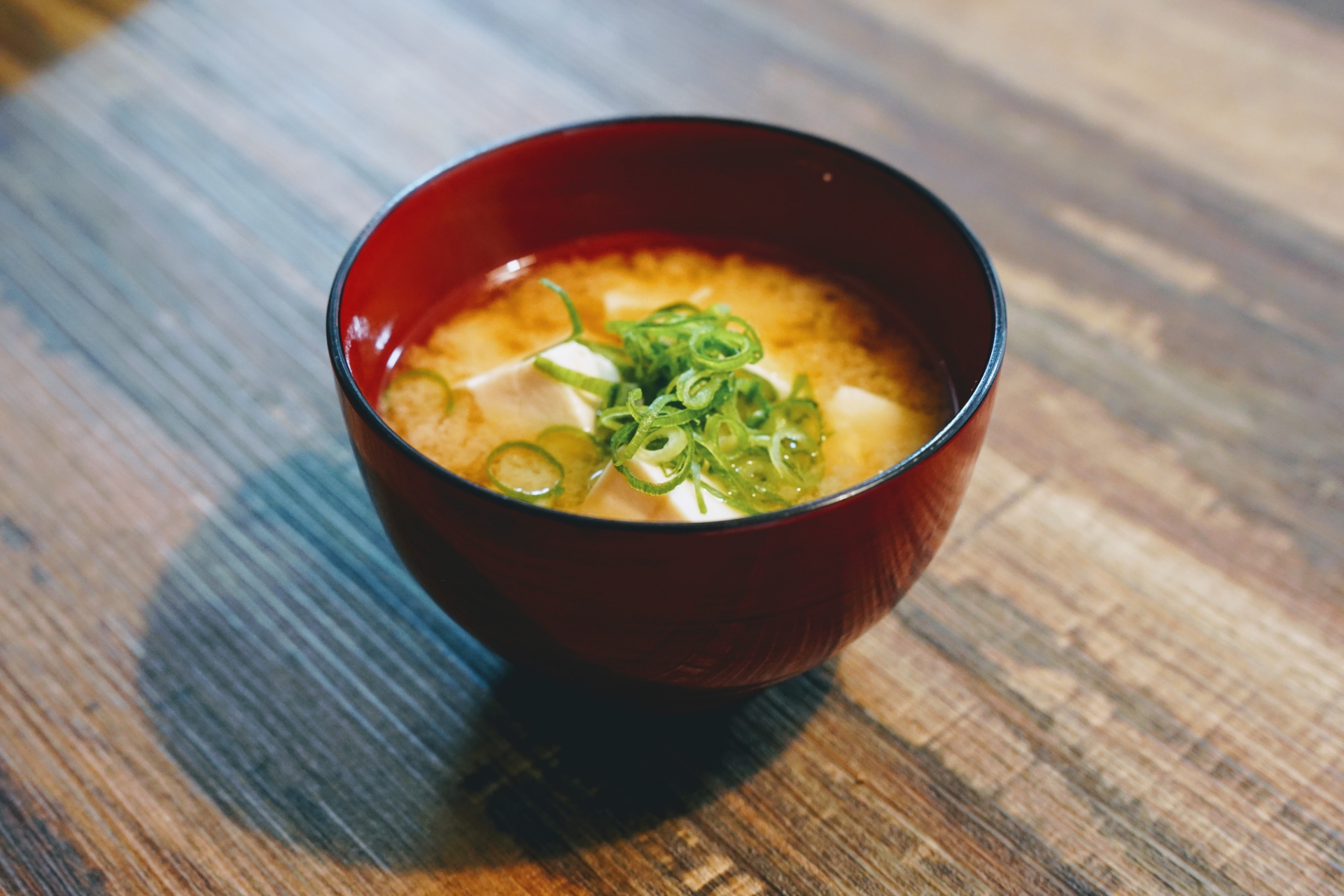
Look at a traditional Japanese meal, and you may notice something that seems a little odd at first.
The rice is often served in a ceramic bowl. Beside it sits the miso soup — but the soup bowl looks completely different.
It may be black or vermilion. It feels surprisingly light when you pick it up. And instead of ceramic, it is traditionally made of wood and finished with lacquer.
Why? Why not simply serve rice and soup in ceramic bowls?
The answer has less to do with decoration than you might expect. It begins with how the bowl is used.
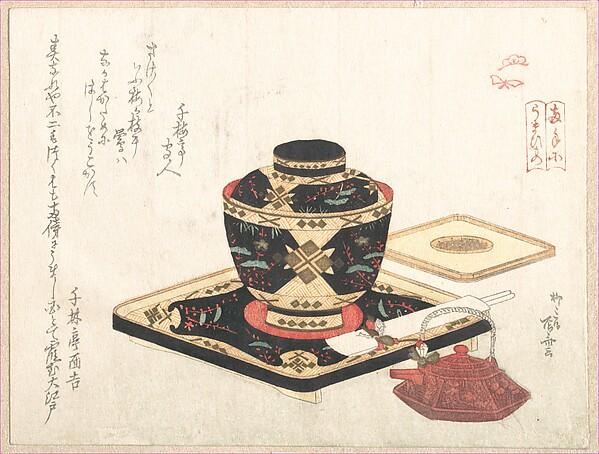
First: Look at How Miso Soup Is Eaten
In Japan, miso soup is not usually eaten with a spoon from a bowl left on the table.
The bowl is picked up. Chopsticks are used for the tofu, seaweed, vegetables or other solid ingredients, and the broth is drunk straight from the rim.
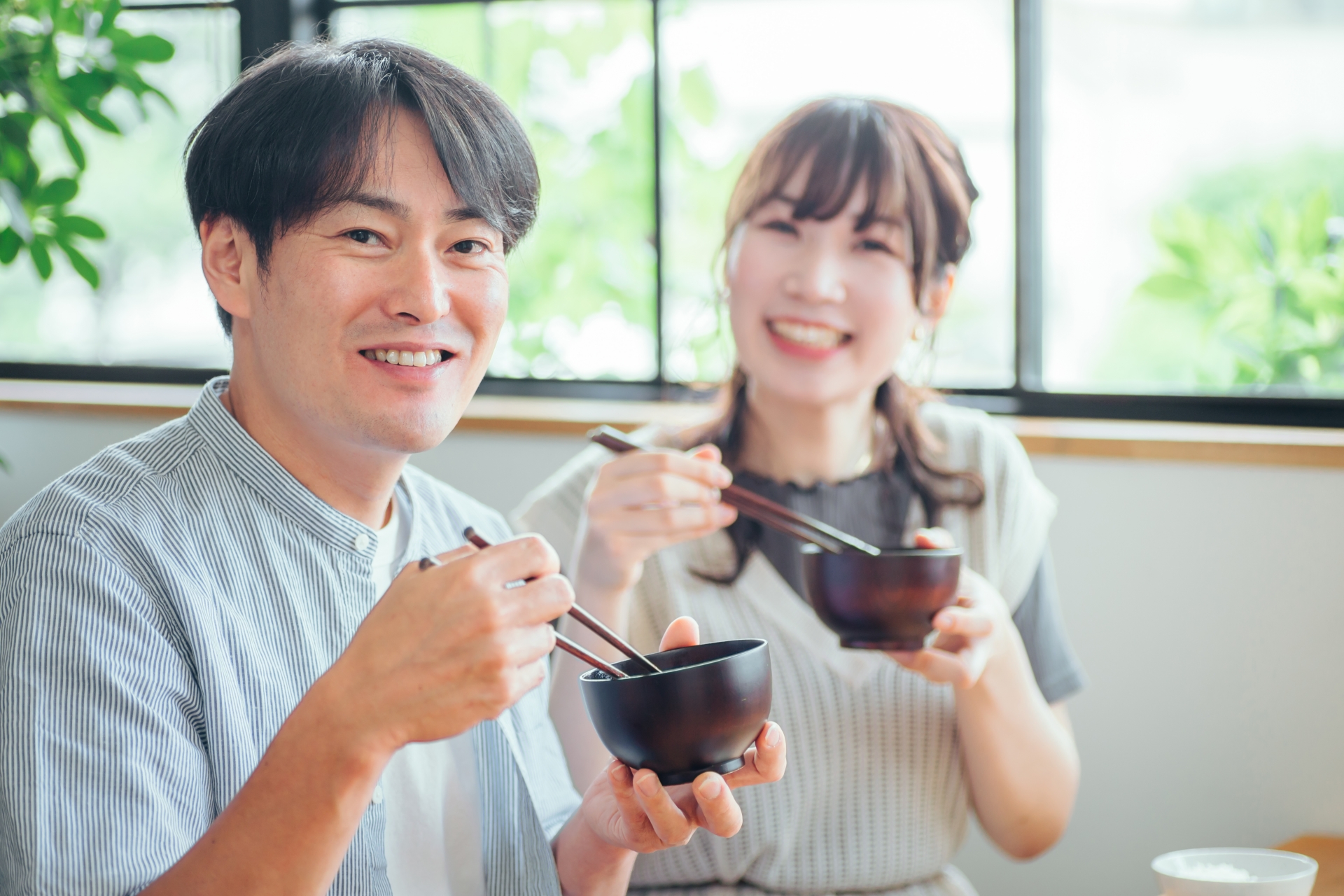
That means the bowl is in your hands and against your lips throughout the meal. Suddenly, the material matters.
A soup bowl needs to be:
- light enough to lift comfortably
- pleasant to hold
- comfortable against the mouth
- able to hold hot liquid
- slow to pass on heat, so it doesn't become uncomfortable to touch
A traditional wooden bowl does all of these things remarkably well.
Japan's Ministry of Agriculture, Forestry and Fisheries explains that wooden lacquer bowls don't pass on heat easily, so you can hold them even with hot soup inside and drink straight from them. Over time, this is why Japanese people stopped using spoons.02
So even before lacquer enters the story, the wood itself makes sense.
1. Why Wood Works So Well for Soup
Imagine pouring very hot miso soup into two bowls of a similar size. One is ceramic. The other is thinly turned wood.
The ceramic bowl may quickly become hot on the outside. The wooden one usually stays much easier to hold. Because a wooden bowl insulates well, you don't feel the heat on your lips when you bring hot soup to your mouth — and the soup stays hot for longer.03
It is also much lighter. Wooden lacquer vessels are light and don't readily conduct heat, and the custom of lifting a bowl to your mouth probably grew naturally from this.04 That matters when the bowl isn't just sitting in front of you, but is lifted to your mouth again and again.
The rim of a well-shaped wooden bowl can also feel softer than a thick ceramic edge.
This is why the Japanese soup bowl — shiru-wan (汁椀) — is more than a decorative tradition. Its material suits the action.
And this is a pattern we have already seen in Japanese tableware.
A rice bowl has a foot because it is held.
Chopsticks vary in shape because the fingers control them.
A soup bowl is light and insulating because it, too, is held.
The body and the object have developed together.
But bare wood has its own problem. Soup contains water. Wood absorbs water.
So Japan found another material to work with it: urushi.
Some links in this guide are affiliate links. If you buy through them, Japan in Small Ways may earn a commission at no extra cost to you.
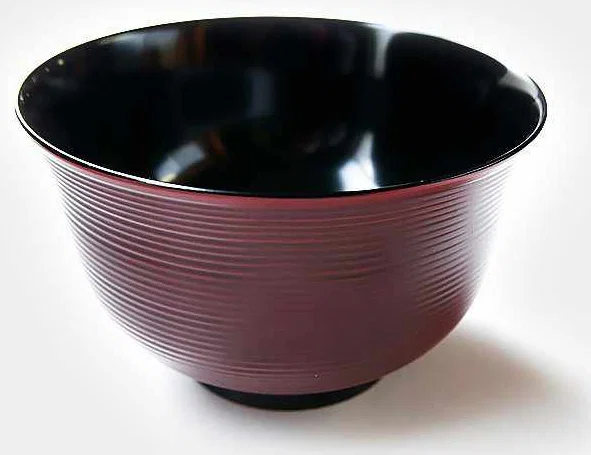
See why a lacquer bowl works so well for soup · AD
Goto Lacquer Bowl
87.5 (Kawaguchi Shikki) · Kagawa lacquerware · Kagawa, Japan
Made of natural wood and lacquer, this bowl weighs only about 90 g. Fine lines on the outside give your fingers an easy grip, and its curved shape makes soup easy to drink straight from the bowl. A good example of how the form of a Japanese soup bowl follows the way it is actually used. Hand wash only.
2. Why Coat the Wood with Lacquer?
Japanese lacquer, urushi (漆), begins as sap collected from the lacquer tree. Applied correctly and left to harden, it forms a tough, durable surface that protects the material beneath.
Once hardened, lacquer is extremely durable and resistant to high temperatures, acid, salt and alcohol, though ultraviolet light can damage it.05 Lacquer gives excellent protection against water and corrosion.06
On a wooden bowl, lacquer helps to:
- protect the wood from moisture
- create a smoother surface
- make the bowl easier to clean
- strengthen and preserve the wooden form
- give a pleasant surface for the hand and mouth
And of course, it can also be beautiful.
Black lacquer has depth, rather than simply looking black. Vermilion can look remarkably warm against the colour of miso soup. With regular use, some lacquerware gains more lustre instead of simply looking worn.
So the lacquer is not decoration added to an otherwise finished bowl. It is part of what makes the bowl work.
3. Urushi Was in Japan Long Before Buddhism
It is easy to link Japanese lacquer with ornate boxes, temples, maki-e decoration or expensive museum pieces. But the history of urushi in Japan begins much earlier — thousands of years earlier.
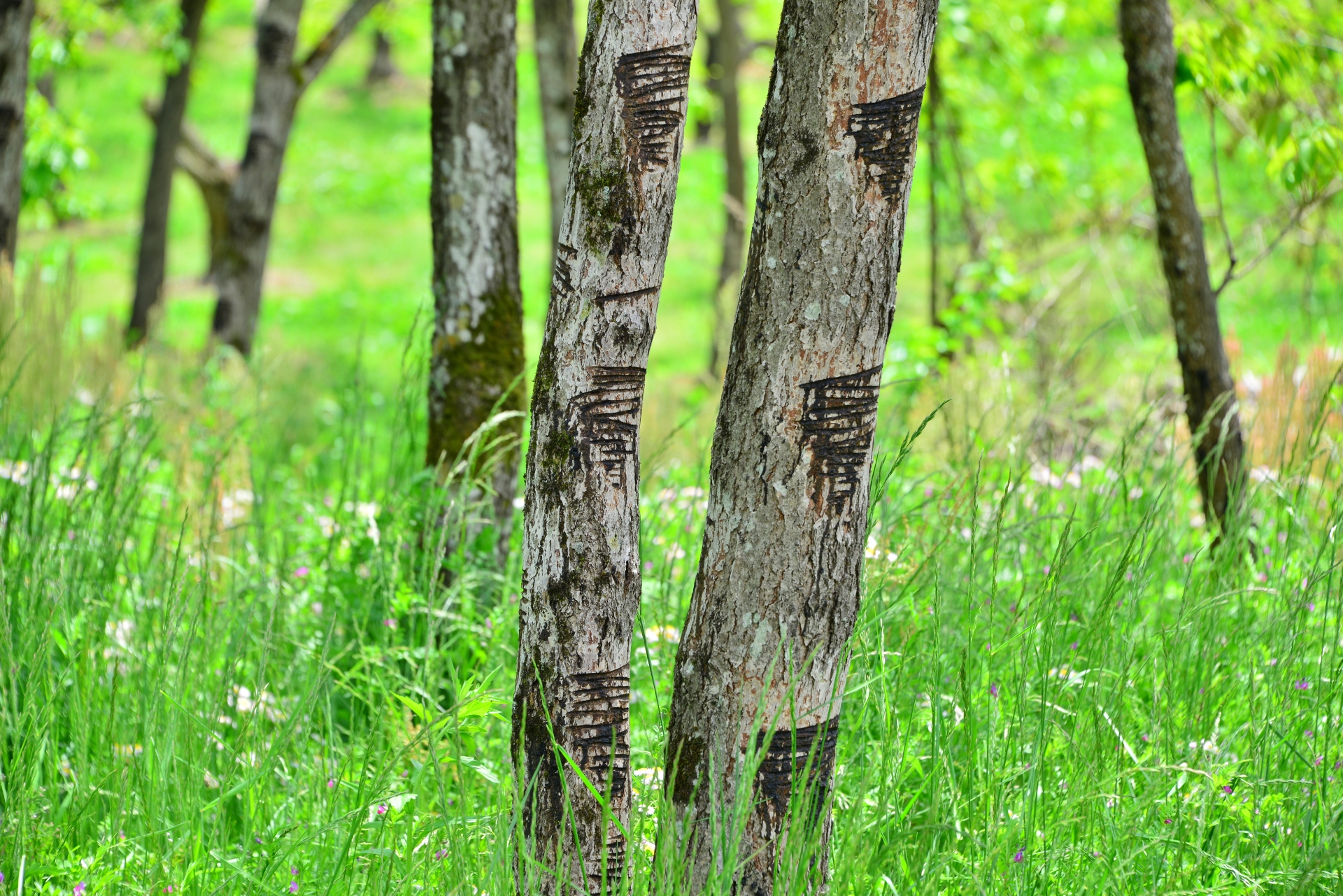
Lacquer trees have been found in Japan dating from the start of the Jōmon period, about 12,600 years ago. From about 7,500 years ago, people began making things with lacquer. Fragments of a lacquered comb found in Toyama and Ishikawa Prefectures are about 7,500 to 7,200 years old, and red-lacquered wooden plates about 5,500 years old have been found at the Sannai Maruyama site in Aomori.07
Lacquer made objects more durable and waterproof. But Jōmon people wanted more than that: by about 7,000 years ago, they were already combining red and black lacquer artistically, and red seems to have carried a special meaning as a symbol of life.07
So Buddhism did not bring lacquer to Japan. When Buddhism arrived in the sixth century (traditionally dated 538 or 552),08 people had already been working with urushi for thousands of years.
What Buddhism did was give lacquer new places to develop.
4. From Everyday Material to Sacred Objects
As Buddhism spread through Japan, temples needed a huge range of objects.
Buddhist sculpture.
Offering stands.
Containers for sacred texts.
Ritual implements.
Architectural decoration.
Lacquer was extraordinarily useful for all of them. It protected wood, created deep black and vermilion surfaces, held gold and silver decoration in place, and could be used in highly refined sculptural techniques.
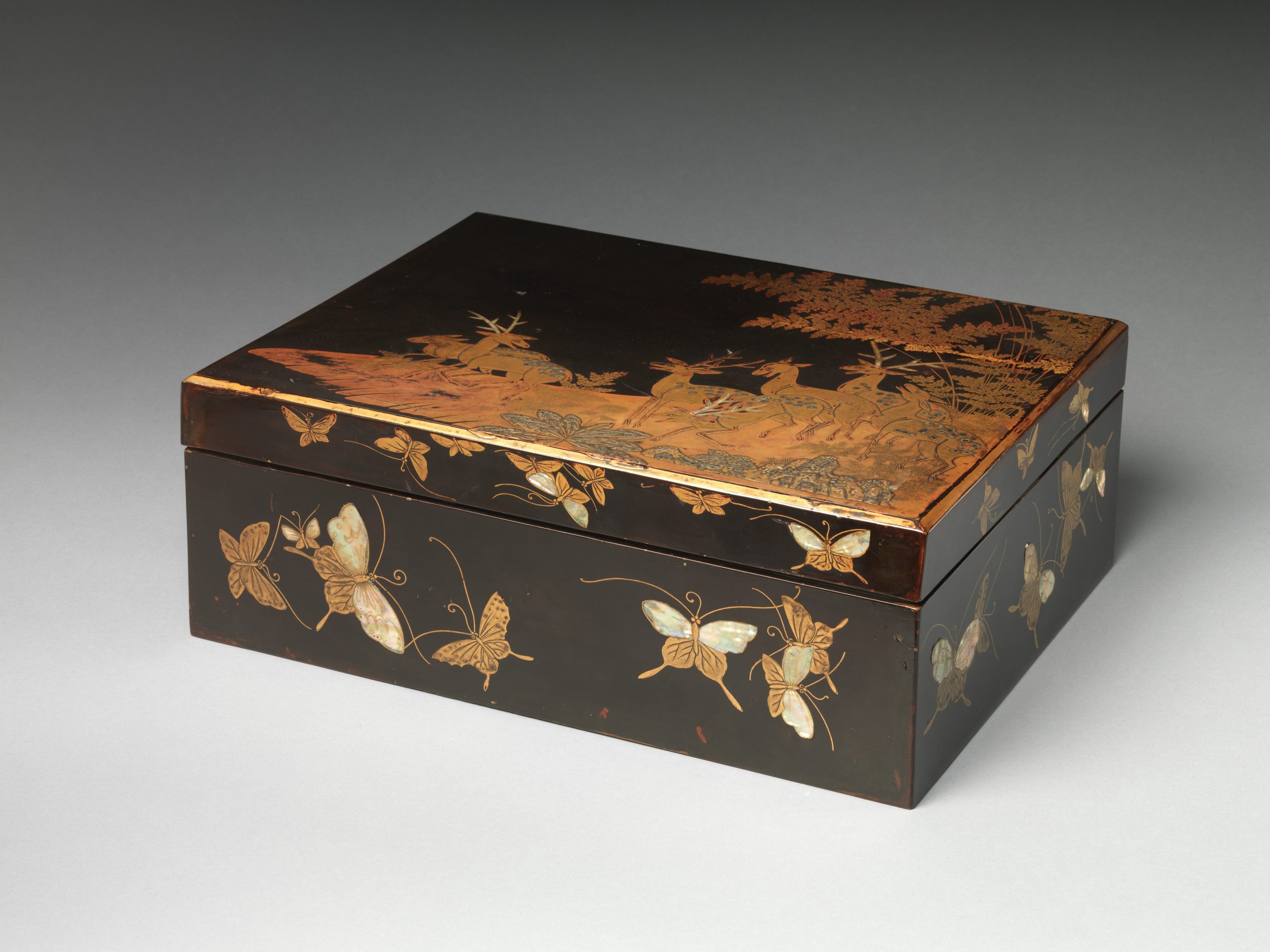
One famous example is a maki-e box now at Ninna-ji Temple in Kyoto, a National Treasure from the 10th century. It was made to hold Buddhist texts that the monk Kūkai copied in Tang China, and temple records say the emperor gave it to Ninna-ji in 919.10
New techniques and objects also kept arriving from elsewhere in Asia. Chinese carved red lacquer, tsuishu (堆朱), came to Japan together with Zen Buddhism in the Kamakura period, and was later prized as the finest of Chinese lacquerware, used for tea utensils and to decorate Chinese-style study rooms.11
So once again, Japanese craft history is not the story of a sealed culture developing alone. Old Japanese lacquer traditions met Buddhist institutions, techniques from the continent, imported objects and new tastes.
And yet lacquer did not stay only in the sacred or luxurious world. It came back to ordinary meals.
5. How an Expensive Material Reached Everyday Tables
This part of the story is especially interesting.
High-status lacquerware could be extremely expensive. Many layers of lacquer needed large amounts of precious sap and enormous labour. For aristocratic and religious objects, that cost could be justified. For everyday bowls, it could not.
Around the 11th century, however, a cheaper method appeared: a rough base coat — a mixture of charcoal powder and persimmon tannin — finished with just one or two coats of lacquer. Everyday lacquered rice bowls, plates and other tableware then spread among samurai, Buddhist monks and priests, and city merchants. By the 16th century, farmers were using lacquerware too.12
That is a fascinating journey. A material that could cover sacred sculpture and the finest objects also became the surface of an ordinary bowl.
And in some places, the link between religion and everyday eating was especially direct.
6. Jōbōji: From Monks' Bowls to Everyday Lacquerware
In northern Iwate Prefecture lies Jōbōji, today the heart of Japan's own urushi production. In 2020, Japan produced about 2 tons of domestic lacquer, and about 1.5 tons of it — roughly three-quarters — was Jōbōji urushi.13
Jōbōji urushi is the lacquer sap produced in the area.
Jōbōji-nuri is the lacquerware made there.
Jōbōji-nuri is said to have begun in the Heian period, when Buddhist monks at Tendai-ji Temple lacquered the bowls and plates they made for their own meals.13
This was not elaborate court decoration. It was monks' tableware.
Simple.
Sturdy.
Made to be used.
Later, because it combined simple beauty with strength, Jōbōji-nuri spread across Japan as lacquerware for everyday use.
Jōbōji is also important today for the lacquer itself. Its urushi has been used to restore World Heritage sites such as the Konjikidō of Chūson-ji in Iwate, Nikkō Tōshōgū and Kinkaku-ji. At the same time, Jōbōji-nuri is still made as bowls, cups and other pieces for everyday use.13
I find that contrast striking.
The same natural material can help preserve a World Heritage temple —
and coat the bowl from which someone drinks their soup.
The history of urushi in Japan moves surprisingly easily between the sacred and the ordinary.
7. Lacquerware Was Never Only Something to Display
This matters, because lacquerware can feel intimidating today.
A beautiful handmade bowl may be expensive. The surface looks flawless. Perhaps you start to think: Should I really put miso soup in this?
But traditional lacquerware was not necessarily made to stay untouched.
Lacquerware as covering functional, decorative and ceremonial items, from bento boxes to Buddhist sculpture, and notes that many local styles developed to suit different needs.06
Jōbōji-nuri is closely tied to this everyday quality. An official of Ninohe City, where it is made, says that if you use it every day, a natural sheen will appear.13
Other lacquer traditions welcome ageing even more visibly. Negoro lacquerware was made mainly as everyday utensils, such as rice and soup bowls, in a workshop at Negoro-ji Temple between the late 12th and late 16th centuries. Over many years of use, the vermilion surface wears away to reveal the black lacquer underneath — and the pattern this creates is part of its beauty.14
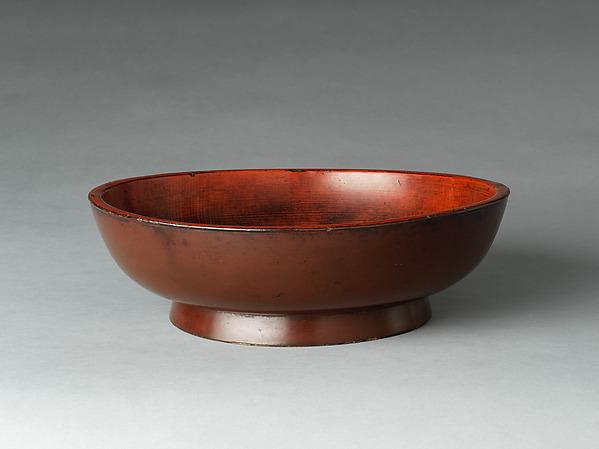
So a well-made lacquer bowl is not necessarily something to protect from life. It can gain character because it takes part in it.
8. What Are You Actually Buying?
This is where shopping for a Japanese soup bowl can become confusing. A bowl may look like traditional lacquerware without being made in the same way.
Even a famous lacquer region may make both kinds. Yamanaka in Ishikawa, for example, was one of the first areas to start producing "modern lacquerware" after the war — plastic resin bases with a urethane finish — alongside its traditional wooden pieces.16
You may come across:
Solid wood with natural urushi
This is the traditional form many craft buyers are looking for. A woodworker turns or carves the bowl, and lacquer is applied in several stages. The exact process varies greatly from region to region.
Wood with a modern coating
The bowl may still be real wood, but the coating could be urethane or another synthetic material rather than natural urushi. For some buyers, this may actually be more practical.
Composite wood base
Some bowls are made from wood powder or other composite material and coated afterwards. They can be inexpensive and durable.
Resin or plastic bowls
These are very common in restaurants and in inexpensive sets for the home. They may look like lacquerware, but they are a fundamentally different object.
None of these makes a bowl automatically "bad". The important thing is to know what you are buying.
If you want traditional urushi craft, look beyond the colour and shape. Check:
- the base material
- whether the coating is natural urushi
- where it was made
- the maker or workshop
- the recommended care
A shiny black bowl is not necessarily lacquerware in the traditional sense.
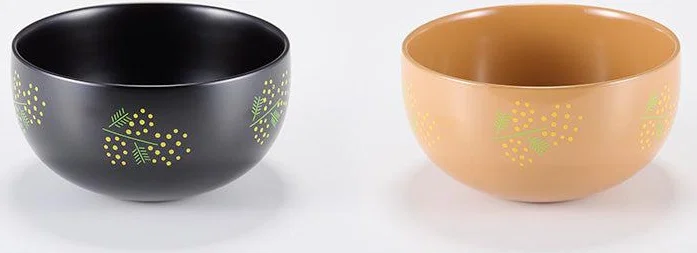
See why the material description matters · AD
MIMOSA Lacquer Bowl
ISUKE · Kyoto, Japan
This contemporary bowl, with a mimosa pattern that is unusual for lacquerware, looks very different from cheap plastic imitations — but it is also different from a traditional solid-wood bowl. Its base is moulded wood powder and resin, finished with lacquer. The maker suggests it for soup or noodles. A useful reminder that "lacquerware" describes the surface, but doesn't always tell you what lies underneath. Hand wash only.
9. Natural Urushi or Modern Convenience?
This is not a contest in which the most traditional option always wins.
A handmade wooden bowl coated in natural urushi can offer a feel in the hand that resin cannot copy.
The weight.
The warmth.
The small differences between pieces.
The way the surface ages.
If those qualities matter to you, traditional lacquerware may be worth the extra care and cost.
But perhaps you have young children. Perhaps everything in your kitchen goes into the dishwasher. Perhaps you want a bowl you can use roughly without thinking about it. Then a more modern material or coating might suit your life better.
The useful question is not: Which bowl is the most authentic?
It is: Which qualities am I actually looking for?
That is the same question we have asked throughout this Tableware series.
10. Is Lacquerware Difficult to Care For?
Traditional lacquerware has a reputation for being difficult. In everyday use, the rules are actually fairly simple.
For a traditional wooden urushi bowl17:
- wash it with a soft sponge
- mild washing-up liquid is generally fine
- don't leave it soaking in water
- dry it after washing
- avoid the dishwasher unless the maker clearly says otherwise
- don't put it in the microwave
- avoid extreme heat and long exposure to direct sunlight
That is different from porcelain. But it is not especially complicated. It asks for perhaps a minute of attention after the meal.
Whether that feels like a burden or perfectly reasonable depends on you.
11. What About Scratches and Ageing?
If you buy an expensive handmade bowl, the first scratch can feel alarming. But use will leave traces.
A lacquer bowl held hundreds of times won't necessarily look exactly as it did on the day you bought it. Its sheen may deepen. Its colour may change slightly. Fine wear may appear.
That doesn't automatically mean the bowl is ruined.
With traditional lacquerware, the possibility of repair and re-lacquering can also make an object last far longer than a cheap replacement.
This is another reason to look at the workshop or maker, not only at the product photo.
Does the maker offer repairs?
Can the surface be renewed?
Is this meant as disposable tableware, or as an object designed to stay in use?
A higher price at the start can make more sense when the object has a much longer relationship with its owner.
12. Is Urushi Safe for Food?
There is an important difference here.
Raw lacquer sap contains urushiol, the main component of raw urushi and the substance that causes lacquer rash — a form of contact dermatitis.18 Urushiols are made by several related plants, including the lacquer tree, poison oak and poison sumac.19 That is why craftspeople handle raw urushi with care; as Japan House London puts it, urushi is "poisonous until it dries".06
But hardened lacquer is very different from raw sap, and it has been used for food vessels in Japan for centuries. According to the Royal Society of Chemistry, a properly cured coating loses its allergenic ability — although lacquer that has not hardened properly can still cause a rash.19
For most people, a properly made and fully cured lacquer bowl is simply a food vessel.
However, if you know you have a severe sensitivity to urushiol, poison ivy or related allergens, it is sensible to ask a doctor before using natural-urushi tableware.
For ordinary buyers, the more practical point is to buy from a reputable maker, so you know what coating has actually been used.
13. Why Does One Soup Bowl Cost So Much More Than Another?
From a distance, two black lacquer bowls may look almost the same. One may cost $20 (£15). Another may cost $150 (£115) or much more.
The difference can lie in things you can't see straight away. For example:
- solid wood versus moulded material
- the type and quality of the wood
- whether the bowl is turned one by one
- natural urushi versus a synthetic coating
- how the wooden base is prepared
- the number of lacquer layers
- polishing between layers
- decoration such as maki-e or mother-of-pearl
- the skill of the individual craftsperson
- the regional craft tradition
- whether the piece can be repaired later
A Wajima bowl, for example, has weak points such as the rim reinforced with cloth, and is built up with many layers over a base that uses jinoko, a locally made powder of baked soil.20
A Jōbōji bowl is usually simple. Its lacquer is brushed on, dried and sanded at least six times, and the beauty of the lacquer and the form carries the piece.13
A Yamanaka bowl may show off the woodturner's skill and the grain of the wood.16
So "lacquer bowl" describes a category. It doesn't tell you how much work sits inside the object.
14. A Few Lacquer Traditions You May Meet
This article is not a complete guide to Japan's lacquer regions — that deserves its own article later. But when shopping, you may see a few names again and again.
Jōbōji-nuri — Iwate
Simple forms, a strong link to Japan's own urushi, and a tradition closely tied to everyday use.13
Wajima-nuri — Ishikawa
Known for its very sturdy, multi-layered construction, with cloth reinforcement and a base made with jinoko.20
Yamanaka Shikki — Ishikawa
Famous for woodturning. Yamanaka produces more turned wooden bases than anywhere else in Japan, and its craftspeople are known for very thin turning and fine decorative lines cut into the wood. The shape and grain of the wooden body are often an important part of the finished piece.16
Echizen Shikki — Fukui
A long-established lacquer region, said to date back to the sixth century, making bowls, trays and boxes. It is known for its sturdy base and its hananuri finish, in which the final coat is left to dry without polishing.21
For now, you don't need to memorise these names. Just notice that, as with Japanese pottery, a regional name may tell you something about how an object was made and what that region learned to value.
A Simple Checklist Before You Buy
If you are choosing a Japanese soup bowl online, ask:
- Is the bowl made of solid wood, composite material or resin?
- Is the finish natural urushi or a synthetic coating?
- Is it light enough to hold comfortably?
- Does the rim look comfortable for drinking?
- Does the shape suit the amount of soup I usually serve?
- Is the foot easy to hold?
- Can I realistically follow the care instructions?
- Is it dishwasher-safe, if that matters to me?
- Do I know where it was made?
- Do I know anything about the maker or workshop?
- Can it be repaired or re-lacquered?
- Can I imagine lifting this bowl to my lips for many years?
You don't have to buy the most elaborate lacquer bowl. But if you are buying one to use every day, it is worth looking beyond the shiny surface.
A Bowl Designed to Be Held
You can understand something about a Japanese soup bowl without knowing the history of lacquer.
Pick one up. Feel how little it weighs. Notice that hot soup doesn't make the outside impossible to hold. Put your fingers around the body and under the foot. Bring the rim to your lips.
The material begins to explain itself.
Then its history adds another layer.
The wood connects the bowl to forests and woodturners. The lacquer connects it to a material used in Japan since the Jōmon period. The same urushi tradition that helped protect Buddhist sculpture and sacred objects also moved into the bowls used by monks, merchants, farmers and families.
Today, it may hold nothing more elaborate than miso soup at breakfast.
There is something very Japanese in that movement between the precious and the ordinary.
A beautiful material doesn't always need to be kept apart from daily life. Sometimes its place is exactly there — in your hands, at the table, being used.
Sources
[02] Ministry of Agriculture, Forestry and Fisheries, 「和食」を支える日本の箸文化 (in Japanese)
[03] Kotobank, Wan 椀 (in Japanese)
[04] Kikkoman Food Forum, The Japanese Table, Vol. 40 No. 2 (Summer 2026), Yasuo Kuwabara, "Lacquerware"
[05] Kyoto National Museum, Preserving Lacquers through Conservation
[06] Japan House London, Japanese Lacquerware
[07] Government of Japan, HIGHLIGHTING Japan (May 2022), "Red Lacquerware from the Jomon Period"
[08] Kotobank, Bukkyō denrai 仏教伝来 (in Japanese)
[09] The Metropolitan Museum of Art, Document Box (Ryōshibako) with Deer and Butterflies
[11] Kyoto National Museum, Carved Cinnabar Lacquer Tray with Camellia and Magpie Designs
[12] Government of Japan, HIGHLIGHTING Japan (May 2022), "The History and Culture of Lacquer in Japan"
[15] The Metropolitan Museum of Art, Round Bowl (Negoro ware), dated 1580
[16] Yamanaka Shikki Cooperative, 山中塗について (About Yamanaka-nuri) (in Japanese)
[17] Japan House London Shop, Urushi Soup Bowl (care instructions)
[18] Kotobank, Urushiol ウルシオール (in Japanese)
[20] Japan Traditional Crafts Center (KOUGEIHIN), Wajima Nuri
[21] Japan Traditional Crafts Center (KOUGEIHIN), Echizen Shikki
10 Quiet Ways to Bring a Little Japan into Your Everyday Life
Ten quiet invitations to bring Japanese ways of seeing into everyday life.