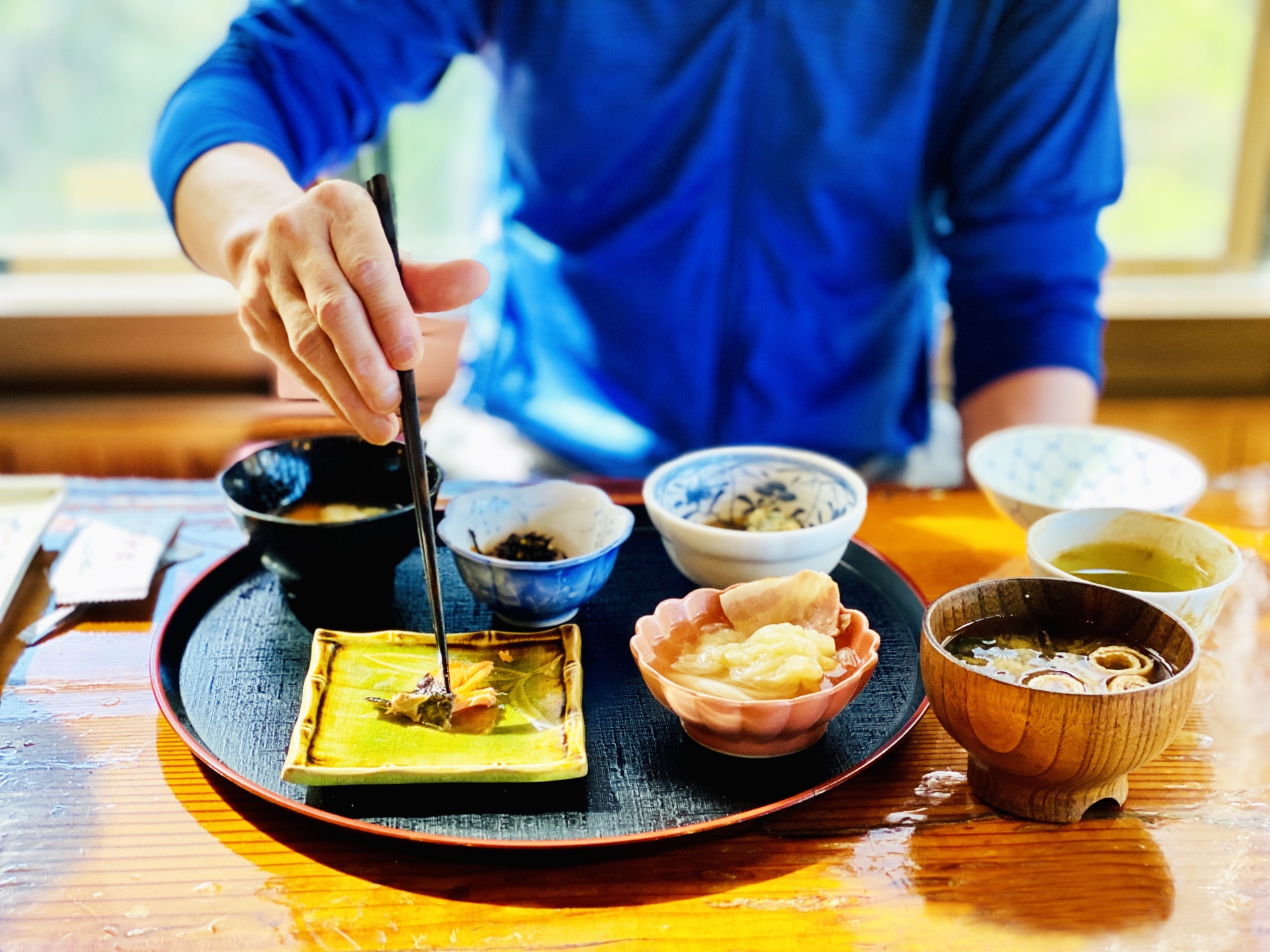
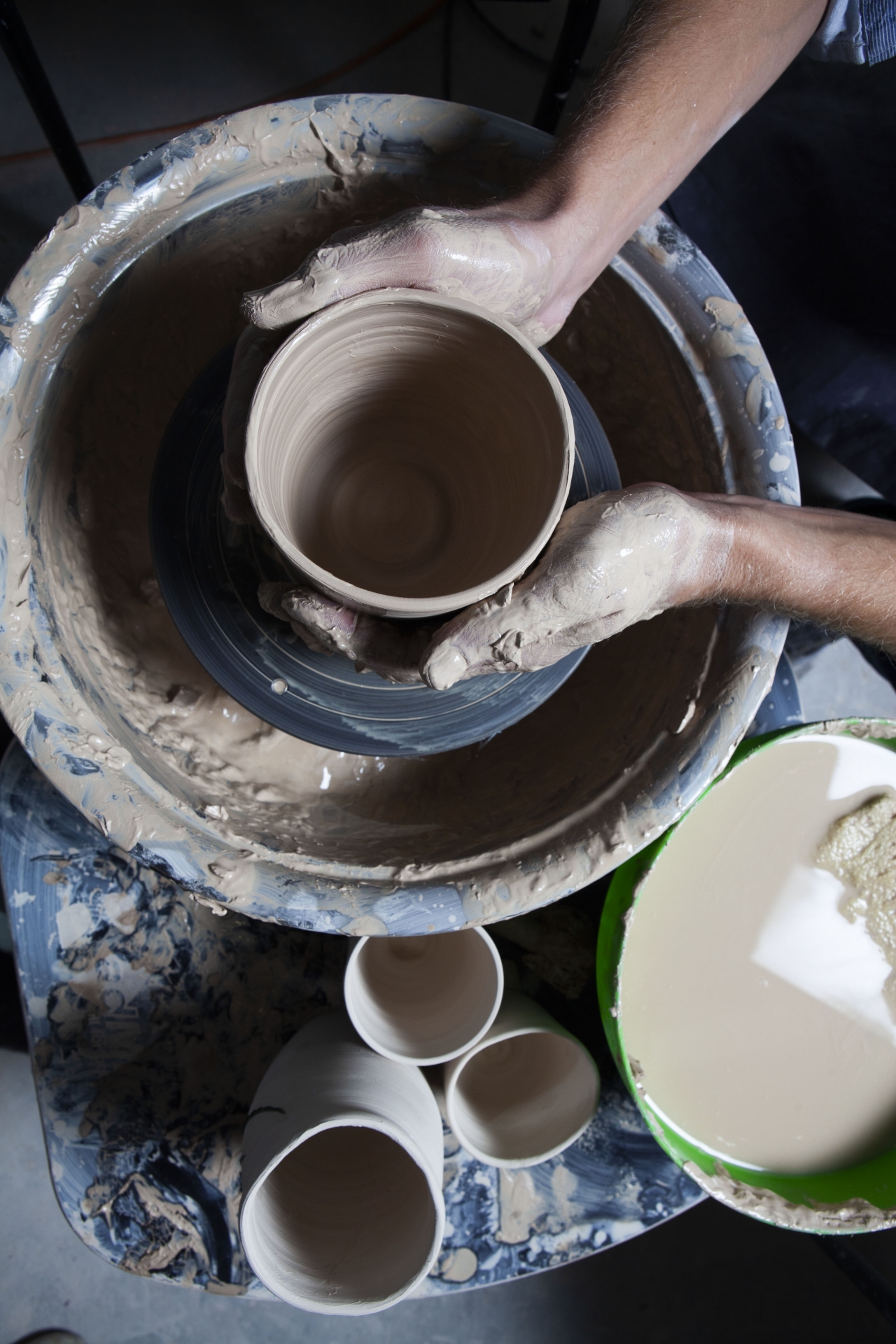
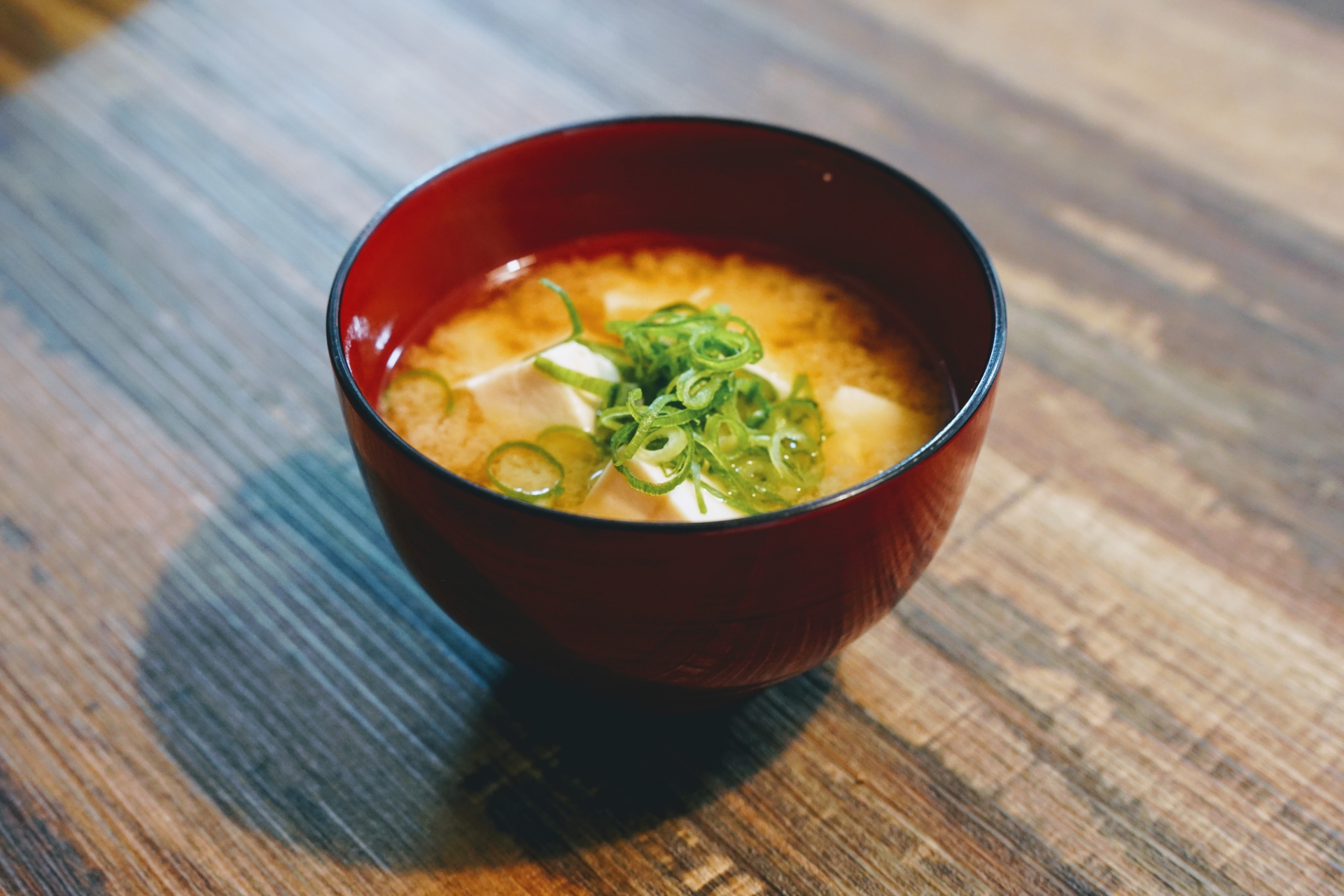
Japanese rice bowls come in countless sizes, materials and styles. So what really matters when you choose one for yourself?
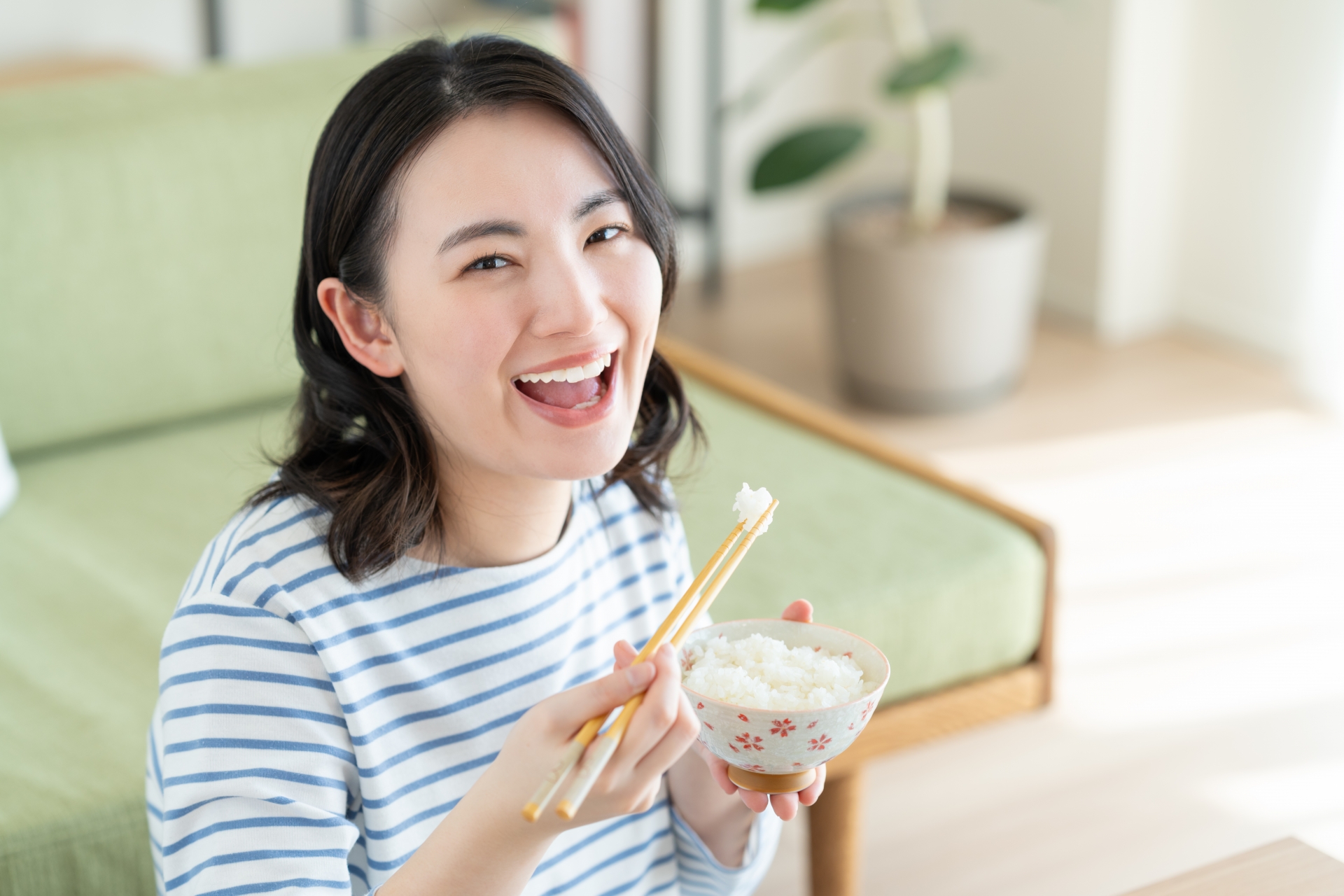
Start looking for a Japanese rice bowl online, and the choices quickly multiply.
Porcelain or pottery? Smooth or textured? Arita or Bizen? Eleven centimetres or thirteen? Plain white, hand-painted blue, or an earthy glaze that looks a little different from every angle?
And then there is the price. One bowl might cost £15, while another costs £80 or more.
How are you supposed to know which one is right for you?
There is a surprisingly simple place to begin: the way the bowl is used.
This guide takes you through size, material, shape, weight, pottery traditions and price, so you can choose a bowl that not only looks beautiful, but also feels right in your everyday life.
First: what exactly is a Japanese rice bowl?
In Japan, the everyday bowl for cooked rice is usually called an o-chawan (お茶碗), or more specifically a gohan-jawan (ご飯茶碗).
There is something curious about the word chawan (茶碗). Its first character, 茶 (cha), means tea. So 茶碗 literally means “tea bowl”.
Why is a rice bowl called a tea bowl?
Japanese encyclopedias explain that chawan originally meant a bowl for drinking tea, and referred to porcelain imported from China. From the Heian to the Muromachi period, the word was used for porcelain itself. Later, it also came to mean bowls for other purposes, such as rice.01
That is why today a bowl for whisked matcha can be called a matcha-jawan (抹茶茶碗), while the small bowl at an everyday meal is a gohan-jawan (ご飯茶碗).
In this article, we are talking about the second kind: the small bowl you eat rice from.
And how you eat from it turns out to matter quite a lot.
1. Why the way you hold a rice bowl matters
If you grew up with Western-style tableware, you may be used to leaving your plate or bowl on the table.
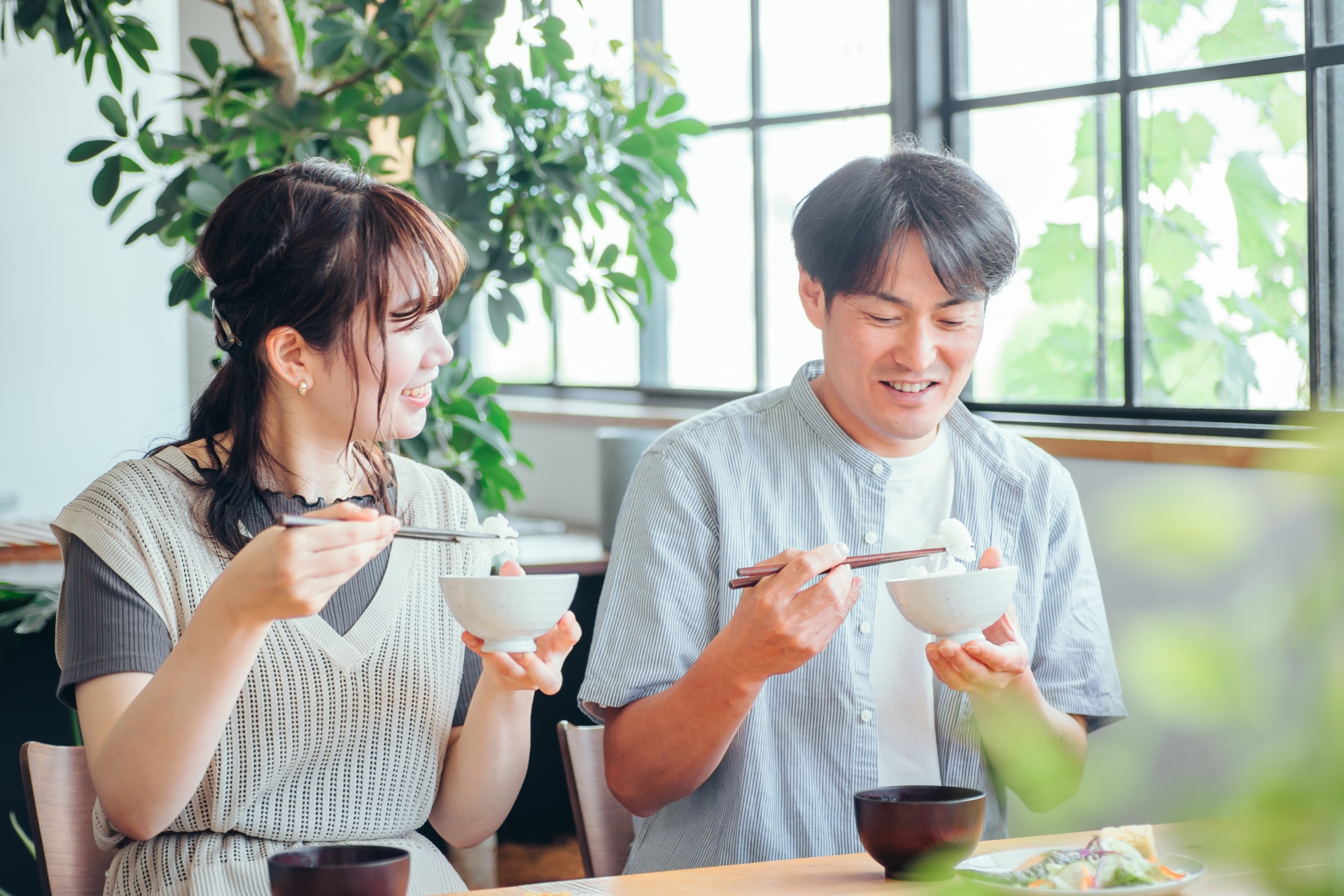
Japanese rice is usually eaten differently. You pick up the rice bowl in one hand and use chopsticks with the other.02
In Japan, we hold the bowl while we eat.
That changes what you should look for. A Japanese rice bowl should not only look good sitting on the table.
It needs to feel good in your hand.
Some links in this guide are affiliate links. If you buy through them, Japan in Small Ways may earn a commission at no extra cost to you.
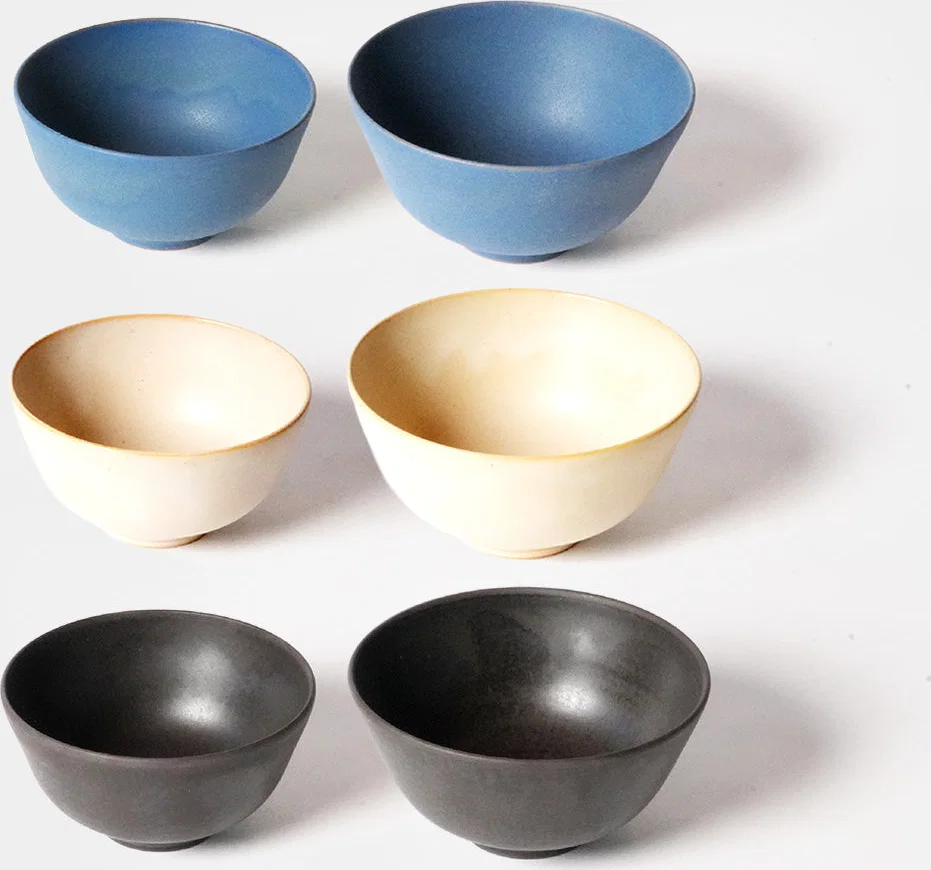
See a rice bowl designed around the hand · AD
Easy-to-Hold Rice Bowl
FUUU / TOHKEN-GAMA · Kyoto-Kiyomizu ware · Kyoto, Japan
Slightly hollowed and shaped to sit comfortably in the hand, this handmade rice bowl comes in two sizes for different hands and appetites. It is a good example of why choosing a Japanese rice bowl begins with how it feels when you hold it — not simply how it looks on the table.
The standard size for a rice bowl is about 12 cm across, or 4 sun (寸) in the traditional Japanese unit of length.03 That is a useful starting point, but it is not a rule.
Your hand may be larger or smaller. You may prefer something light and delicate, or something a little more substantial.
So the important question is not just:
What is the standard Japanese size?
It is:
What feels comfortable for me to hold?
If you are buying online
Of course, this creates a problem. Most of us cannot pick up a bowl before we buy it online.
So look carefully at:
- the diameter
- the height
- the weight
- the capacity
- the shape from the side
- the foot underneath, called the kōdai (高台)
- photos showing the bowl in someone’s hand, if there are any
One very simple trick is to measure a bowl you already own and enjoy using. Measure its width and height, and weigh it if you can.
Now you have a reference point. Instead of wondering whether a 12 cm bowl is “correct”, you can compare it with something your hands already know.
2. How much rice do you actually eat?
Your hand is only part of the answer. The other question is very practical:
How much rice do you normally eat?
Japanese rice bowls are much smaller than Western cereal bowls, pasta bowls or soup bowls. Its standard size is based on a serving of about 150 g of rice, and adds that how much people eat depends on their activity, age and build.03
So there is no reason to choose a size just because it looks traditionally Japanese.
If you usually eat a small portion of rice, a smaller bowl can feel comfortable and balanced. If rice makes up a larger part of your meal, you may prefer a slightly larger bowl. And if you often top your rice with egg, vegetables or other ingredients, you may want more room.
At some point, a larger bowl moves into the territory of a donburi (丼). But there is no need to worry about exactly where that line is.
Choose your bowl for the amount of rice you actually eat, not the amount you think a Japanese rice bowl is supposed to hold.
That may sound obvious. But it is easy to forget when you are looking at beautiful photos online.
3. Porcelain or pottery, and what kind?
Once you have a sense of size, the next big choice is material. Japanese rice bowls are usually made of either porcelain or pottery.
You can see the difference. But you can also feel it.
Porcelain
Porcelain is fired at a high temperature until the body turns glassy. It is hard, it absorbs almost no water, and it rings with a clear, metallic sound when you tap it.04
Porcelain can be made quite thin while staying strong. If you like a clean, light feeling in your hand, it may appeal to you.
Some well-known porcelain traditions include:
Arita ware: Arita-yaki (有田焼)
Porcelain from the Arita area of Saga Prefecture, also known as Imari ware after the port it was shipped from. It is known for blue-and-white decoration painted under the glaze, and for colourful overglaze enamels.05

Kutani ware: Kutani-yaki (九谷焼)
Known for bold designs in overglaze enamels, and for its distinctive five-colour palette of red, green, yellow, purple and Prussian blue.06 A Kutani bowl can bring real colour to even a very simple meal.
Mikawachi ware: Mikawachi-yaki (三川内焼)
Known for designs painted in cobalt blue on white porcelain, with delicate elegance and fine craftsmanship. It flourished as the official kiln of the Hirado domain.07
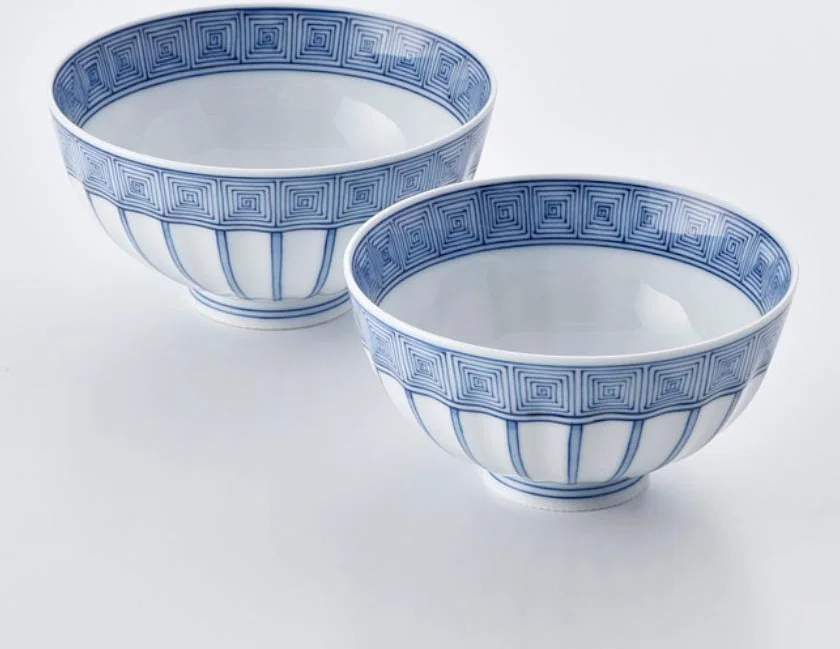
SEE MIKAWACHI BLUE AND WHITE · AD
Hirado-Jyusso Rice Bowl Pair
Hirado Shozan · Mikawachi porcelain · Nagasaki, Japan
Fine cobalt-blue lines sit against white porcelain in this pair of rice bowls. The two sizes make it possible to see both the delicate decoration and the way the same design works for different hands.
Pottery
Pottery often feels warmer and more tactile.
You may be able to see the clay itself. The glaze may vary from one part of the bowl to another. Two pieces from the same maker may not look exactly alike.
Some traditions make this especially visible.
Bizen ware: Bizen-yaki (備前焼)
Bizen ware has no glaze, so the beauty of its iron-rich clay comes forward. Its surfaces come mainly from the “chance” effects of firing, such as ash that settles and melts on the pot.08 No two pieces are the same.
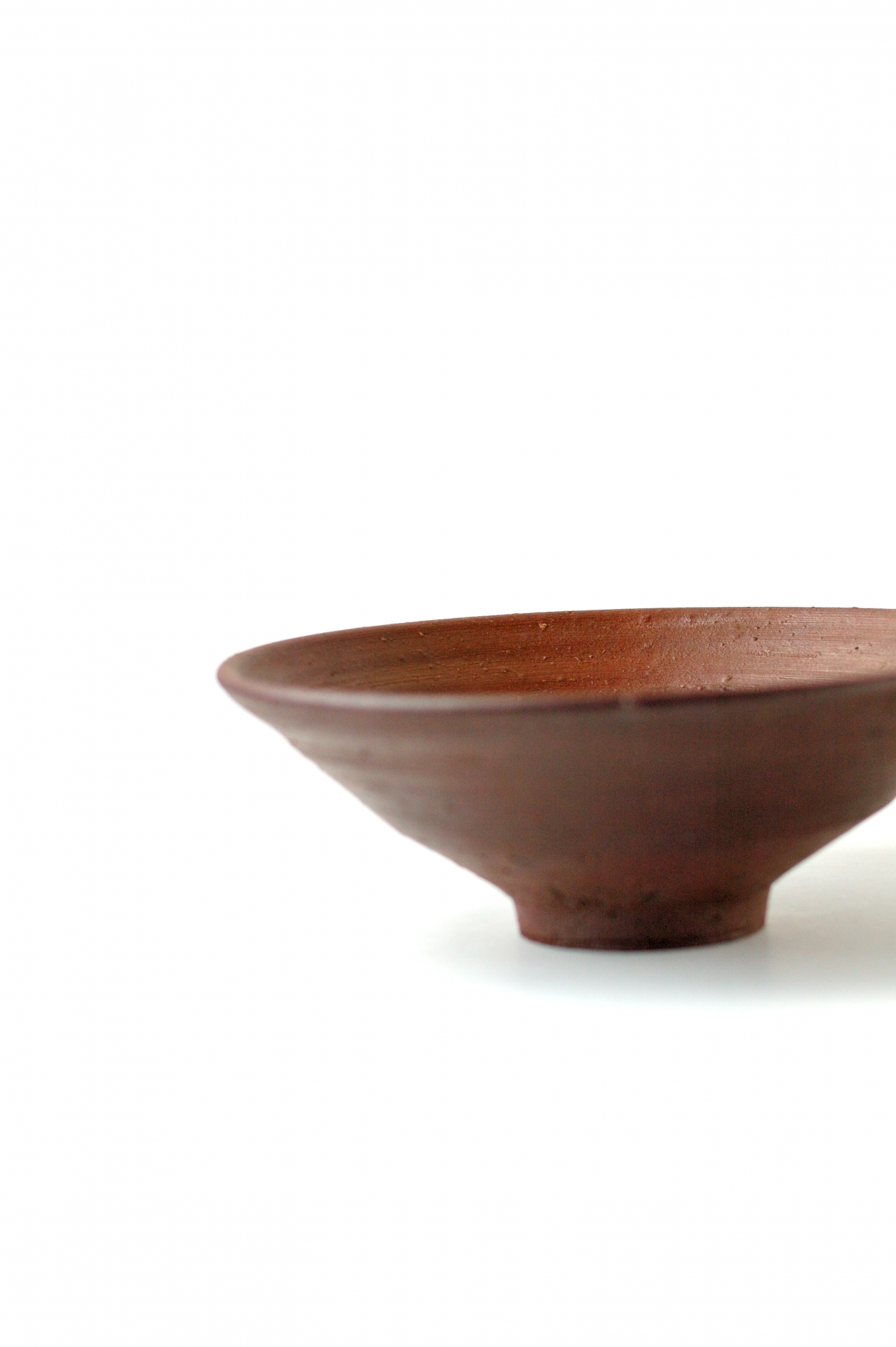
Hagi ware: Hagi-yaki (萩焼)
Hagi ware is a porous stoneware, often with a soft, milky glaze. Because it absorbs a little of what it holds, it is said to change colour as many as seven times with use. This is called Hagi no nanabake (萩の七化け), “the seven changes of Hagi”.09
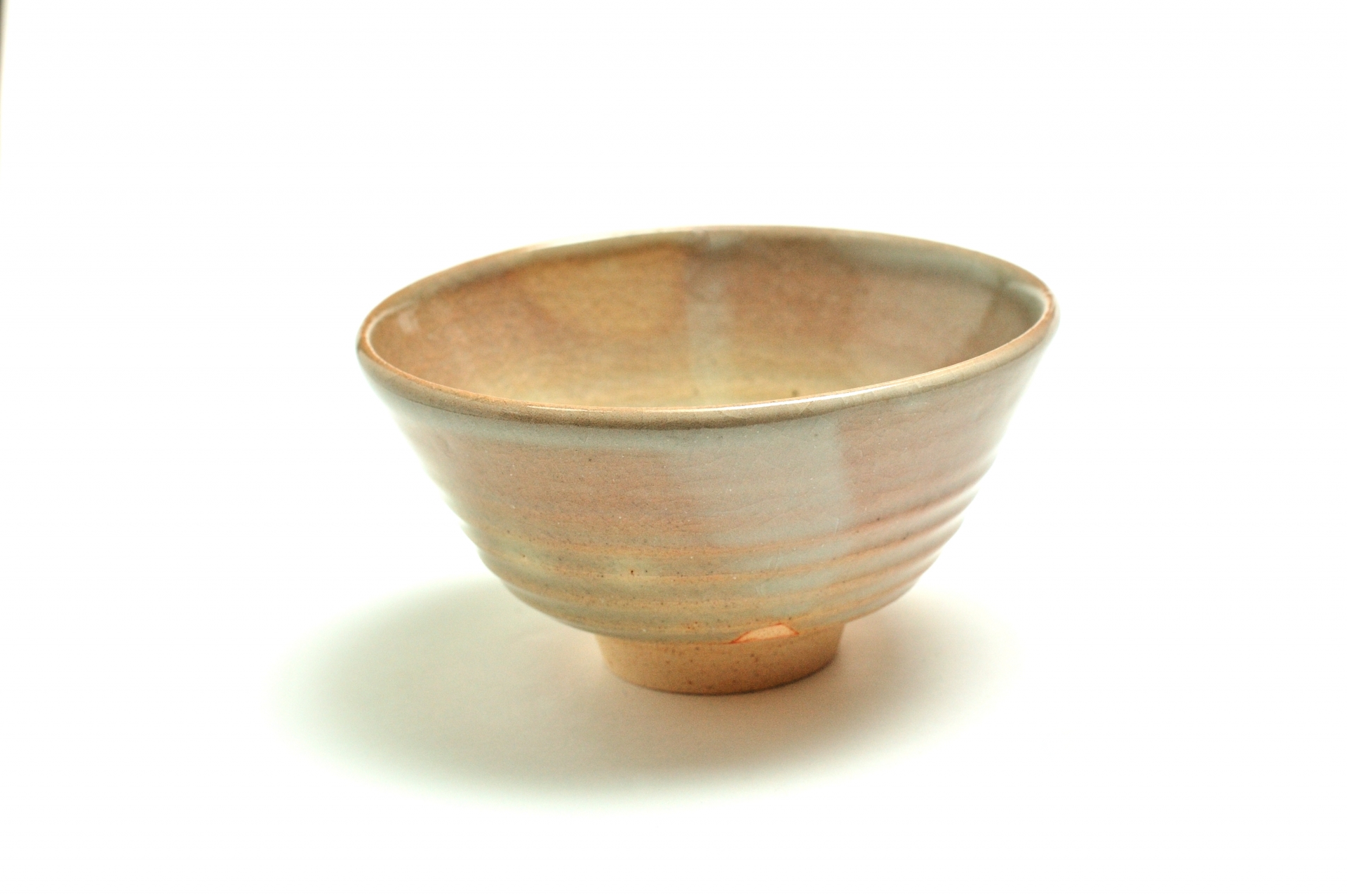
Shigaraki ware: Shigaraki-yaki (信楽焼)
Known for clay full of quartz and feldspar grains, natural ash glaze, and scorch marks from the kiln.10 You feel the material itself.

These descriptions are only introductions. Each tradition holds enormous variety, and Japan has many more pottery regions. We explore them in our Japanese Pottery Regions Guide.
For now, you don’t need to become an expert. Simply ask yourself:
Do I enjoy the smoothness and lightness of porcelain, or do I prefer the texture and variation of pottery?
Your hand may answer before your mind does.
4. Notice the rim, the foot and the weight
In a photo, we notice colour and decoration first. But three quieter details make a big difference to how a rice bowl feels every day.
The rim
Look at the thickness and shape of the rim. Some rims are fine and delicate. Others are rounder and more substantial.
You may not drink from a rice bowl the way you would from a soup bowl, but you bring it close to your face again and again. The edge affects how delicate or sturdy the whole bowl feels.
The foot: kōdai (高台)
Turn a Japanese rice bowl over, and you will usually find a raised ring underneath. This is the kōdai (高台). Japanese dictionaries describe it as the base that supports the bowl and keeps it steady.11
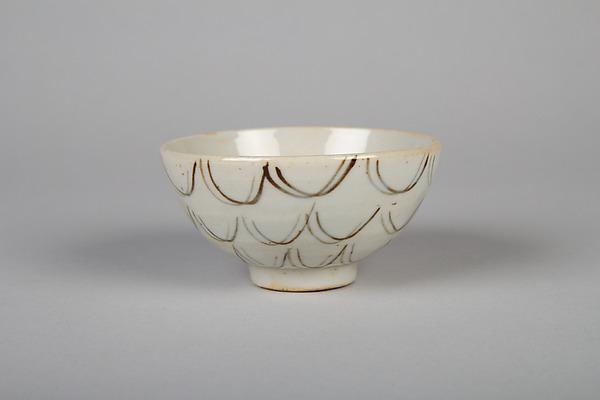
In everyday use, you will notice it does more than that. It lifts the body of the bowl off the table, it gives your fingers somewhere to rest, and it can make a warm bowl easier to hold.
The foot is easy to overlook online, because most photos show the top and sides of the bowl. But the underside matters.
If you have ever eaten Japanese rice from a Western cereal bowl, this may be one reason it didn’t feel quite the same. Many Western bowls have a flatter base. They are mainly designed to sit on the table, while a Japanese rice bowl is lifted at every meal.
So when you shop online, look for a photo of the base. The kōdai is not just decoration. Your fingers will meet it every time you eat.
The weight
Remember that the bowl will feel heavier once it is full of hot rice.
A thick pottery bowl can feel beautifully solid when empty, but be more weight than you want to hold through a whole meal. A very light bowl may feel wonderful to someone else, but too delicate to you.
Neither is better. Again, you are looking for the bowl that suits your hand.
5. Choose the inside as carefully as the outside
Online shops naturally photograph the outside of a bowl beautifully. That is often where the pattern or glaze is most striking.
But once the bowl is yours, you may spend far more time looking at the inside. Every serving of rice sits against that surface.
A pale porcelain bowl can make white rice look clean and bright. A dark glaze creates a stronger contrast. An earthy or softly coloured glaze can make the rice feel warmer and less formal. A painted inside adds another small pleasure, as the design slowly appears while you eat.
There is no correct choice. Just ask yourself:
Do I like looking into this bowl as much as I like looking at it from the outside?
It is a small difference when you are shopping. Over hundreds of meals, it may matter much more.
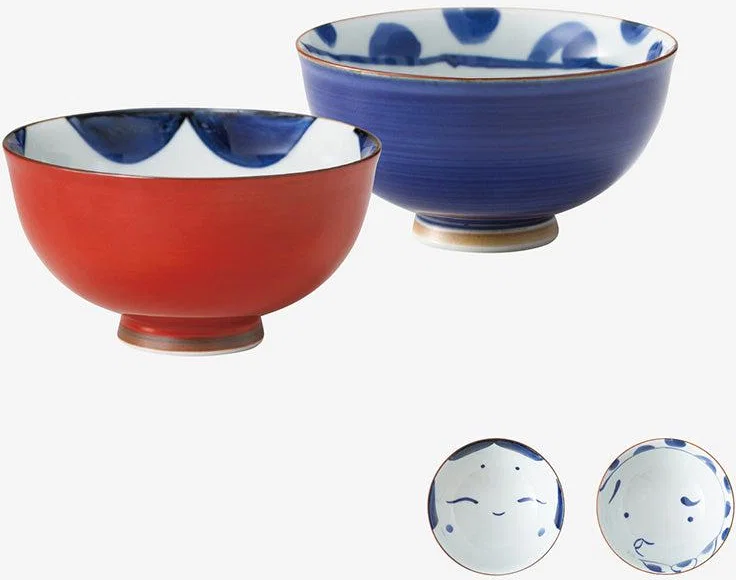
See why the inside matters · AD
Okame & Hyottoko Rice Bowl Pair
J.Flavor × Saikai Toki · Hasami ware · Nagasaki, Japan
Okame and Hyottoko are painted inside these porcelain bowls, so the design gradually appears as the rice disappears. The pair comes in two sizes, making it a useful example of choosing for different hands and appetites without requiring two identical bowls.
6. Your rice bowl doesn’t have to match anyone else’s
There is another side of Japanese rice bowls that may surprise you, if you are used to buying tableware in matching sets.
A rice bowl is often a personal object.
Japanese researchers use the word zokujinki (属人器) for tableware that is always used by one particular person in the household.
In a 2002 survey of households, mainly in Saitama Prefecture, chopsticks were the item most often kept for one person, followed by rice bowls and teacups. Around 80–90% of households used these as personal items.13
Of course, that doesn’t mean every household in Japan does the same. But the idea of “my rice bowl” is very familiar.
It also means a family doesn’t need four identical bowls.
One person may like smooth white porcelain. Another may prefer heavy, earthy pottery. A child may have a smaller bowl. They can all sit together naturally on the same table.
There is even a traditional pair called meoto-jawan (夫婦茶碗), “husband-and-wife rice bowls”. They share the same shape and pattern but come in two sizes. Traditionally, the husband used the larger bowl and the wife the smaller one.14
Today, there is little reason to follow that rule. Appetite and hand size are much more useful guides.
A couple might enjoy a matching pair. Or each person might choose something completely different. Both feel perfectly at home on a Japanese table.
This is one reason Japanese tableware doesn’t have to match in the way a Western dinner set often does.
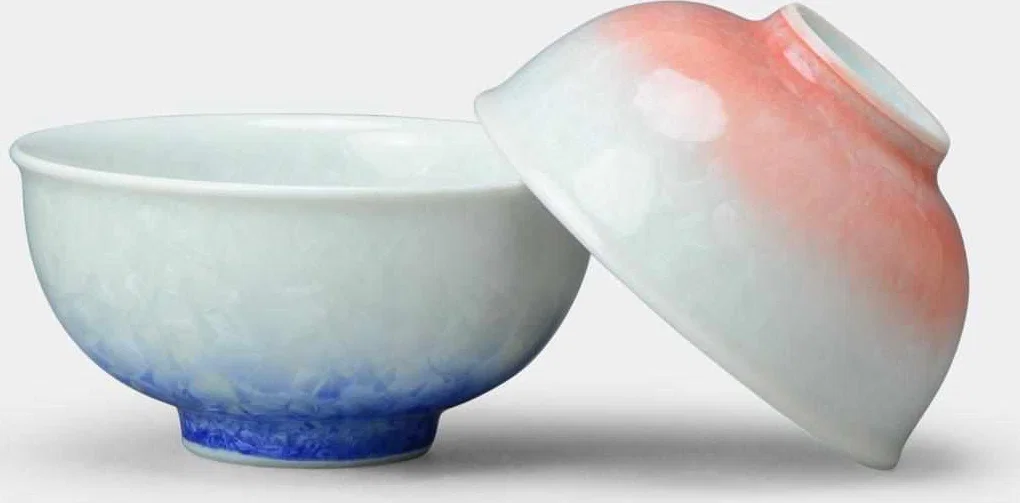
See how a pair can belong together without being identical · AD
Flower Crystal Rice Bowl Pair
Touan · Kyoto-Kiyomizu ware · Kyoto, Japan
These two porcelain bowls share Touan's flower-crystal glaze, but one is blue and the other red. They make a coordinated pair without becoming identical — a clear example of how personal bowls can still belong together on the same table.
7. What should you spend?
A Japanese rice bowl can be an inexpensive everyday object, or an individual piece of craft. That is why prices vary so widely.
The price may reflect:
- the material
- how the bowl is shaped
- how much of the work is done by hand
- hand painting, carving or other decoration
- glazing and firing techniques
- the maker or kiln
- how many are made, and how rare they are
A bowl that is thrown and painted by hand takes far more human time than one made in large numbers.
But that doesn’t make mass-produced tableware worse. Japan has a long history of making practical, well-designed ceramics for ordinary households.
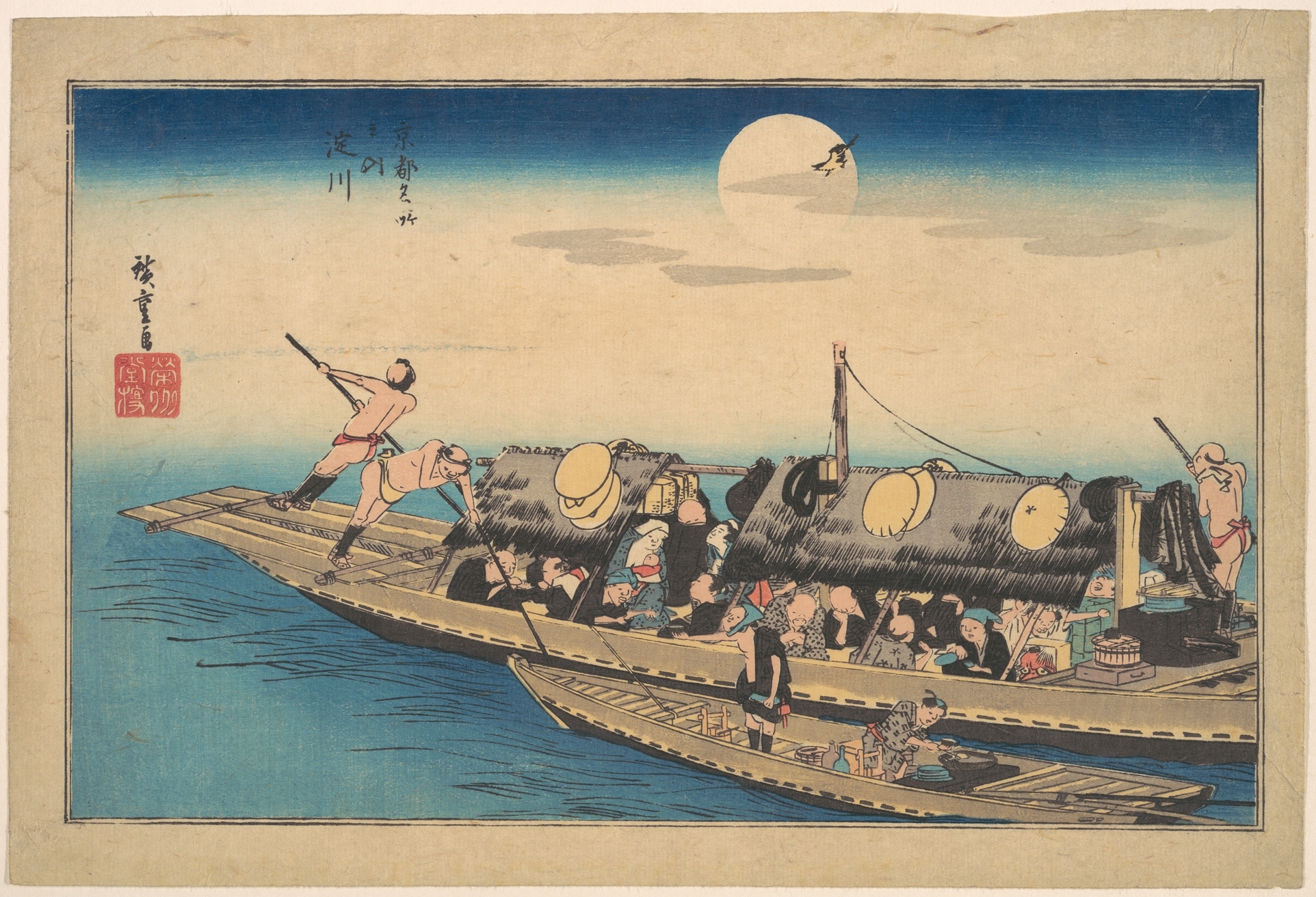
In the late Edo period, for example, sturdy porcelain bowls were mass-produced in Hasami as inexpensive, everyday tableware for ordinary people. Vendors on small boats used them to sell food and drink to passengers on the Yodo River between Kyoto and Osaka. Their thick bodies made them easy to hold, even on a rocking boat. They are now known as kurawanka bowls.12
“Kurawanka”, meaning “Won’t you eat?”, was the famous call of those river vendors.15
A reasonably priced bowl can be beautifully made, and become something you use happily for decades.
At the other end of the scale, you may decide that the craft itself matters to you.
Japan’s official definition of a designated traditional craft, dentōteki kōgeihin (伝統的工芸品), is interesting here. One of the requirements is that it is made mainly for use in everyday life. Another is that the main part of its making is done by hand.16
That combination says something important. Traditional craft in Japan is not only something to keep in a display case. It can be something you eat from every day.
If you value the skills behind a particular pottery tradition, and would like them to continue into the next generation, choosing work from a maker, workshop or region you can name is one practical way to support it.
You don’t need to buy the most expensive bowl. But understanding why one bowl costs more than another helps you decide what is worth paying for.
See what handmade variation looks like · AD
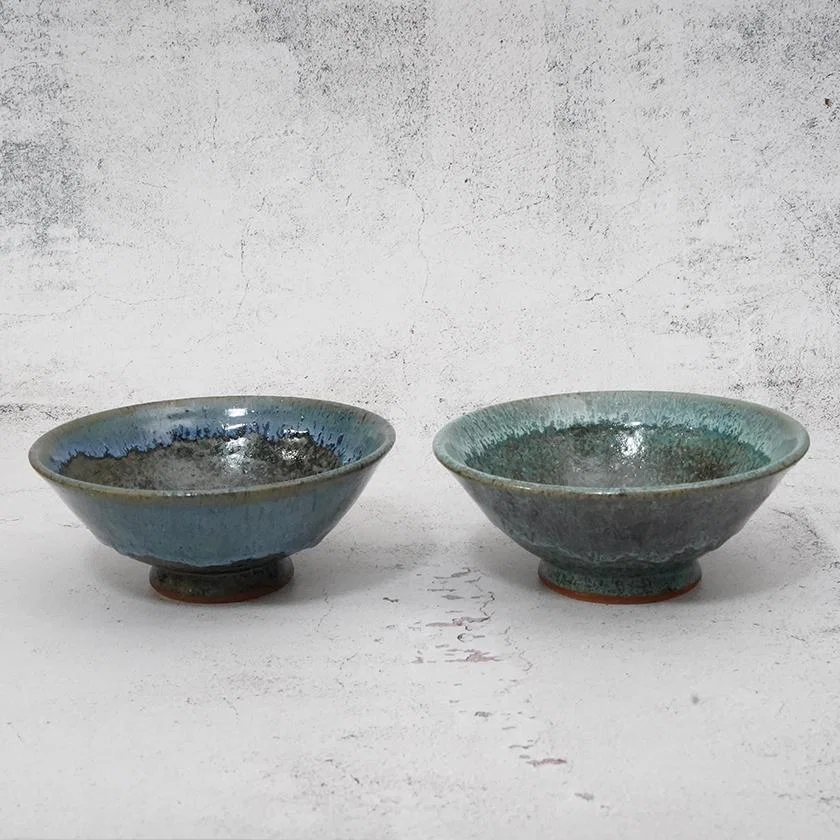
Ruri Karatsu & Hekiryoku Karatsu Rice Bowl Pair
Umezato Gama · Otani ware · Tokushima, Japan
These handmade bowls are shaped and glazed individually, so the firing leaves each one with its own colour and surface. BECOS currently lists a wait of around three months — a useful reminder that some of the price of handmade tableware reflects not only materials, but time.
A simple checklist before you buy
Before you choose your rice bowl, ask yourself:
- Can I imagine holding this comfortably in one hand?
- Is the size right for the amount of rice I normally eat?
- Do I prefer smooth porcelain or more tactile pottery?
- Will it still feel comfortable when it is full?
- Does the foot look easy to hold?
- Do I like the inside as much as the outside?
- Can I realistically care for this material?
- Do I know where, or how, it was made?
- Does the price make sense for the craftsmanship?
- Can I imagine wanting to pick up this bowl every day for years?
You don’t need a perfect answer to every question. The list simply moves the decision away from:
Which bowl looks nicest on the screen?
and closer to:
Which bowl would I actually like to live with?
The bowl you’ll want to pick up every day
A rice bowl is a small object. It may not seem to deserve much thought.
But if you eat rice regularly, you may pick it up hundreds of times a year.
Your fingers will learn the shape of its foot. You will stop noticing its weight, because it has become familiar. You will see the same glaze beneath countless meals.
Small marks may appear. A handmade surface may change a little with use. What was once a new object simply becomes your bowl.
That is why it is worth choosing with a little more care than a bowl that just looks beautiful in a photo.
Choose a bowl that suits your hand, your appetite and the way you actually live.
And perhaps choose one made well enough that you will still be happy to pick it up, meal after meal, many years from now.
Sources
[02] Japan National Tourism Organization (JNTO), Table Manners in Japan (2013)
[03] Hakusan Porcelain, Choosing a Rice Bowl for a New Life (2024, in Japanese)
[04] Kotobank, Jiki 磁器 (porcelain) (in Japanese)
[05] JAANUS (Japanese Architecture and Art Net Users System), Imari-yaki
[06] JAANUS, Kutani-yaki
[07] Association for the Promotion of Traditional Craft Industries, Mikawachi Yaki
[08] JAANUS, Bizen-yaki
[09] Japan Tourism Agency Multilingual Commentary Database, Hagi Ware (Kikuya Residence)
[11] Kotobank, Kōdai 高台 (in Japanese)
[12] Metropolitan Museum of Art, Set of Five Everyday Vessels (Kurawanka Bowls) (early 19th century)
[14] Kotobank, Meoto-jawan 夫婦茶碗 (in Japanese)
[15] Metropolitan Museum of Art, Utagawa Hiroshige, The Yodo River, from Famous Places of Kyoto (1834)
[16] Ministry of Economy, Trade and Industry (METI), Designation of Traditional Crafts (in Japanese)
10 Quiet Ways to Bring a Little Japan into Your Everyday Life
Ten quiet invitations to bring Japanese ways of seeing into everyday life.